
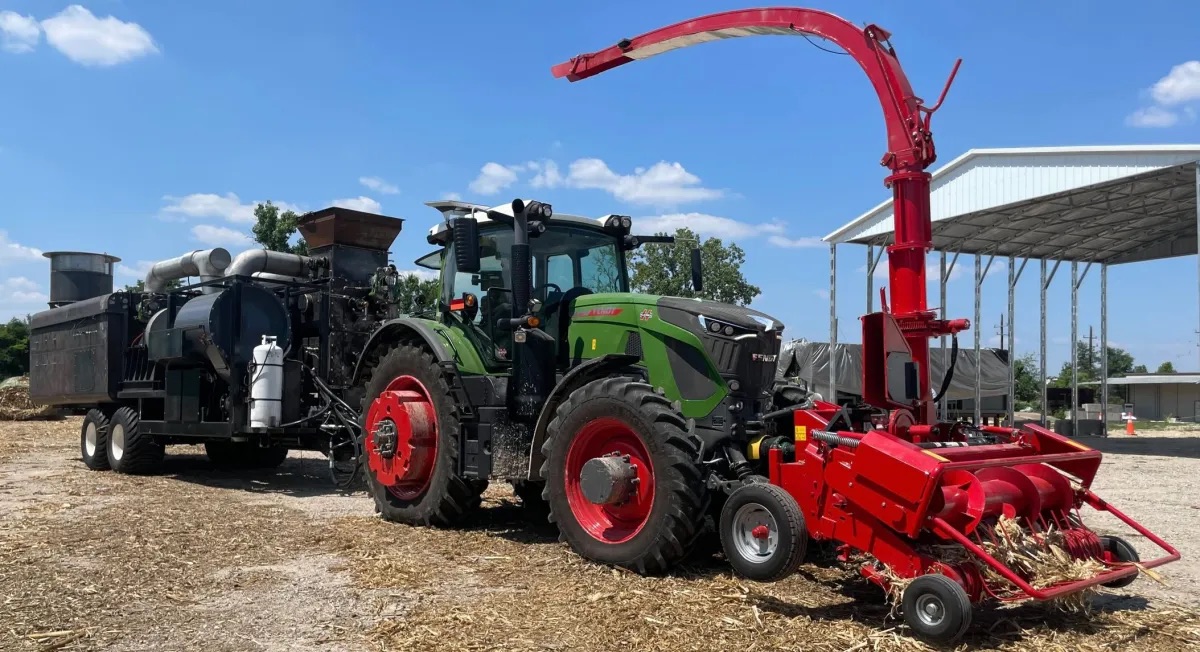
Addressing climate change by removing CO2 from the atmosphere is complex and costly. While some startups build expensive industrial systems for carbon capture, Applied Carbon has taken a different approach by using biocharBiochar is a carbon-rich material created from biomass decomposition in low-oxygen conditions. It has important applications in environmental remediation, soil improvement, agriculture, carbon sequestration, energy storage, and sustainable materials, promoting efficiency and reducing waste in various contexts while addressing climate change challenges. More, a charcoal-like substance made from plant waste that can store carbon for centuries and improve soil health. Founders Jason Aramburu and Morgan Williams recognized the challenges of traditional biochar production, which involves transporting plant waste to facilities and then returning the biochar to farms. This process is costly and energy-intensive, often negating the carbon benefits.
To solve this, Aramburu and Williams decided to create a mobile solution, bringing the biochar production process directly to the fields. Applied Carbon developed a machine pulled by a tractor and fed by a harvester. This machine processes crop residue into biochar and syngasSyngas, or synthesis gas, is a fuel gas mixture consisting primarily of hydrogen and carbon monoxide. It is produced during gasification and can be used as a fuel source or as a feedstock for producing other chemicals and fuels. More, which powers the system. The resulting biochar is then spread and mixed into the soil.
Applied Carbon’s innovation simplifies the logistics and reduces costs, making biochar production more efficient. Over four years, the company has produced five prototypes, primarily for corn residue but adaptable to other crops like rice, wheat, and sugarcane. With a recent $21.5 million funding round, Applied Carbon aims to move from prototype to early production, focusing on deployment in Texas and surrounding states.
Currently, the startup operates the tractors pulling these machines but plans to lease or sell the equipment to farmers, enabling them to generate and sell carbon credits. This approach aims to scale biochar production sustainably, aspiring to become as integral to farming as John Deere equipment.
LEARN MORE: Applied Carbon’s farm robot turns plant waste into biochar to capture CO2



Leave a Reply