
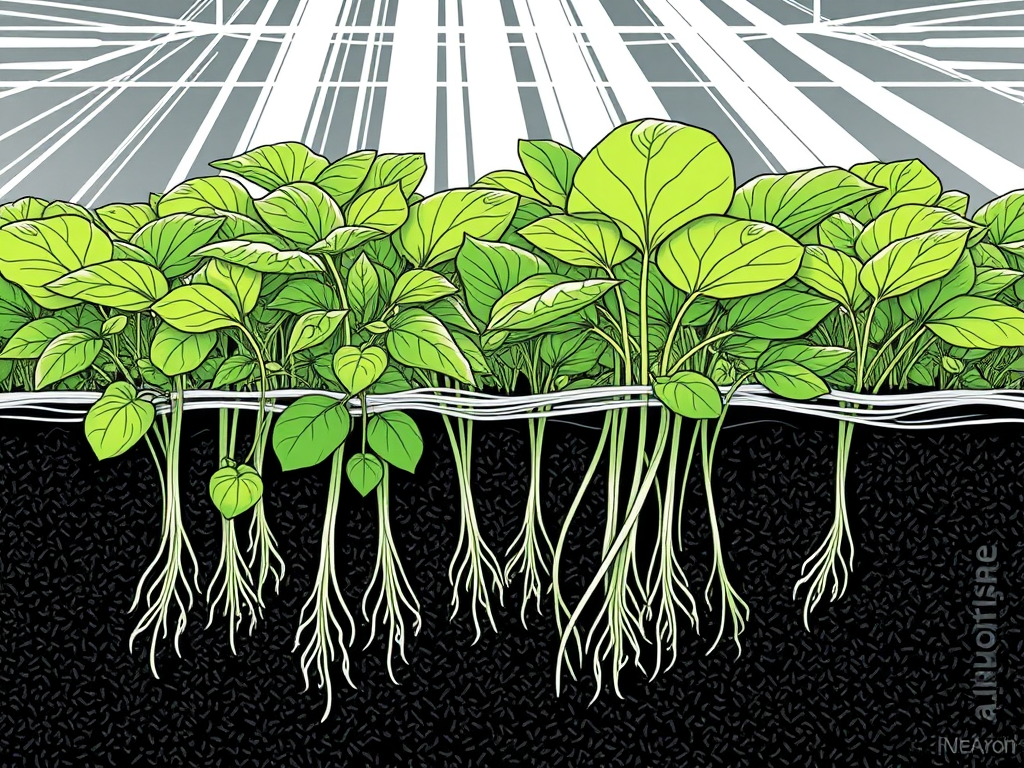
In a recent study published in ACS Sustainable Resource Management, Zhe Zhu and colleagues investigated the effects of rice straw biocharBiochar is a carbon-rich material created from biomass decomposition in low-oxygen conditions. It has important applications in environmental remediation, soil improvement, agriculture, carbon sequestration, energy storage, and sustainable materials, promoting efficiency and reducing waste in various contexts while addressing climate change challenges. More on aquaponic plant growth, nutrient uptake, and bacterial communities. With urban populations projected to reach 60% of the global total by the 2030s, there’s a critical need for sustainable agricultural methods. Aquaponics, an innovative system integrating aquaculture and hydroponics, offers a promising solution. Biochar, a carbon-rich material created through the pyrolysisPyrolysis is a thermochemical process that converts waste biomass into bio-char, bio-oil, and pyro-gas. It offers significant advantages in waste valorization, turning low-value materials into economically valuable resources. Its versatility allows for tailored products based on operational conditions, presenting itself as a cost-effective and efficient More of organic matter, is known to improve soil ecological efficiency and may offer similar benefits in aquaponic systems. This study specifically explored the role of rice-straw derived biochar when incorporated into coco coir substrate within a deep-water culture (DWC) aquaponic system, using basil (Ocimum basilicum) and lettuce (Lactuca sativa) as test plants.
The study’s findings indicated that while biochar did not significantly increase the overall biomassBiomass is a complex biological organic or non-organic solid product derived from living or recently living organism and available naturally. Various types of wastes such as animal manure, waste paper, sludge and many industrial wastes are also treated as biomass because like natural biomass these More of the plants, it did enhance the uptake of several key minerals. Optimal biochar concentrations varied depending on the plant and mineral. For basil, 40% biochar was found to be optimal for manganese (Mn), iron (Fe), and calcium (Ca), while 80% biochar maximized sulfur (S) uptake. In lettuce, an 80% biochar concentration proved optimal for Mn, zinc (Zn), and Ca uptake. These findings underscore biochar’s potential for improving nutrient uptake and fostering beneficial microbial communities within aquaponic systems.
Microbial analysis revealed that the predominant bacterial phyla in the biochar-amended substrates were Proteobacteria, Bacteroidetes, and Firmicutes. These bacterial groups are crucial for nitrogen cycling and play a vital role in enhancing plant growth. The study also predicted that in biochar treatments exceeding 60% concentration, the nitrogen fixationNitrogen is a crucial nutrient for plant growth, but plants can’t directly absorb it from the air. Nitrogen fixation is a process where certain bacteria convert atmospheric nitrogen into a form that plants can use. Biochar can provide a home for these nitrogen-fixing bacteria, enhancing More functional group would play a more prominent role in both basil and lettuce systems. By optimizing biochar applications, this research contributes to the broader goal of developing resilient urban food systems that can mitigate environmental impact and enhance food security.
Source: Zhu, Z., Chan, F. K. S., Xu, M., Li, G., Feng, M., Zhang, G., & Zhu, Y.-G. (2025). Effects of Rice Straw Biochar on Aquaponic Plant Growth, Nutrient Uptake and Bacterial Communities. ACS Sustainable Resource Management.



Leave a Reply