
Key Takeaways
- Industrial cotton waste can be transformed into a sustainable biocharBiochar is a carbon-rich material created from biomass decomposition in low-oxygen conditions. It has important applications in environmental remediation, soil improvement, agriculture, carbon sequestration, energy storage, and sustainable materials, promoting efficiency and reducing waste in various contexts while addressing climate change challenges. More material to clean up toxic textile dyes from wastewater.
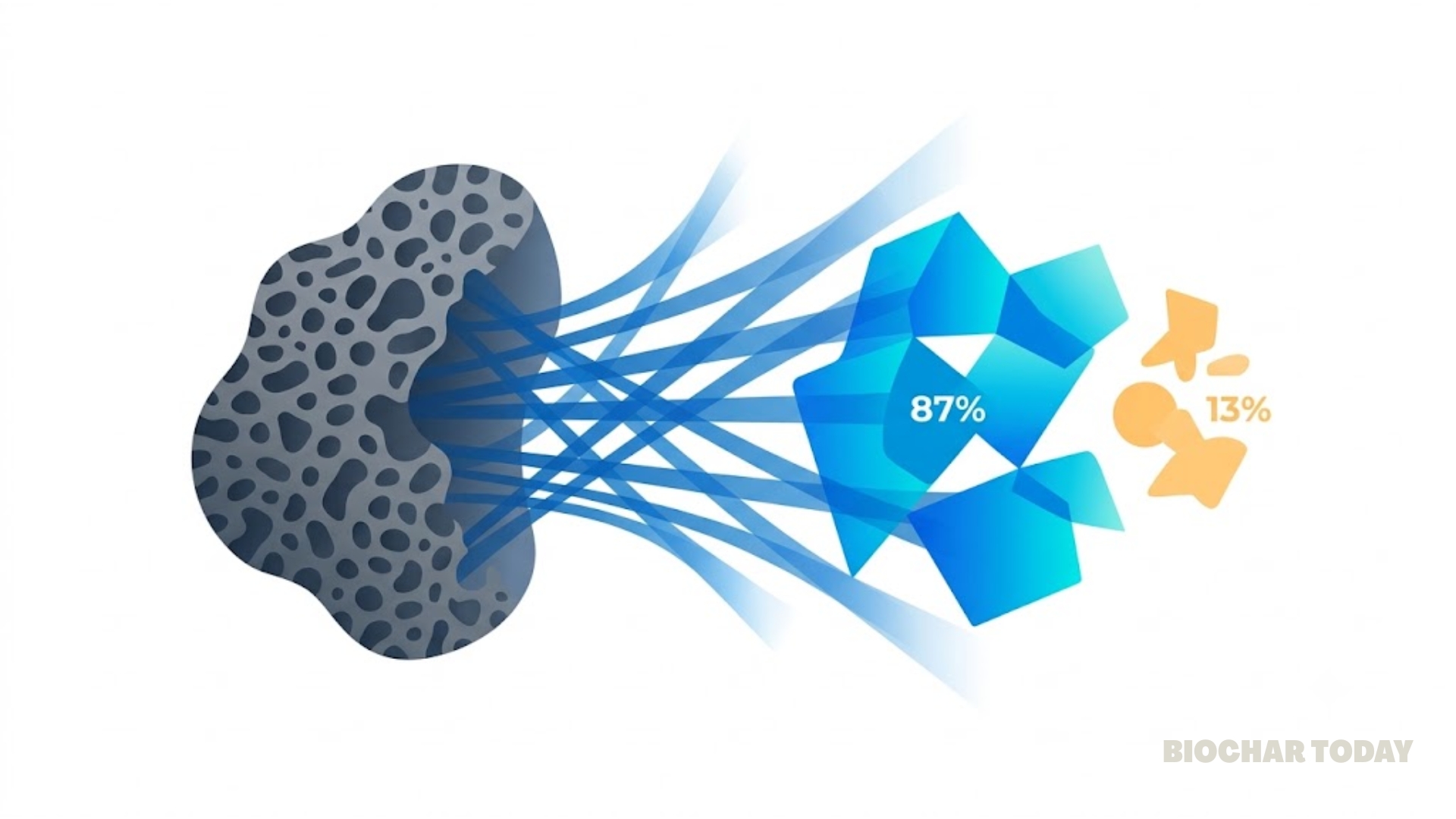
- Modifying the cotton waste biochar with hydrogen peroxide boosts its dye removal efficiency from seventy-two percent to over eighty-seven percent.
- The enhanced biochar features larger pore volumes and an increased density of surface oxygen groups that attract cationic dye molecules.
- Computer machine learning models can accurately predict dye adsorption capacity based on operating parameters like dosage and contact time.
- The modified biochar retains over eighty-three percent of its performance after five consecutive reuse cycles, offering a practical circular economy solution.
A study published in RSC Advances by Thu Huong Nguyen, Huu-Tap Van, Trung Kien Hoang, Van Gioi Ngo, and Thi Bich Lien Nguyen examines the conversion of industrial cotton textile waste into a functional biochar adsorbent for wastewater treatment. Synthetic cationic azo dyes released from textile manufacturing present major environmental and public health hazards due to their high solubility, chemical stability, and resistance to conventional biological degradation. While pristine biochar derived from organic residues offers a porous carbon structure, its capacity to capture positively charged pollutants is often limited by a low density of negatively charged surface groups. To overcome these constraints, the research team treated cotton garment waste biochar with mild hydrogen peroxide oxidation to introduce additional functional groups and enhance its performance for cationic dye removal.
The experimental findings reveal that treating cotton waste biochar with a ten percent hydrogen peroxide solution significantly outperforms untreated biochar, increasing the maximum removal efficiency of basic red 46 dye from seventy-two percent to over eighty-seven percent. Although chemical oxidation slightly reduced the total surface area, it substantially expanded the total pore volume and average pore size, while enriching the surface with oxygen-containing carboxyl and hydroxyl groups. These structural and chemical transformations lowered the point of zero charge, generating a strong negative surface charge under optimal near-neutral conditions that drives rapid dye capture through electrostatic attraction, hydrogen bonding, and physical diffusion. Furthermore, support vector machine algorithms accurately predicted adsorption capacity across operating variables, identifying adsorbent dosage and contact time as the primary factors governing performance. Retaining over eighty-three percent of its capacity after five consecutive regeneration cycles, this modified biochar provides a practical, low-cost circular economy solution for industrial effluent remediation.
Source: Nguyen, T. H., Van, H.-T., Hoang, T. K., Ngo, V. G., & Nguyen, T. B. L. (2026). H2O2 modification of cotton textile waste biochar for enhanced adsorption of basic red 46: performance, mechanism, and machine learning prediction. RSC Advances, 16, 28350-28365.


Leave a Reply