

Key Takeaways
- Char Type Matters Most for Climate: Hydrochar shows a clear advantage over biocharBiochar is a carbon-rich material created from biomass decomposition in low-oxygen conditions. It has important applications in environmental remediation, soil improvement, agriculture, carbon sequestration, energy storage, and sustainable materials, promoting efficiency and reducing waste in various contexts while addressing climate change challenges. More in this boreal legume grassland system by restricting N2O emissions, a potent greenhouse gas, and even demonstrating N2O uptake potential when no N fertilizer is used.
- Carbon Sequestration Quality Varies: Hydrochar appears better at promoting the formation of stable, long-term soil carbon (MAOC), while biochar showed a potential to destabilize this native soil carbon pool.
- Fertilizer Interaction is Complex: Biochar with N fertilizer negatively impacted timothy grass yield, likely by locking up the applied N, indicating that char amendments must be tailored to specific crops and N management practices.
- CO2 and CH4 were Unaffected: The study found no significant change in the cumulative emissions of CO2 (carbon dioxide) or the uptake of CH4 (methane) across all treatments.
Recent research article- “Effects of biochar, hydrochar and itrogen fertilization on greenhouse gas fluxes, soil organic carbon pools, and biomassBiomass is a complex biological organic or non-organic solid product derived from living or recently living organism and available naturally. Various types of wastes such as animal manure, waste paper, sludge and many industrial wastes are also treated as biomass because like natural biomass these More yield of a boreal legume grassland,” authored by Hem Raj Bhattarai et al., and published in the journal Biochar, used a three-month mesocosm experiment on a typical boreal forage-legume grassland to evaluate the contrasting impacts of two types of char amendments—biochar and hydrochar—on greenhouse gas (GHG) fluxes, soil carbon pools, and crop productivity, both with and without nitrogen (N) fertilizer. The aim was to determine if char application could lower the climatic impact of agricultural soils.
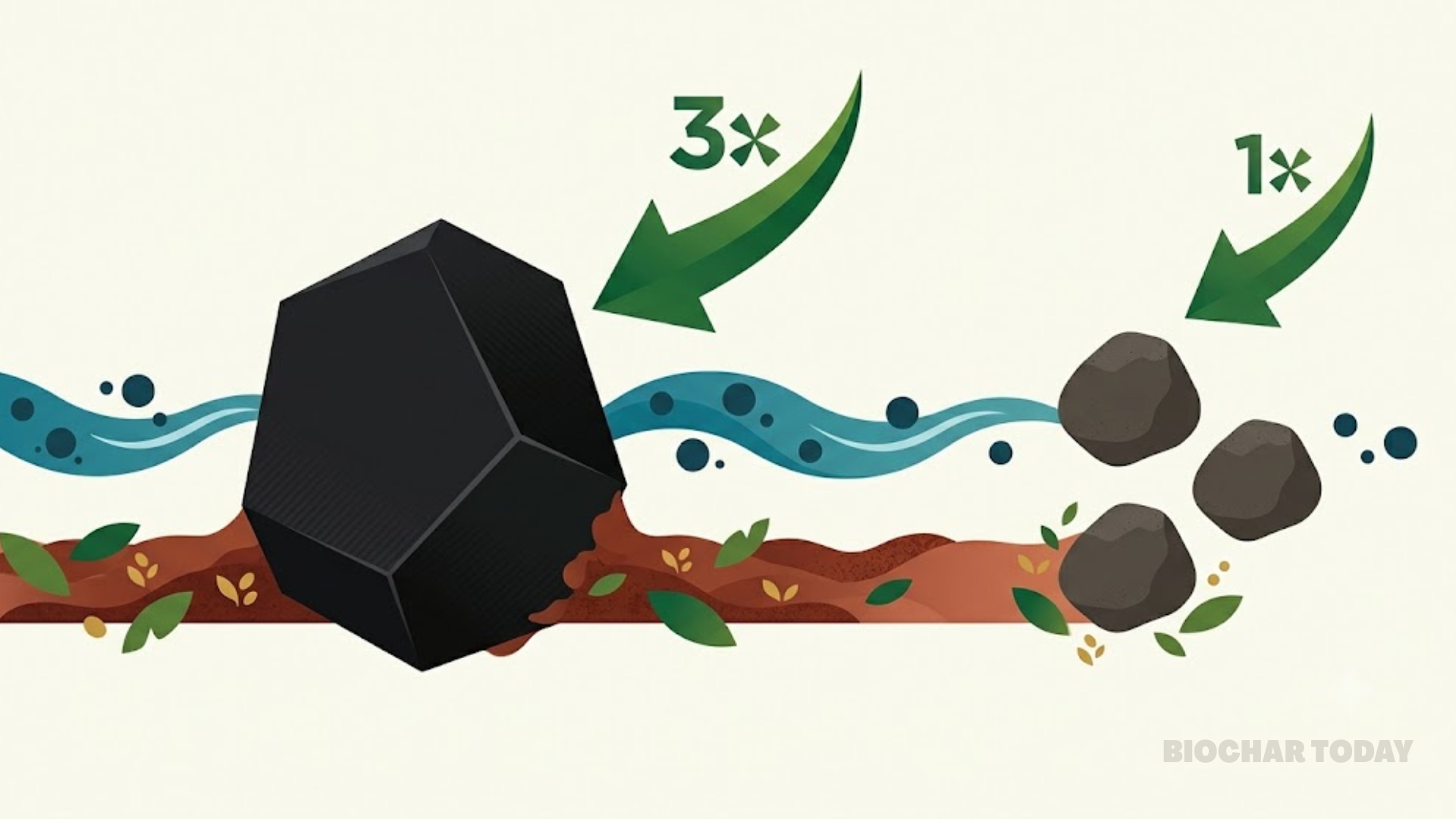
The most significant finding concerned N2O emissions, a potent GHG. When both chars were added at a uniform rate along with N fertilizer (the farmer’s practice), biochar significantly increased N2O emissions compared to the control. This increase was linked to a significant rise in gross nitrification (NO3− production), indicating that biochar enhanced the activity of nitrifying microbes, which are a source of N2O. In contrast, hydrochar restricted N2O emissions relative to the control and significantly lowered them compared to the biochar treatment. This restrictive effect in hydrochar was attributed to either the NO3− limitation or an enhanced soil N2O reduction mechanism, potentially involving N2O-reducing microbes. Notably, hydrochar without N amendment showed the lowest cumulative N2O emissions and even included instances of N2O uptake, suggesting a potential to make the soil a net N2O sink in the absence of fertilizer. These contrasting effects were strongly associated with the chars’ physicochemical properties: biochar’s higher surface area may have promoted the aerobic conditions favored by nitrifiers, while hydrochar’s smaller surface area and characteristics may have favored N2O reduction.
Regarding soil carbon pools, both biochar and hydrochar treatments significantly increased the soil particulate organic carbon (POC) content compared to the control and initial soil, largely because the char material itself is carbon. However, the study found key differences in the formation of the more stable, long-term carbon pool: Mineral-Associated Organic Carbon (MAOC). When assessing MAOC per unit of char carbon added, biochar amendments showed a significant reduction in soil MAOC compared to the initial soil. This suggests that biochar may destabilize native MAOC, especially with N fertilization and active vegetation. Conversely, hydrochar did not show this reduction and had a significantly greater rise in microbial biomass carbon (Cmic) than biochar. This indicates that hydrochar promoted more effective microbial growth and assimilation of root-derived carbon, which is crucial for forming new, stable MAOC.
The overall total biomass yield (timothy and red clover) remained statistically unaffected by either char amendment. However, when looking at individual species, biochar with N fertilization reduced the timothy grass yield compared to the control, suggesting a negative impact on timothy’s ability to acquire applied N. This is possibly due to biochar’s large surface area immobilizing the applied N fertilizer, making it unavailable for plant uptake. In contrast, hydrochar did not negatively affect timothy yield.
Source: Bhattarai, H. R., Honkanen, E., Ruhanen, H., Soinnie, H., Gil, J., Saghir, S., Lappalainen, R., & Shurpali, N. J. (2025). Effects of biochar, hydrochar and nitrogen fertilization on greenhouse gas fluxes, soil organic carbon pools, and biomass yield of a boreal legume grassland. Biochar, 7(1), 114.



Leave a Reply