
Key Takeaways
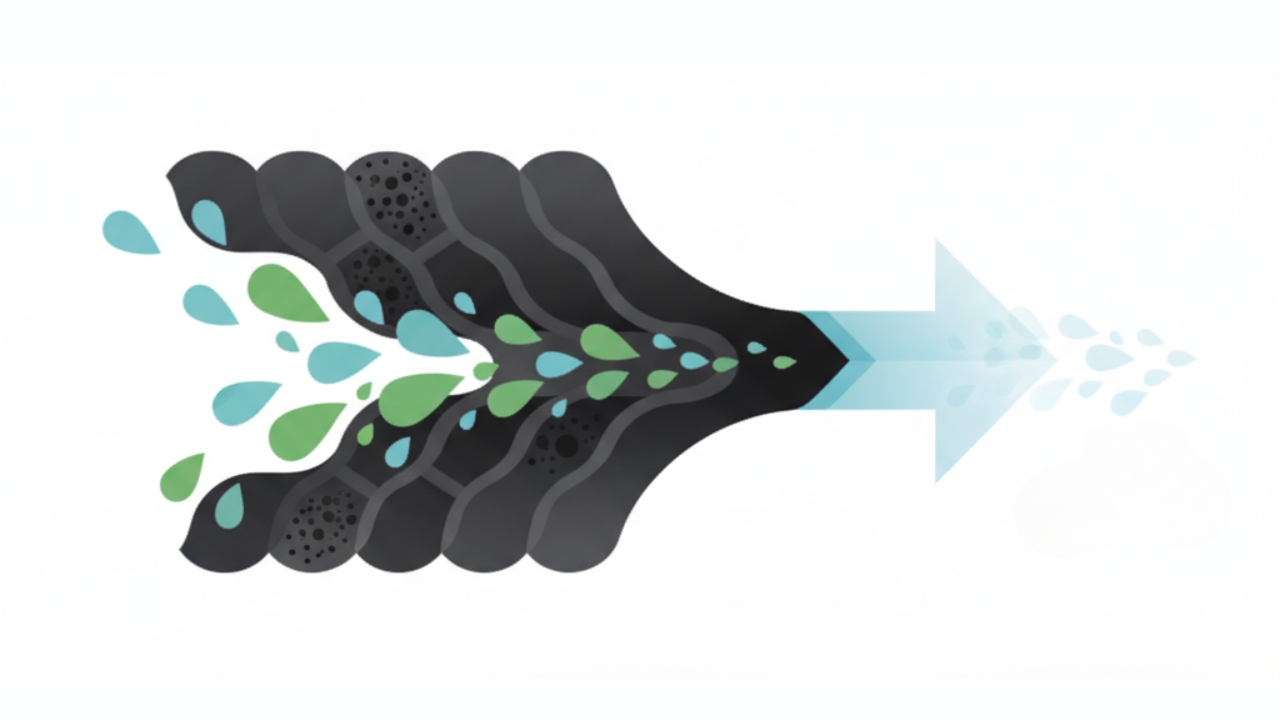
- PFAS is in Our Water: “Forever chemicals” (PFAS) are contaminating recycled water used for crop irrigation, posing a potential threat to our food supply.
- BiocharBiochar is a carbon-rich material created from biomass decomposition in low-oxygen conditions. It has important applications in environmental remediation, soil improvement, agriculture, carbon sequestration, energy storage, and sustainable materials, promoting efficiency and reducing waste in various contexts while addressing climate change challenges. More is the Best Filter: Biochar, made from agricultural waste, is a powerful, low-cost, and environmentally friendly adsorbent—a better filter than many traditional materials for capturing PFAS.
- Selection is Key: Successfully removing PFAS is not about using any biochar; it is about using the right one. Highly effective biochars must be engineered with specific properties, like a large surface area and precise ratios of carbon and nitrogen.
- It Cleans Up Wastewater: A carefully chosen commercial biochar demonstrated an impressive >90% removal for major PFAS compounds in complex treated municipal wastewater.
- It’s Reusable and Improved by Heat: Simple, low-temperature thermal treatment can recharge the used biochar filter. This process was found to actually increase the biochar’s ability to remove the tricky short-chained PFAS by up to five times.
The pervasive threat of Per- and Polyfluoroalkyl Substances (PFAS), often dubbed “forever chemicals,” presents one of the greatest challenges to modern agriculture, especially as farms increasingly rely on recycled water for irrigation. These synthetic compounds can pose a threat to crops and ultimately enter the human food chain. Traditional remediation methods are often costly or inefficient, but new research points to an elegant, sustainable, and powerful solution: engineered biochar. A systematic and comprehensive study by Pia Ramos, Michael P. Schmidt, Richeng Xuan, and Daniel J. Ashworth in Biochar explores precisely how to select and optimize this carbon-rich material to effectively remove PFAS from water. The key takeaway is that success is entirely dependent on careful, evidence-based selection of biochar with optimal physicochemical characteristics.
The researchers tested 24 different biochars, derived from common agricultural waste sources—pine wood chips, grass clippings, walnut shells, and cattle manure—pyrolyzed across a wide temperature range (300∘C to 800∘C). By evaluating 17 different properties, they cracked the code on what makes a biochar effective for different types of PFAS. They found that different properties govern the removal of different PFAS compounds as Long-Chained PFAS (like PFOS, PFNA, PFOA) are best adsorbed by biochars with a high carbon/nitrogen (C/N) ratio and high Specific Surface Area (SSA). This is consistent with the fact that longer-chain compounds are more hydrophobic and interact strongly with the carbon-rich surface and Sort-Chained PFAS (like PFBS, PFHxS) removal is influenced by both the C/N ratio and the [nitrogen + oxygen]/carbon (NOC) ratio.
Using these insights, the researchers developed linear models that can predict the removal performance of a biochar based on easily measurable properties. This is invaluable for practitioners, allowing them to select or prepare suitable materials with confidence.
To validate their predictive framework, the researchers tested a commercial pine wood biochar, “Rogue biochar,” selected for its optimal characteristics. The results were impressive, demonstrating that an evidence-based selection strategy results in superior performance, even in complex water matrices. PFOS (Long-Chain Sulfonate): Rogue biochar achieved an average experimental removal of 98±1%. Wastewater Performance: In treated municipal wastewater—a much more complex matrix containing competing ions—Rogue biochar maintained >90% removal for PFOS, PFOA, PFHxS, and PFNA, and managed to remove >50% of the short-chained PFBS. The strong hydrophobic interactions between the biochar and the long-chained PFOS meant that competing ions in the treated wastewater had a negligible effect on removal efficiency for that compound.
For biochar to be truly scalable and cost-effective, it must be reusable. The study explored thermal reactivation—a simple post-pyrolysis thermal treatment in the presence of air—as a strategy to regenerate the biochars.
This process provided a two- to five-fold increase in the removal of the short-chained sulfonate PFBS across the in-house generated biochars. The greatest improvement was observed for the manure biochar produced at 400∘C. The effectiveness is likely due to the heat causing oxidative removal of residual organic matter from the pore walls, improving the biochar’s surface area and hydrophobicity.
This simple, low-energy reactivation strategy (using temperatures as low as 400∘C) is a significant finding because it dramatically increases the potential lifetime of the adsorbent, making biochar a more sustainable and viable choice than many conventional, energy-intensive alternatives. Overall, the study offers a critical framework for selecting and preparing the most effective biochar materials to safely remediate PFAS from water used in agriculture, safeguarding the food chain.
Source: Ramos, P., Schmidt, M. P., Xuan, R., & Ashworth, D. J. (2025). Biochar selection for removal of perfluoroalkyl substances from reclaimed water for agricultural irrigation. Biochar, 7(56), 1–15.



Leave a Reply