
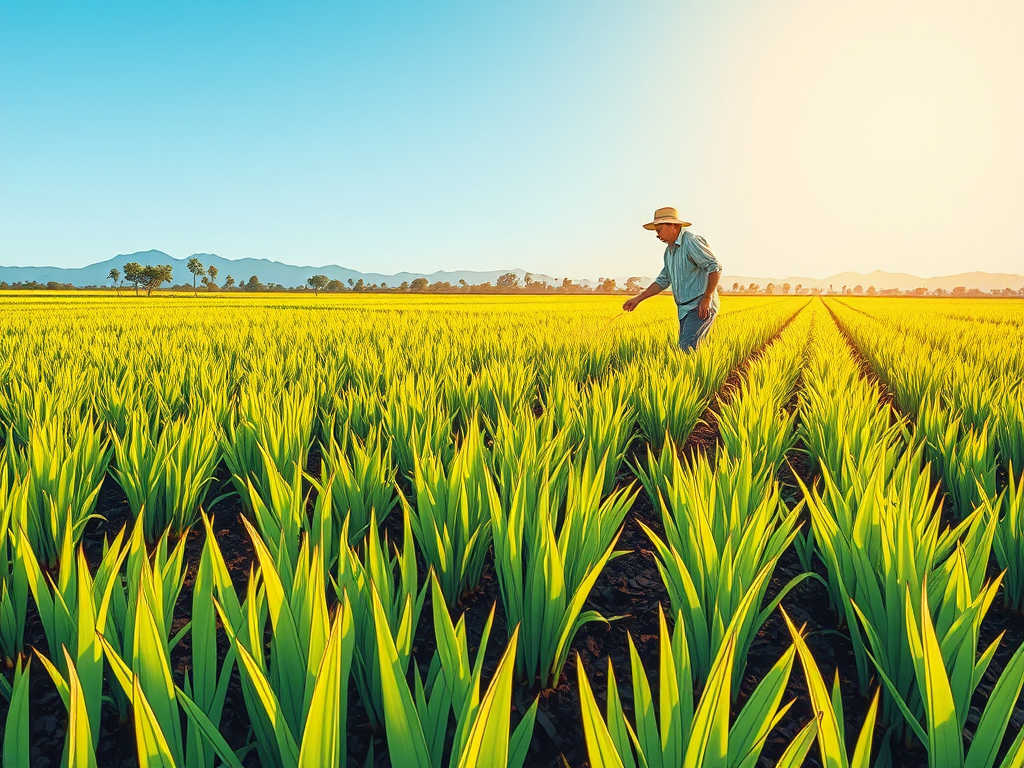
A recent study published in Food and Energy Security by Shengji Yan and colleagues evaluates the impact of biocharBiochar is a carbon-rich material created from biomass decomposition in low-oxygen conditions. It has important applications in environmental remediation, soil improvement, agriculture, carbon sequestration, energy storage, and sustainable materials, promoting efficiency and reducing waste in various contexts while addressing climate change challenges. More application on reducing non-CO2 emission intensity (EI) across these staple crops. By conducting a meta-analysis of 202 observations from 41 studies across Monsoon Asia, the researchers provide crucial insights into how biochar can mitigate methane (CH4) and nitrous oxide (N2O) emissions while maintaining crop yields.
Biochar has gained attention for its potential to improve soil health and sequester carbon. This study highlights that biochar application reduced EI by an average of 14.6 kg CO2 equivalent per megacalorie (M cal⁻¹) across all crops. The most significant reduction was observed in rice cultivation, where EI decreased by 28.9 kg CO2 eq M cal⁻¹. The primary mechanism driving this reduction was the suppression of CH4 emissions, which dropped by 0.4 Mg CO2 eq ha⁻¹ in rice fields—three times higher than reductions observed in maize and wheat.
Soil characteristics played a key role in determining the effectiveness of biochar. The study found that soil organic carbon and clay content influenced the mitigation of N2O and CH4 emissions, respectively. In flooded rice fields, biochar promoted the formation of iron oxides and altered microbial activity, leading to a reduction in methanogenesis. For upland crops like maize and wheat, biochar improved soil aeration, reducing N2O emissions through changes in nitrification and denitrification processes. Beyond emissions reduction, biochar application enhanced caloric yield across all crops. Wheat saw the highest yield increase, followed by maize and rice. However, the increase in productivity contributed minimally to changes in EI compared to reductions in GHG emissions. The findings suggest that integrating biochar into farming practices can significantly lower the carbon footprint of cereal production while maintaining food security.
Scaling biochar use presents challenges, particularly in production and distribution. Future research should focus on optimizing biochar formulations for different soil types and climatic conditions to maximize its benefits. As the world seeks sustainable agricultural solutions, biochar emerges as a promising tool for reducing emissions and enhancing soil resilience.
Source: Yan, S., Forsyth, K. A., Revillini, D., Cui, X., Zhan, X., Song, Z., Shang, Z., & Zhang, W. (2025). The effect of cereal crop type on reducing emission intensity with biochar application in Monsoon Asia. Food and Energy Security, 14, e70067.




Leave a Reply