
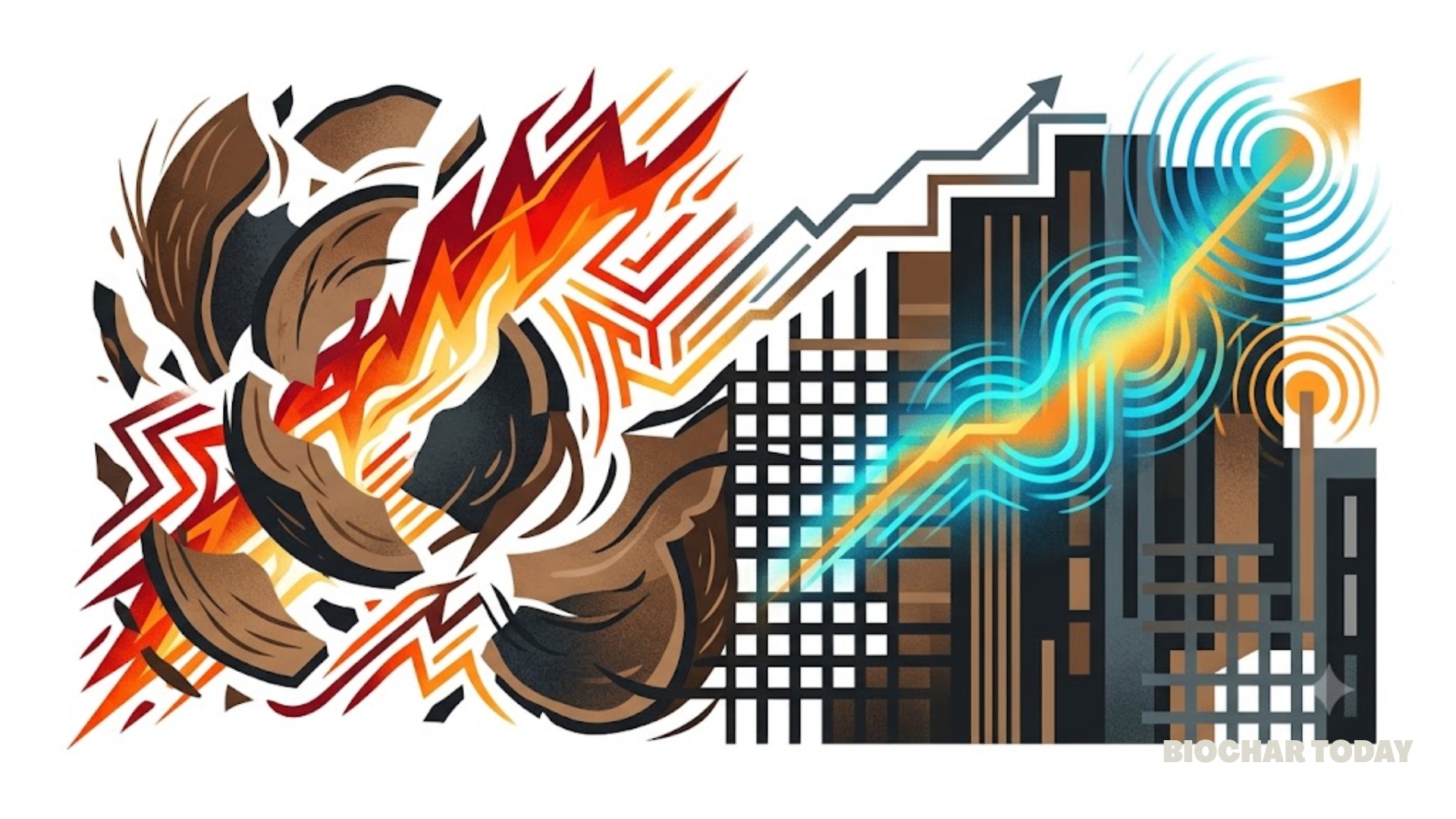
Key Takeaways
- Heating and cooling buildings takes up a massive amount of global energy, making smarter materials essential for saving power.
- Researchers tested coconut shells burned at different temperatures to see how well they could hold and store liquid phase change materials.
- Burning the coconut shells at 1,000 degrees Celsius successfully widened internal pathways, allowing the material to soak up significantly more liquid.
- The optimized coconut shell composite captured nearly 70 percent of its potential energy storage capacity without leaking.
- The material safely withstood 500 consecutive melting and cooling cycles, proving it can provide long-lasting temperature regulation for buildings.
A recent study published in Scientific Reports by Soumen Mandal, Avinash C. Mendhe, Raihana Jannat Adnin, Taejoon Park, Han-Seung Lee, and Yashabanta N. Singhbabu explores an innovative approach to passive building thermal regulation by transforming agricultural waste into an efficient energy storage medium. Managing indoor temperatures accounts for nearly one third of global energy consumption, driving the need for sustainable, low-energy strategies that reduce peak heating and cooling loads. Phase change materials can absorb and release thermal energy as they melt and solidify, but they frequently suffer from liquid leakage and poor thermal conductivity when integrated into building envelopes. To overcome these hurdles, scientists frequently rely on porous carbon matrices like biocharBiochar is a carbon-rich material created from biomass decomposition in low-oxygen conditions. It has important applications in environmental remediation, soil improvement, agriculture, carbon sequestration, energy storage, and sustainable materials, promoting efficiency and reducing waste in various contexts while addressing climate change challenges. More to confine the liquid within microscopic channels using capillary forces.
The research team focused on how the preparation temperature of coconut shell biochar alters internal structures and dictates how much energy-storing material the carbon scaffold can hold. Traditionally, studies assumed that higher surface areas automatically guarantee greater storage capacity. However, the authors discovered that intermediate high temperatures can cause internal pore entrances to constrict into narrow neck shapes, blocking the liquid from entering. By preparing biochars at four distinct temperatures ranging from 550 to 1,000 degrees Celsius under identical chemical activation protocols, the team investigated how structural evolution affects performance. They determined that the total internal surface area matters less than the volume of pores that are actually accessible to the melting substance.
Advanced microscopic imaging and gas sorption analysis revealed that heating the coconut shell material to the highest tested temperature successfully cleared out constricted pore necks, transforming narrow, closed spaces into wide, open channels. This structural optimization allowed the biochar to effectively encapsulate capric acid, a fatty acid known for its favorable melting point and high latent heat. The resulting composite material achieved an encapsulation efficiency of 68.25 percent, meaning it retained a remarkably high proportion of the pure substance’s thermal energy storage capacity. Furthermore, the material proved entirely resistant to macroscopic leakage even when heated twenty degrees above the melting point of the trapped substance.
When subjected to rigorous thermal testing, the optimized composite demonstrated exceptional durability and performance. Differential scanning calorimetry confirmed that the material maintained over 99 percent of its melting and crystallization enthalpies after undergoing 500 consecutive thermal cycles. Infrared thermal imaging further verified that the composite provides effective thermal buffering by absorbing heat during melting and releasing it steadily during solidification, keeping indoor temperatures stable. By converting abundant agricultural residues into high-performance thermal regulators, this approach offers a sustainable, carbon-negative alternative to synthetic materials for modern building energy conservation.
Source: Mandal, S., Mendhe, A. C., Adnin, R. J., Park, T., Lee, H.-S., & Singhbabu, Y. N. (2026). PyrolysisPyrolysis is a thermochemical process that converts waste biomass into bio-char, bio-oil, and pyro-gas. It offers significant advantages in waste valorization, turning low-value materials into economically valuable resources. Its versatility allows for tailored products based on operational conditions, presenting itself as a cost-effective and efficient More temperature controls the accessible pore volume and capric acid encapsulation efficiency of coconut shell biochar. Scientific Reports, Article in Press.



Leave a Reply