
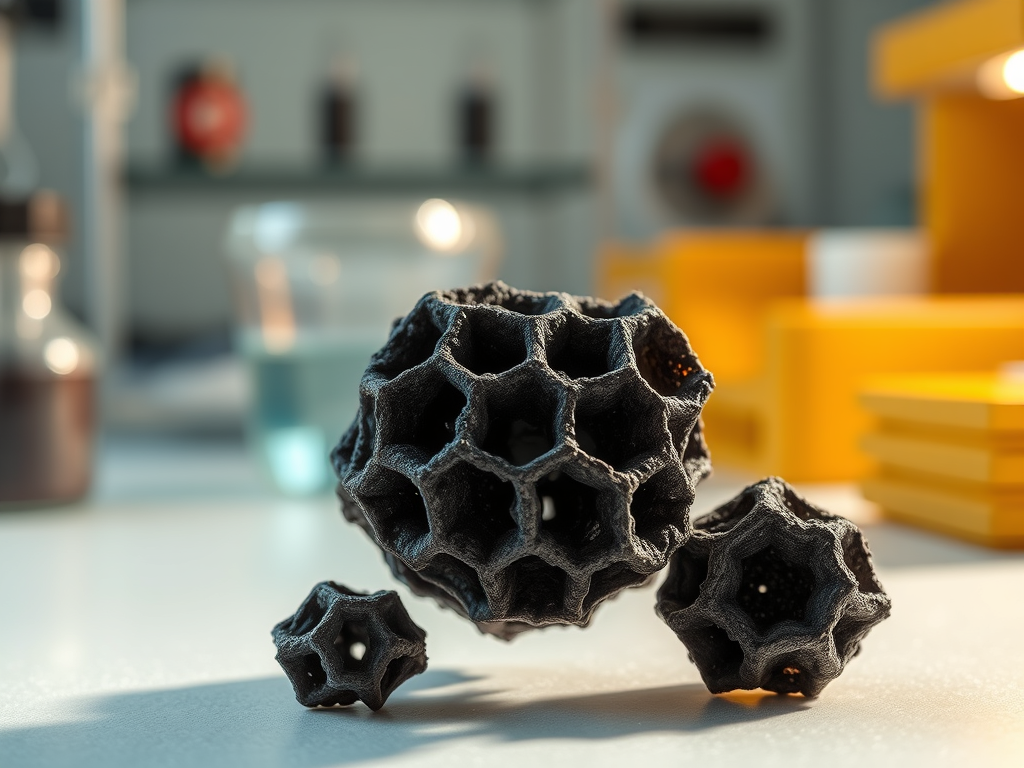
A recent study published in the journal Fundamental Research by Zhang et al. explores the potential of using honeycomb-like nitrogen-doped ultramicroporous biocharBiochar is a carbon-rich material created from biomass decomposition in low-oxygen conditions. It has important applications in environmental remediation, soil improvement, agriculture, carbon sequestration, energy storage, and sustainable materials, promoting efficiency and reducing waste in various contexts while addressing climate change challenges. More for efficient and robust CO2 capture. The research focuses on developing a sustainable and efficient method for capturing carbon dioxide from various sources.
Biochar has gained attention as a potential CO2 sorbent due to its low cost, availability, and environmental friendliness. The researchers investigated the effects of nitrogen doping and the creation of ultramicropores on biochar’s CO2 capture capabilities. The study found that honeycomb-like nitrogen-doped ultramicroporous biochar exhibits a high CO2 sorption capacity, reaching up to 4.15 mmol/g at 1 bar and 298 K. This impressive performance is attributed to the unique structural properties of the biochar, which include densely packed ultramicropores arranged in honeycomb-like patterns, a predominantly graphite state of carbon with defects, abundant functional groups, and a high nitrogen content. These features provide numerous CO2 sorption sites, leading to enhanced capture efficiency.
The research also highlights the cyclic robustness of the biochar, with an attenuation rate of 13.98% over 20 cycles. This indicates the material’s ability to maintain its CO2 capture performance over multiple cycles, making it a promising candidate for industrial applications. The authors conclude that the abundant availability and cost-effectiveness of biomassBiomass is a complex biological organic or non-organic solid product derived from living or recently living organism and available naturally. Various types of wastes such as animal manure, waste paper, sludge and many industrial wastes are also treated as biomass because like natural biomass these More, combined with a straightforward synthesis procedure and excellent CO2 sorption performance, position honeycomb-like N-doped ultramicroporous biochar as a promising material for CO2 capture applications. This research contributes to the development of sustainable and efficient technologies for mitigating CO2 emissions and addressing climate change.
SOURCE: Zhang, C., Zhang, D., Zhang, X., Chen, L., Chen, X., Tian, Y., & Wang, L. (2025). Honeycomb-Like Nitrogen-Doped Ultramicroporous Biochar for Efficient and Robust CO2 Capture. Fundamental Research. https://doi.org/10.1016/j.fmre.2025.02.005



Leave a Reply