
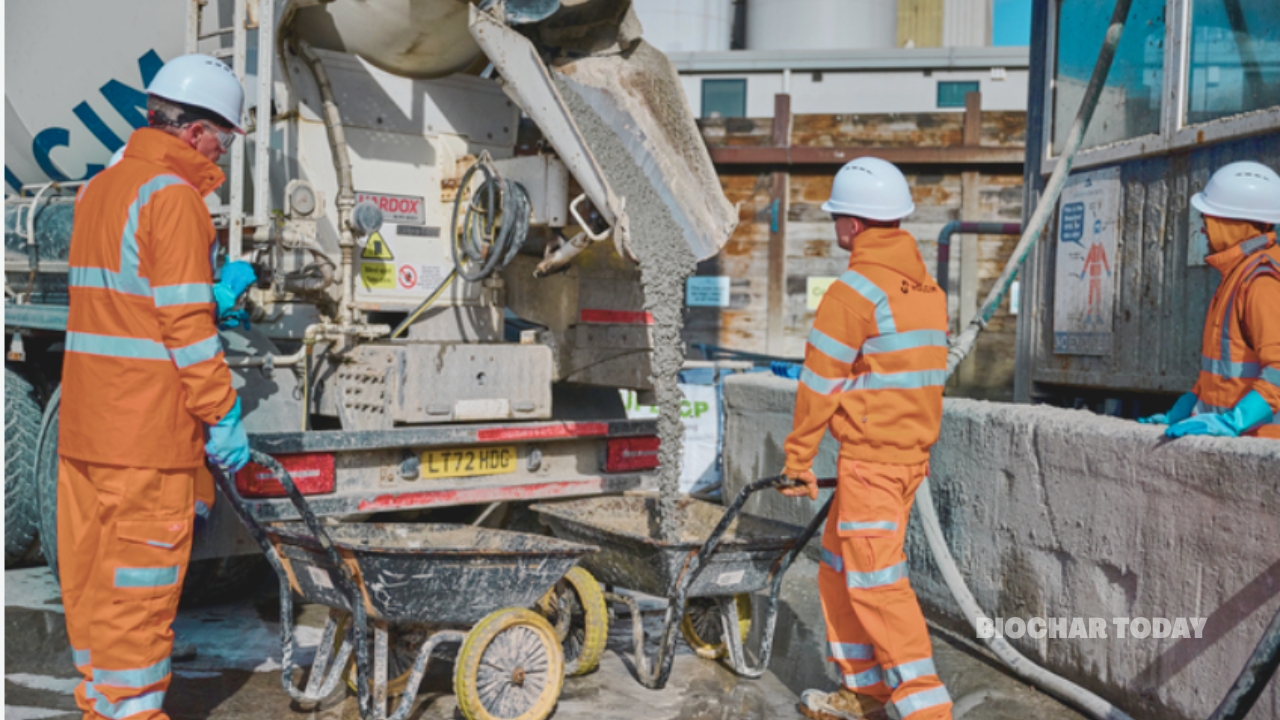
A leading industry collaboration in the United Kingdom has successfully demonstrated the viability of net-zero concrete on a commercial scale. Real estate developer Canary Wharf Group (CWG) and construction materials giant Holcim UK partnered to pour innovative concrete mixes at two high-density urban sites in London. The program utilized a specialized mix containing biocharBiochar is a carbon-rich material created from biomass decomposition in low-oxygen conditions. It has important applications in environmental remediation, soil improvement, agriculture, carbon sequestration, energy storage, and sustainable materials, promoting efficiency and reducing waste in various contexts while addressing climate change challenges. More derived from coppiced wood and spent coffee grounds, marking the first time such material has been used in a commercial building project in the country. This initiative establishes a technical pathway for sequestering carbon within urban infrastructure, effectively transforming the built environment into a long-term carbon store.
The primary challenge addressed by these trials is the significant embodied carbon associated with traditional concrete production. Conventional concrete typically relies on CEM I Portland cement, a material that emits substantial carbon dioxide during manufacturing and often utilizes energy from coal. Reducing the global warming potential of structural elements without compromising mechanical strength, durability, or circularity remains a persistent hurdle for the real estate sector. For urban developers like CWG, meeting stringent net-zero targets requires innovative materials that not only lower manufacturing emissions but also actively offset remaining footprints through long-term biogenic carbon storage.
The implemented solution involved the development and optimization of a specialized concrete mix that replaces a portion of traditional cement with biochar. This biochar was produced from locally sourced waste biomassBiomass is a complex biological organic or non-organic solid product derived from living or recently living organism and available naturally. Various types of wastes such as animal manure, waste paper, sludge and many industrial wastes are also treated as biomass because like natural biomass these More, including forestry residues and spent coffee grounds initially collected from shops within the Canary Wharf district. By integrating this carbon-rich material into the concrete matrix, the partnership successfully locked in biogenic carbon that was previously absorbed by plants during their growth. This approach adheres to circular economy principles by turning local organic waste into a high-value construction ingredient, thereby diverting it from landfills where it would otherwise release greenhouse gases.
During the trials, the optimized biochar-integrated mix achieved a net-negative global warming potential of -14 kilograms of carbon dioxide per cubic meter. This performance surpassed initial expectations and established a new benchmark for net-zero construction in the United Kingdom. Full-scale test slabs and deep raft slabs poured at the Wood Wharf and Bank Street sites proved that the material meets all structural code requirements while maintaining the necessary strength and durability. These successful outcomes provide the construction industry with the technical validation required to adopt carbon-storing concrete as a standard for sustainable urban development.



Leave a Reply