
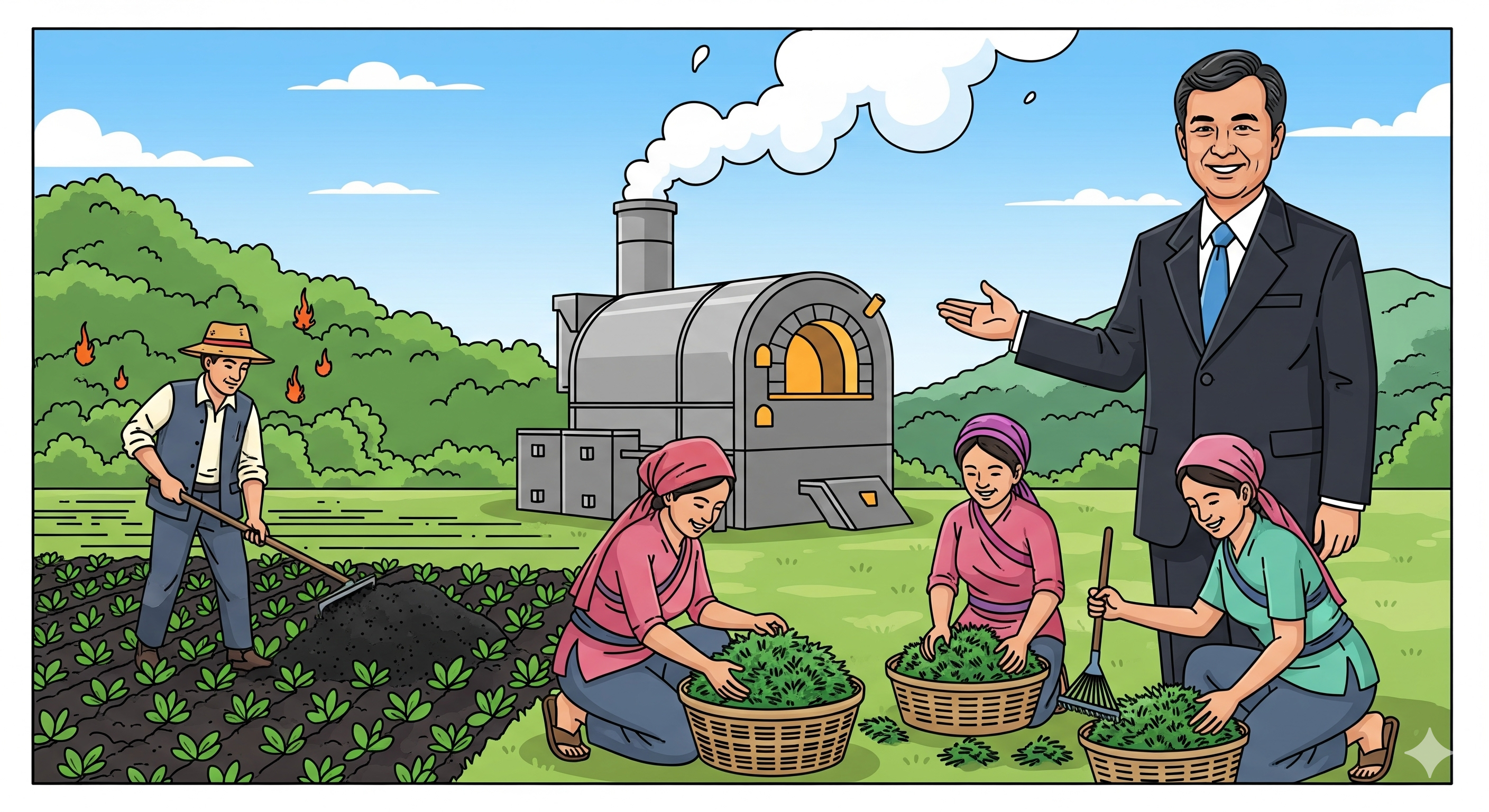
Himachal Pradesh has taken a pioneering step by launching the country’s first state-supported biocharBiochar is a carbon-rich material created from biomass decomposition in low-oxygen conditions. It has important applications in environmental remediation, soil improvement, agriculture, carbon sequestration, energy storage, and sustainable materials, promoting efficiency and reducing waste in various contexts while addressing climate change challenges. More program. The initiative, spearheaded by the state’s Chief Minister, is designed to serve a dual purpose: mitigating environmental risks and fostering economic growth.
The program’s primary focus is to utilize biomassBiomass is a complex biological organic or non-organic solid product derived from living or recently living organism and available naturally. Various types of wastes such as animal manure, waste paper, sludge and many industrial wastes are also treated as biomass because like natural biomass these More, particularly from pine needles, a major contributor to devastating forest fires in the region. By converting this material into biochar through a process called pyrolysisPyrolysis is a thermochemical process that converts waste biomass into bio-char, bio-oil, and pyro-gas. It offers significant advantages in waste valorization, turning low-value materials into economically valuable resources. Its versatility allows for tailored products based on operational conditions, presenting itself as a cost-effective and efficient More, the government can effectively reduce fire hazards. This approach turns a hazardous waste product into a valuable resource, aligning with the principles of a circular economy. The resulting biochar can be used as a soil amendmentA soil amendment is any material added to the soil to enhance its physical or chemical properties, improving its suitability for plant growth. Biochar is considered a soil amendment as it can improve soil structure, water retention, nutrient availability, and microbial activity. More, enhancing agricultural productivity and locking carbon into the ground, a key component of carbon farming strategies.
A tripartite agreement has reportedly been signed to establish a biochar production plant at Neri in Hamirpur. This facility is planned to be operational within six months of the program’s launch. The establishment of this plant and the broader program is not just an environmental solution; it is also a significant employment generator for the local population. The project is expected to create jobs for people involved in collecting the pine needles and other biomass, as well as in the operation and maintenance of the biochar plants.
This state-backed venture places Himachal Pradesh at the forefront of sustainable development and climate action in India. It builds on previous state initiatives aimed at promoting natural farming and environmental conservation. The government has been commended for its focus on strengthening the rural economy and empowering the farming community through various schemes, and this biochar program is a natural extension of that vision. By integrating a clean technology solution with local economic and ecological needs, the program serves as a model for other states looking to tackle similar challenges.




Leave a Reply