
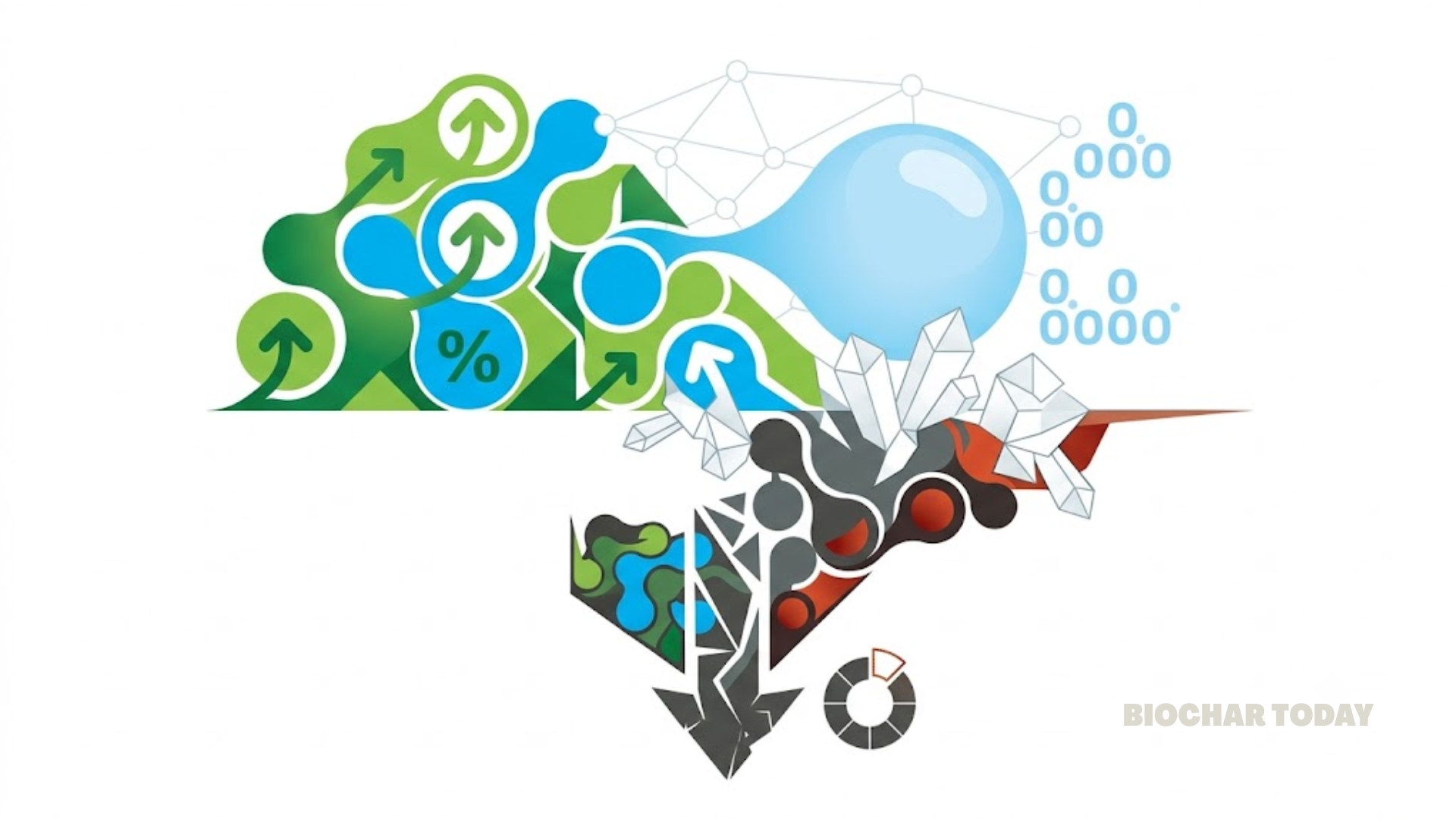
Key Takeaways
- Saline soil slows down the natural breakdown and changing of biocharBiochar is a carbon-rich material created from biomass decomposition in low-oxygen conditions. It has important applications in environmental remediation, soil improvement, agriculture, carbon sequestration, energy storage, and sustainable materials, promoting efficiency and reducing waste in various contexts while addressing climate change challenges. More over time.
- Highly salty environments preserve more carbon and the original molecular structures of biochar.
- High soil salt levels lower the activity and overall variety of living microbes inside the biochar.
- Salt-tolerant bacteria form tightly connected networks under high salinity while fungi are reduced.
- Minerals and salts build up a physical shield on the biochar surface to protect it from oxidation.
The aging of biochar in soil typically alters its structural and chemical performance, which can reduce its capability to remediate poor soil over long periods. In agricultural regions affected by high salt concentrations, understanding how environmental stress factors alter biochar stability is essential for optimizing long-term carbon sequestration and soil health. However, a major challenge in deploying these amendments is that natural weathering processes, such as recurring wet-dry events and microbial colonization, normally accelerate the degradation of the biochar matrix, causing structural collapse and a severe loss of foundational carbon elements. This rapid transformation remains a significant hurdle for sustainable land management in degraded coastal or arid zones.
To determine how different salinity levels affect this degradation, researchers evaluated the chemical and biological transformations of wheat straw biochar mixed into low, moderate, and high-salinity loam soils over forty complete wet-dry simulation cycles. The laboratory cycles effectively replicated eight years of natural field weathering in coastal environments. The team focused heavily on investigating the variations in elemental contents, examining changes in surface functional groups via spectroscopy, and monitoring the specific structural shifts within the colonizing bacterial and fungal communities via high-throughput genomic sequencing.
The experimental findings demonstrated that increased soil salinization actively retards the aging and degradation pathways of biochar. Biochar exposed to highly saline soils preserved significantly more aromaticity, total carbon content, and surface carbon-to-carbon bonds than biochar aged in low-salinity controls. Specifically, the oxygen-to-carbon ratio was 9.82 percent lower in highly saline conditions, proving that salt limits oxidation. Furthermore, high salt levels blocked the biochar pores with mineral deposits like quartz and calcite, creating a protective physical shield that restricted oxygen contact and guarded the carbon matrix against environmental breakdown.
Biologically, the high salt concentrations severely restricted the abundance, activity, and species richness of colonizing microorganisms within the biochar microhabitats. Fungal communities proved highly sensitive to salt stress, showing a sharp drop in gene copy numbers and network complexity as salinization increased. This restriction of fungi directly contributed to the slower aging rate, as these organisms are typically responsible for breaking down tough aromatic carbon components. Conversely, while salinity eliminated sensitive rare microbes, it forced salt-tolerant bacteria into highly connected, stable specialist networks. Ultimately, the study reveals that applying biochar to highly saline fields is a highly effective, stable strategy because the salt itself preserves the biochar, reducing soil carbon emissions and supporting long-term environmental remediation.
Source: Wang, R., Li, H., Cui, N., Tang, C., Wang, X., Xie, W., & Yao, R. (2026). Increased soil salinization slows biochar aging and limits microbial colonization. Biochar, 8(1), 72.





Leave a Reply