
Key Takeaways
- Biochar’s Climate Benefit is Measurable and Permanent: Scientists are moving beyond guessing how long biocharBiochar is a carbon-rich material created from biomass decomposition in low-oxygen conditions. It has important applications in environmental remediation, soil improvement, agriculture, carbon sequestration, energy storage, and sustainable materials, promoting efficiency and reducing waste in various contexts while addressing climate change challenges. More stores carbon. The new method directly measures the most stable, “rock-like” carbon fraction (inertinite carbon), which is expected to last over millennia.
- Sampling More Means More Creditable Carbon: The amount of carbon a biochar producer can officially claim is heavily influenced by how often they test their product. Doubling the sampling frequency can often more than halve the required “safety deduction,” making their carbon removal claims more valuable.
- High-Frequency Sampling Reduces Uncertainty to Below 1%: A key finding is that by sampling twice a week, the uncertainty deduction (safety margin) for a typical production batch can be reduced to less than 1%, ensuring carbon credits are highly accurate and trustworthy.
- A Consistent Method for a Global Market: The study formalizes the process, making it easier for biochar producers worldwide to get their carbon credits certified under a rigorous, science-backed standard, which builds confidence in the emerging carbon removal market.
For biochar to realize its full potential in tackling climate change, we must accurately and reliably verify its ability to store carbon long-term. This long-term storage is known as carbon permanence. A study published in the International Journal of Coal Geology by Hamed Sanei and colleagues addresses this crucial challenge by formalizing a direct measurement method for stable carbon and providing a framework to quantify the uncertainty in carbon dioxide removal (CDR) claims.
Current methods for assessing biochar permanence often rely on decay models based on short-term lab experiments, which are limited in their ability to project the stable carbon fraction’s fate over centuries. The new approach, called the Inertinite Benchmarking methodology instead directly quantifies the highly stable carbon component. This stable fraction is referred to as inertinite carbon (CInert), which consists of highly aromatized and condensed carbon structures—analogous to geologically stable materials found in sedimentary rocks.
The IBR$ method is a two-pronged analytical approach. First, thermochemical analysis (like Rock-Eval 6 pyrolysisPyrolysis is a thermochemical process that converts waste biomass into bio-char, bio-oil, and pyro-gas. It offers significant advantages in waste valorization, turning low-value materials into economically valuable resources. Its versatility allows for tailored products based on operational conditions, presenting itself as a cost-effective and efficient More) is used on one subsample to measure the reactive organic carbon which is the labile (less stable) fraction prone to short-term degradation. Second, incident-light microscopy is used on a second subsample to measure the random reflectance (Ro) of the solid carbonized organic matter. Reflectance values greater than 2.0% (Ro>2.0%) define the stable inertinite fraction after excluding the reactive organic carbon. This Ro>2.0% threshold marks the lower boundary of the inertinite range, indicating a highly carbonized and chemically resistant structure.
To ensure the measurement of this stable fraction is both precise and reproducible across different labs and operators, the study introduces the use of Kernel Density Estimation (KDE) to process the Ro distribution data. The results from a case study comparing two operators showed that while direct frequency counting of Ro data led to up to a 30% relative difference in the intermediate “semi-inertinite” fraction, the KDE-derived values reduced the difference to less than 1.5% for the crucial inertinite fraction (FRo>2). This computational smoothing is key to standardizing the method, particularly for heterogeneous, industrial biochars.
The most significant finding addresses the practical, real-world issue of variability in biochar production. Since the CDR credit depends directly on the measured CInert content, any uncertainty from sampling variability within a production batch must be quantified and accounted for. The researchers developed a Monte Carlo simulation model that evaluates this uncertainty based on the Coefficient of Variation (CV) and the sampling frequency. The model then dictates a statistically justified safety margin that must be deducted from the reported mean CDR value to ensure conservative and reliable crediting with 95% confidence.
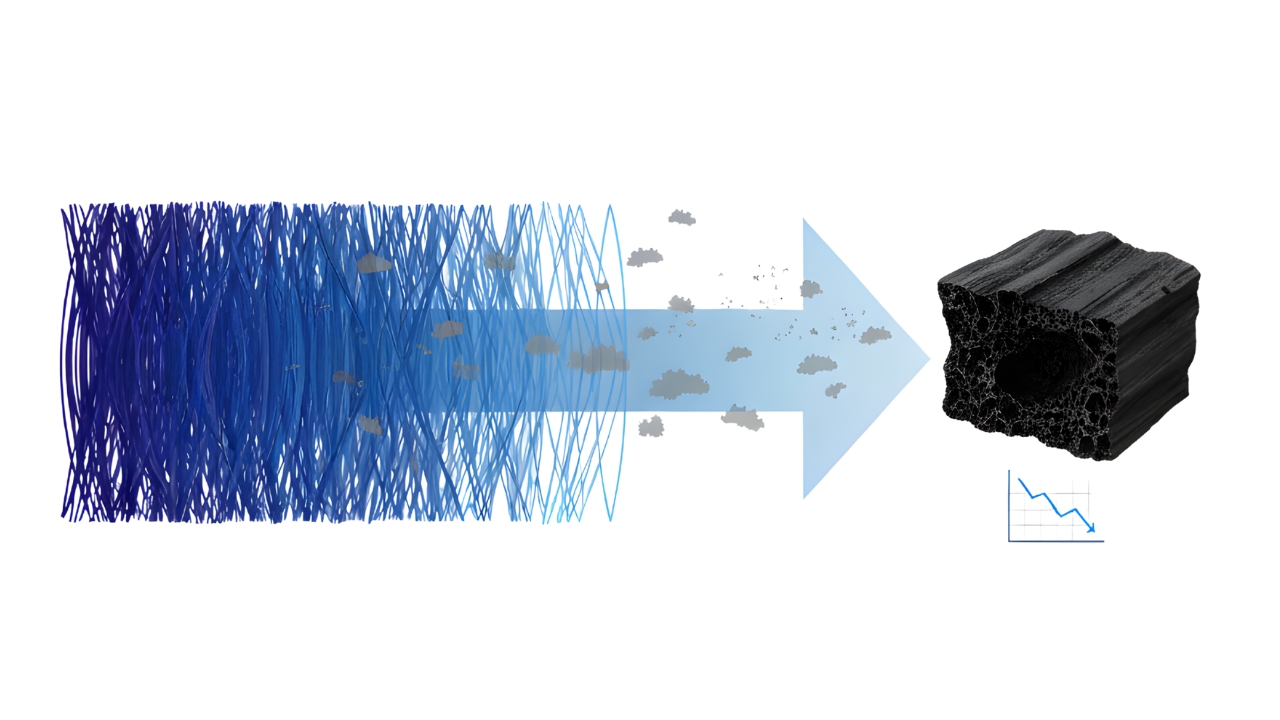
The simulation clearly shows the powerful inverse relationship between sampling frequency and uncertainty. In a case study of a biochar facility with a mean CInert of 80.5 dry wt% and a CV of 4.1%, annual sampling required a 6.6% safety margin deduction from the credited CDR. By increasing the sampling frequency to once per month (12 samples per year), the required safety margin dropped significantly to 1.9%. The greatest improvement came with a high sampling frequency of twice per week (96 samples per year), which reduced the safety margin to a minimal 0.7%. This finding offers a clear, quantitative incentive: higher sampling frequency directly translates into a greater share of creditable CDR for the producer, as the uncertainty is reduced. This novel framework provides the transparency and rigor needed for assessing long-term biochar permanence and aligns with emerging international certification standards.
Source: Sanei, H., Wojtaszek-Kalaitzidi, M., Schovsbo, N. H., Stenshøj, R., Zhou, Z., Schmidt, H.-P., Hagemann, N., Chiaramonti, D., Kiaitsis, T., Rudra, A., Lehner, A. J., Brown, R. W., Gill, S., Dorr, E., Kalaitzidis, S., Goodarzi, F., & Petersen, H. I. (2025). Quantifying inertinite carbon in biochar. International Journal of Coal Geology, 310, 104886



Leave a Reply