
Key Takeaways
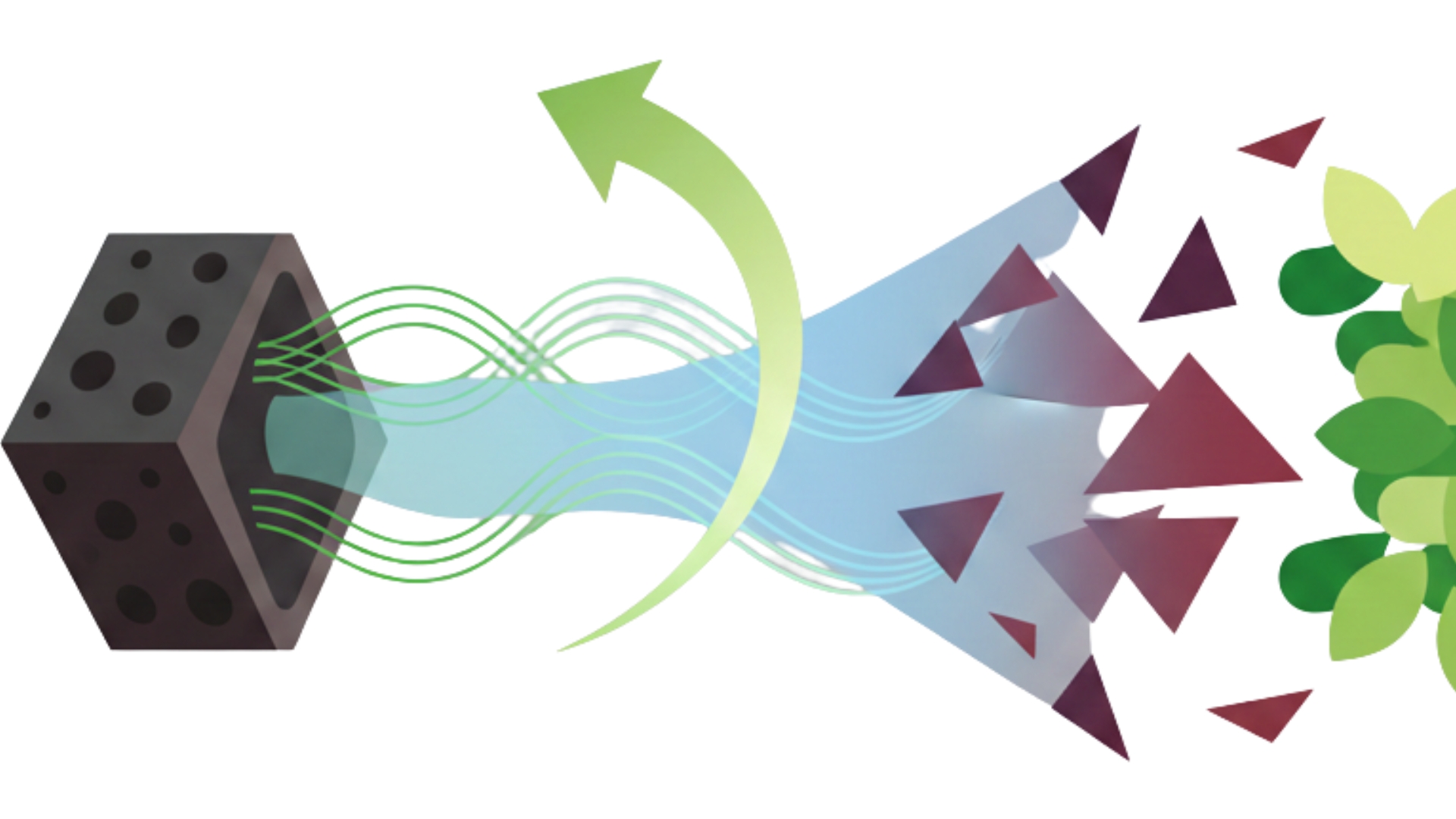
- Scientists developed a modified biocharBiochar is a carbon-rich material created from biomass decomposition in low-oxygen conditions. It has important applications in environmental remediation, soil improvement, agriculture, carbon sequestration, energy storage, and sustainable materials, promoting efficiency and reducing waste in various contexts while addressing climate change challenges. More that can hold 311.46 units of protective enzymes per gram of material.
- This new technology completely removes the primary toxic chemical that stunts pepper growth within just six hours.
- The system restores pepper seed germination and root growth to healthy levels by neutralizing harmful soil acids.
- This stable enzyme-biochar combination remains effective across different temperatures and can be reused up to seven times.
- The process turns toxic soil chemicals into smaller, harmless organic molecules through a safe and natural catalytic reaction.
The challenge of continuous cropping has long plagued the pepper industry, as the natural buildup of self-toxic phenolic acids in the soil severely inhibits plant growth and can lead to total crop failure. In a significant breakthrough published in the journal Biochar, researchers Xueyan Zhang, Shiyu Lv, Tian Yuan, Kerong Fu, Pu Yang, Yanpo Yao, Junfeng Liang, Tongguo Gao, and Feng Wang describe a green technology designed to clean these soils. By utilizing a specially modified biochar derived from tobacco stems, the team created a highly porous carrier that effectively anchors horseradish peroxidase, a natural enzyme capable of breaking down these soil toxins. This study highlights a sustainable biological solution that outperforms traditional physical and chemical soil treatments which often require excessive energy or create secondary pollution.
The primary quantitative achievement of this research is the development of a carbonate-modified biochar that supports a remarkably high enzyme loading capacity. The modified material reached a maximum loading of 311.46 units per gram, a significant improvement over standard biochar carriers. This high concentration of enzymes allows the system to be incredibly efficient; when applied at a specific dosage, it achieved 100 percent removal of ferulic acid, the most common soil toxin in pepper fields, in just six hours. Furthermore, the researchers found that this system is effective against a broad range of other harmful phenolic acids, making it a versatile tool for farmers struggling with declining yields in long-term cultivation plots.
Beyond its immediate cleaning power, the stability of this biochar-enzyme combination is a critical factor for its practical use in the field. Free enzymes are notoriously delicate and lose their effectiveness quickly when exposed to heat or varying acidity levels. However, the modified biochar acts as a protective shield, allowing the enzymes to retain over 61 percent of their activity even at a temperature of 70 degrees Celsius, whereas unprotected enzymes lose nearly 70 percent of their function under the same conditions. This resilience ensures that the treatment remains effective even in hot summer soil conditions. The study also demonstrated the recyclability of the material, showing it could be reused through seven consecutive cycles while still maintaining a meaningful level of toxic removal activity.
The most tangible result for agriculture is the restoration of crop health. The research proved that the inhibitory effects of soil toxins on pepper seeds were completely neutralized following treatment. Seeds soaked in toxic ferulic acid saw their germination rates drop by 17 percent and root lengths decrease significantly, but these healthy growth patterns were fully restored to control levels after the biochar system was introduced. Sophisticated analysis confirmed that the toxic acids were not just trapped but were actually broken down into smaller, less toxic organic molecules like fumaric and oxalic acid. This detoxification process marks a major step forward in creating a circular, green remediation technology that can transition from successful laboratory trials to real-world agricultural applications.
Source: Zhang, X., Lv, S., Yuan, T., Fu, K., Yang, P., Yao, Y., Liang, J., Gao, T., & Wang, F. (2026). Efficient allelochemical removal from continuous capsicum cultivation using horseradish peroxidase-loaded biochar. Biochar, 8(2).




Leave a Reply