
Key Takeaways
- Agro-forestry residues from Portugal can be converted into high-energy solid fuels.
- BiocharBiochar is a carbon-rich material created from biomass decomposition in low-oxygen conditions. It has important applications in environmental remediation, soil improvement, agriculture, carbon sequestration, energy storage, and sustainable materials, promoting efficiency and reducing waste in various contexts while addressing climate change challenges. More made from hazelnut shells provides the highest energy density, comparable to coal.
- Manure-derived biochar is unsuitable as a standalone fuel due to its high ashAsh is the non-combustible inorganic residue that remains after organic matter, like wood or biomass, is completely burned. It consists mainly of minerals and is different from biochar, which is produced through incomplete combustion. Ash Ash is the residue that remains after the complete More content.
- The process of slow-cooling biochar can significantly boost its carbon content and fuel quality.
- The best biochars exceed the energy standards for premium wood pellets but require post-treatment to meet their strict ash and nitrogen limits.
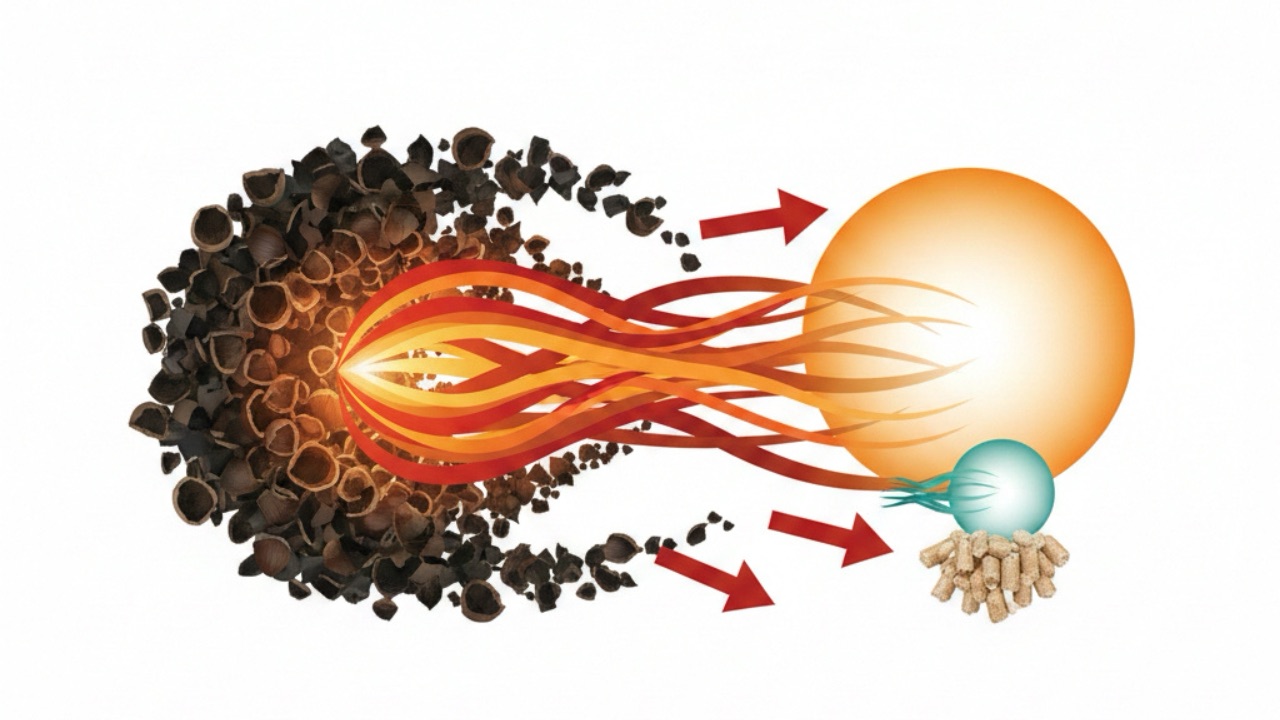
A paper titled “Thermochemical evaluation of biochars properties from Portuguese agro-forestry residues for solid fuel applications,” published in Scientific Reports by Amadeu D. S. Borges, Mariana Cardoso, and Miguel Oliveira, details a comparative characterization of biochars derived from regionally significant Portuguese feedstocks: hazelnut shell, pine, pinecone, oak pruning waste, and swine manure. The research confirms the strong potential of woody residues for conversion into high-quality solid fuels, directly supporting regional decarbonization goals and circular economy strategies. All feedstocks underwent pyrolysisPyrolysis is a thermochemical process that converts waste biomass into bio-char, bio-oil, and pyro-gas. It offers significant advantages in waste valorization, turning low-value materials into economically valuable resources. Its versatility allows for tailored products based on operational conditions, presenting itself as a cost-effective and efficient More at a standardized temperature to ensure direct comparison of their inherent fuel upgrading efficiency.
The study’s findings highlight a clear hierarchy in the energy potential of the tested biomasses. Woody-based biochars consistently demonstrated superior fuel characteristics, primarily due to their lignocellulosic composition. The hazelnut shell biochar emerged as the top-tier fuel, exhibiting the highest measured Higher Heating Value (HHV) of 32.20 MJ/kg and a Lower Heating Value (LHV) of 31.64 MJ/kg. This exceptional energy density stems from its high fixed carbon content of 80.43% and low ash content of only 2.54%. Pinecone biochar followed closely, with an LHV of 29.29 MJ/kg. These superior energy characteristics are directly linked to high degrees of carbonization, evidenced by the low H/C and O/C ratios observed in the Van Krevelen diagram.
In sharp contrast, swine manure biochar proved unsuitable for solid fuel applications. Its high content of inorganic minerals concentrated during pyrolysis, resulting in an extremely high ash content of 48.34% and a significantly diluted organic fuel component. Consequently, the manure biochar had the lowest fixed carbon content (36.12%) and a notably low LHV of only 12.05 MJ/kg. This difference suggests a functional split in valorization: woody biochars are optimized for energy (Level 1 and 2), while manure biochar is best suited for soil amendmentA soil amendment is any material added to the soil to enhance its physical or chemical properties, improving its suitability for plant growth. Biochar is considered a soil amendment as it can improve soil structure, water retention, nutrient availability, and microbial activity. More (Level 3), leveraging its high mineral content as a nutrient source.
A compelling preliminary finding was the notable impact of post-pyrolysis cooling on hazelnut shell biochar. The single sample that underwent slow-cooling over approximately 48 hours, as opposed to rapid water-bath cooling, showed a significant enhancement in quality. Its fixed carbon increased from 80.43% to 82.89%, while its total carbon rose from 76.88% to 82.97%. This enhancement, visually confirmed by a shift toward a higher degree of carbonization on the Van Krevelen diagram, suggests that the cooling phase is not chemically inert. Researchers propose that the prolonged, high-temperature residence timeResidence time refers to the duration that the biomass is heated during the pyrolysis process. The residence time can influence the properties of the biochar produced. More of pyrolysis vapors promotes their secondary decomposition and condensation onto the solid char surface, a process called secondary aromatization. This opens a promising new avenue for optimizing biochar quality without needing to increase the peak pyrolysis temperature.
The wood biochars’ performance was also benchmarked against the ISO 17225-2 standard for premium wood pellets. Although the hazelnut shell and pinecone biochars far exceeded the minimum LHV requirement of 16.5 MJ/kg, they did not meet the stringent limits for ash and nitrogen content. This highlights a regulatory gap for high-quality biochar, suggesting a need for dedicated industry standards or post-treatment processes to achieve premium commercialization. In conclusion, the study strongly supports the use of regional woody residues as a high-potential solid biofuel source, offering a strategic framework for managing Northern Portugal’s diverse biomassBiomass is a complex biological organic or non-organic solid product derived from living or recently living organism and available naturally. Various types of wastes such as animal manure, waste paper, sludge and many industrial wastes are also treated as biomass because like natural biomass these More waste.
Source: Borges, A. D. S., Cardoso, M., & Oliveira, M. (2025). Thermochemical evaluation of biochars properties from Portuguese agro-forestry residues for solid fuel applications. Scientific Reports.



Leave a Reply