
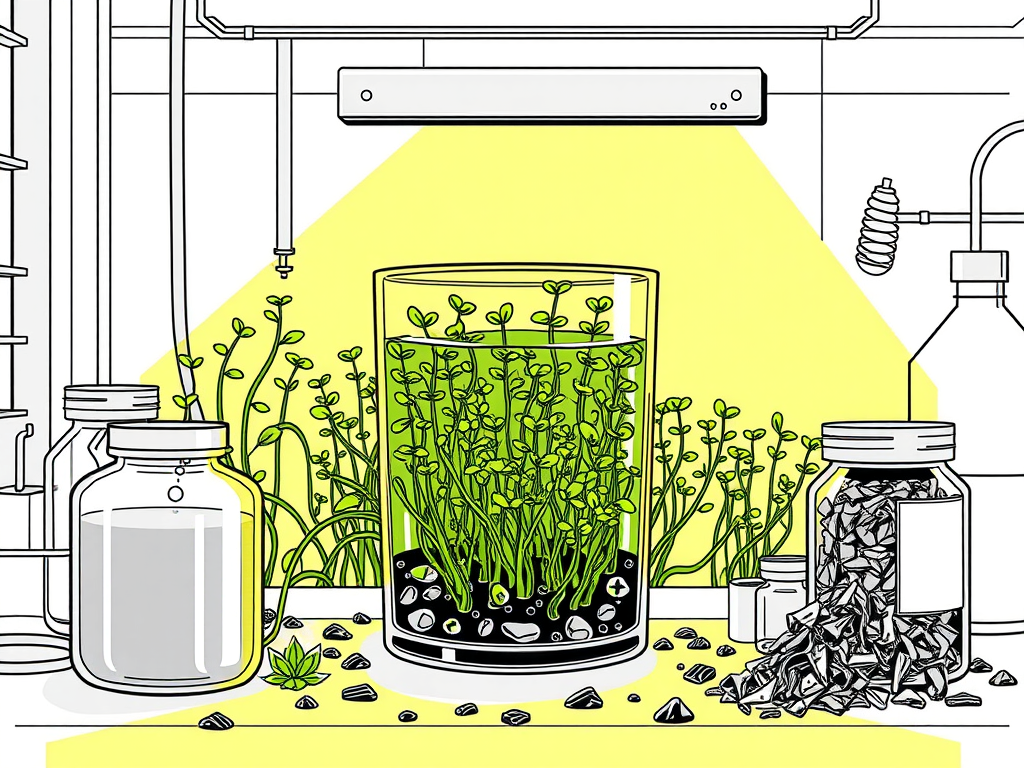
In a promising stride towards a circular economy, researchers have successfully demonstrated an innovative method to transform everyday kitchen waste into valuable resources: carbon-rich biocharBiochar is a carbon-rich material created from biomass decomposition in low-oxygen conditions. It has important applications in environmental remediation, soil improvement, agriculture, carbon sequestration, energy storage, and sustainable materials, promoting efficiency and reducing waste in various contexts while addressing climate change challenges. More and biodiesel. Published in the International Journal of Environmental Research, a study by Praburaman Loganathan, Eman Alhomaidi, Muhammad Fazle Rabbee, Rajesh Ramasamy, Muthu Thiruvengadam, and Benod Kumar Kondapavuluri highlights the potential of using the cyanobacterium Oscillatoria sp. to upcycle kitchen waste. This integrated biorefinery model not only minimizes waste but also maximizes the production of high-value products.
The study investigated the growth of Oscillatoria sp. in a standard BG-11 medium and in various concentrations of hydrolysate of kitchen waste (HKW). The results were compelling: while the synthetic medium yielded 1410 mg/L of biomassBiomass is a complex biological organic or non-organic solid product derived from living or recently living organism and available naturally. Various types of wastes such as animal manure, waste paper, sludge and many industrial wastes are also treated as biomass because like natural biomass these More, the optimal 90:10 (medium: HKW v/v) concentration of HKW boosted the biomass yield significantly to 1842 mg/L. This higher yield translated to increased biomass productivity, with 87.1 mg/L/d observed in the 90:10 HKW condition compared to 65.5 mg/L/d in the control. This enhanced growth is attributed to the rich carbon and nutrient content present in kitchen waste, which ameliorates algal growth.
Beyond biomass, the research also focused on lipid accumulation and subsequent biodiesel production. The total lipid extracted from the control condition was 11.28 wt.%, whereas the 90:10 HKW condition yielded a higher lipid content of 15.71 wt.%. This increased lipid content directly correlated with higher biodiesel conversion. Biodiesel obtained from the extracted lipids was 60.49 wt.% in the HKW-supplemented condition, which is notably higher than the control’s 56.74 wt.%. The fatty acid analysis of the biodiesel revealed an important trend: the HKW-supplemented medium led to an increase in desirable monounsaturated fatty acids, such as palmitoleic acid (C16:1), oleic acid (C18:1), linoleic acid (C18:2), linolenic acid (C18:3), eicosadienoic acid (C20:2), and arachidonic acid (C20:4). These specific fatty acids are crucial for producing high-quality biodiesel with improved oxidative stability and cold-temperature properties.
In a further step towards a circular economy, the defatted biomass from the 90:10 HKW condition was converted into biochar through a slow pyrolysisPyrolysis is a thermochemical process that converts waste biomass into bio-char, bio-oil, and pyro-gas. It offers significant advantages in waste valorization, turning low-value materials into economically valuable resources. Its versatility allows for tailored products based on operational conditions, presenting itself as a cost-effective and efficient More process. The highest biochar yield of 52.05 wt.% was achieved at 450∘C and 40 minutes of pyrolysis. Elemental analysis of this biochar confirmed its carbon-rich nature, with 60.21% carbon content. This dual production of biodiesel and carbon-rich biochar from a single waste stream presents a compelling case for the integrated biorefinery model. The successful cultivation of Oscillatoria sp. using kitchen waste hydrolysate not only provides a sustainable source for biofuel but also offers a practical solution for solid waste reduction and nutrient recovery. This research paves the way for a more environmentally friendly and economically viable approach to waste management and renewable energy production.
Source: Loganathan, P., Alhomaidi, E., Rabbee, M. F., Ramasamy, R., Thiruvengadam, M., & Kondapavuluri, B. K. (2025). Slow Pyrolytic Upcycling of Food Waste-Grown Oscillatoria sp. Biomass into Carbon-Rich Biochar and Biodiesel. International Journal of Environmental Research, 19(154).


![Eucalyptus Wood Waste-Derived Biochar Achieves a Ninety-Eight Percent Removal Efficiency for Benzo[ghi]perylene in Vehicle-Wash Wastewater](https://biochartoday.com/wp-content/uploads/2026/10/SCIENCE-BLOGS-2026-2026-10-19T160523.703.jpg)

Leave a Reply