
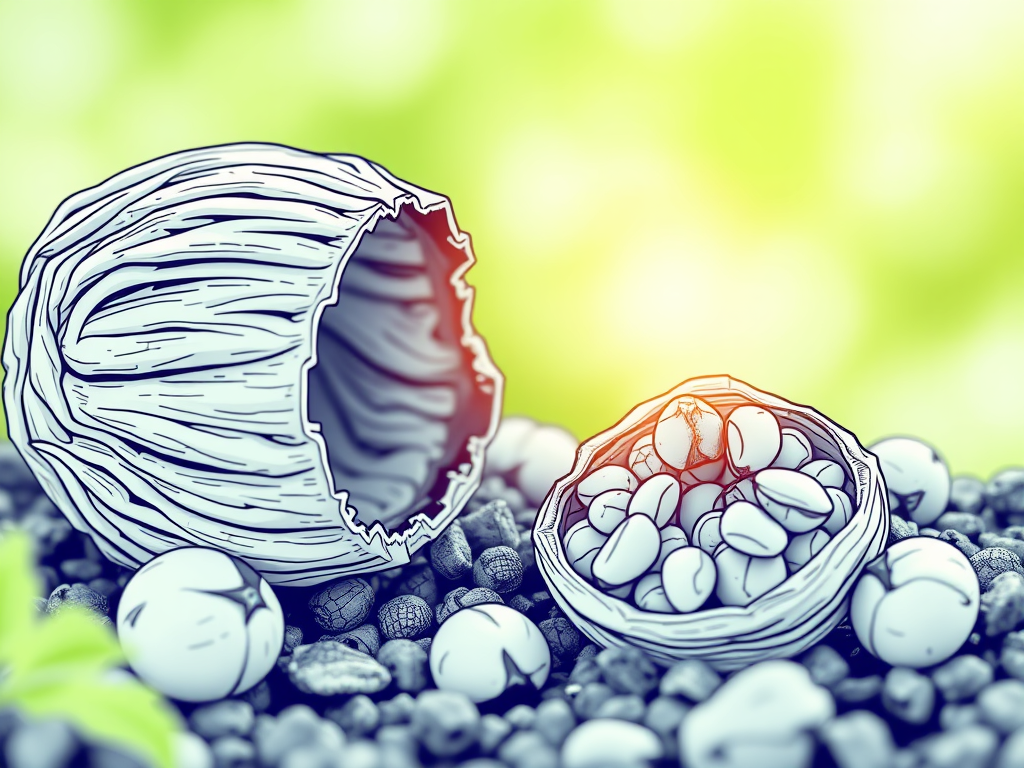
In a recent study published in the journal BiocharBiochar is a carbon-rich material created from biomass decomposition in low-oxygen conditions. It has important applications in environmental remediation, soil improvement, agriculture, carbon sequestration, energy storage, and sustainable materials, promoting efficiency and reducing waste in various contexts while addressing climate change challenges. More, researchers including Jaime Ñanculeo, Teresa Andreu, and María Eugenia González have developed a novel electrocatalyst using hazelnut shell waste to enhance the production of green hydrogen. This innovative approach not only addresses the growing demand for sustainable energy solutions but also offers a method to valorize agro-industrial waste. The study reveals that the catalyst, derived from hazelnut shells, demonstrates remarkable efficiency in hydrogen evolution reaction (HER) and oxygen evolution reaction (OER), crucial processes in electrolytic hydrogen production.
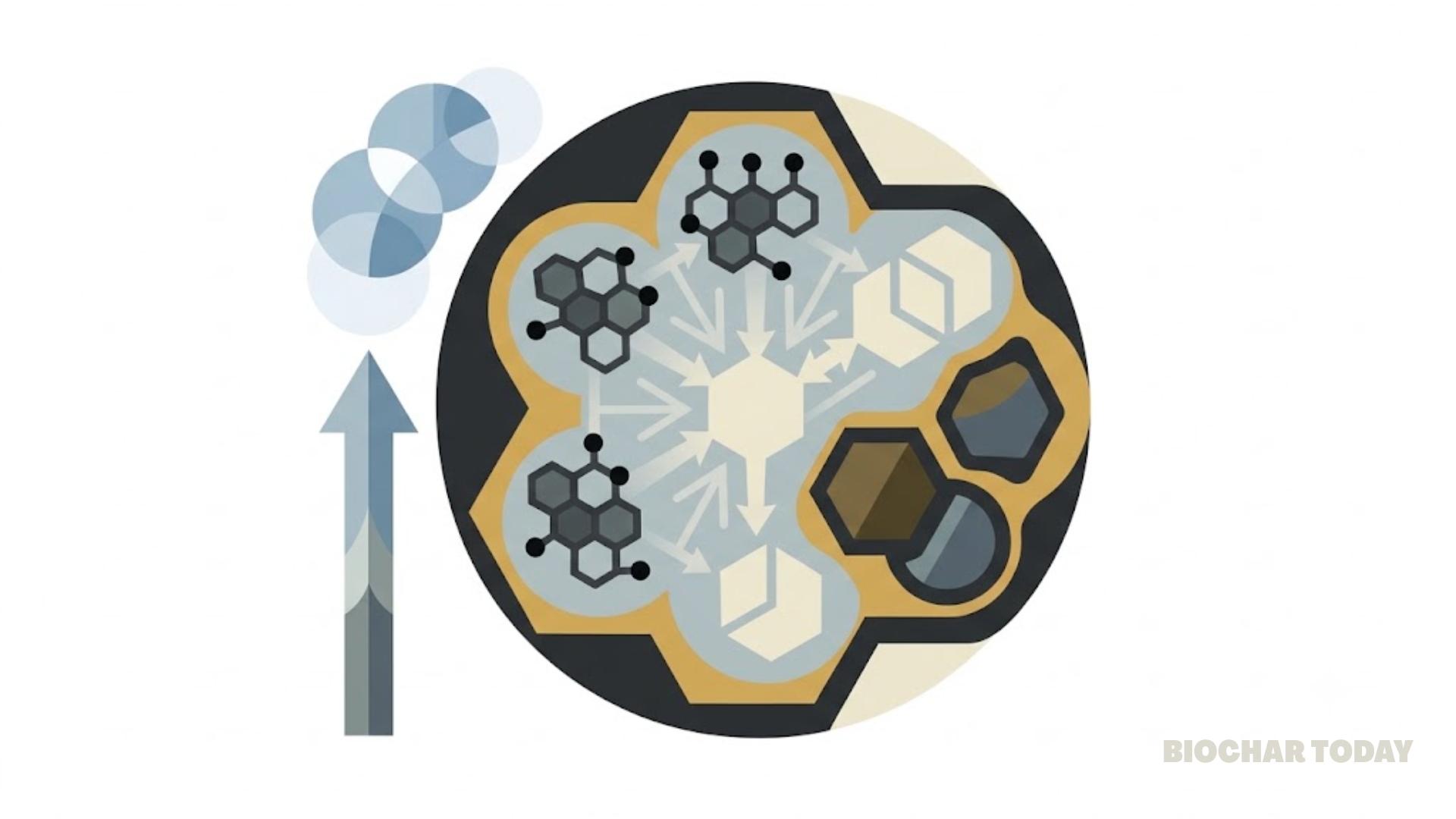
The key to this breakthrough lies in the unique properties of biochar produced from the pyrolysisPyrolysis is a thermochemical process that converts waste biomass into bio-char, bio-oil, and pyro-gas. It offers significant advantages in waste valorization, turning low-value materials into economically valuable resources. Its versatility allows for tailored products based on operational conditions, presenting itself as a cost-effective and efficient More of hazelnut shells. The activation process of biochar creates a highly porous structure with a large surface area . This extensive surface area allows for better dispersion of active catalytic sites and improves the transfer of reactants and products during the HER and OER processes. Furthermore, doping the biochar with nitrogen enhances its electronic properties, which significantly boosts its catalytic activity.
The researchers further enhanced the biochar by incorporating molybdenum (Mo) and cobalt (Co) to form a bifunctional electrocatalyst. This combination proved more effective than using either metal alone, demonstrating low overpotentials for HER (0.257 V) and OER (0.370 V) under alkaline conditions. These low overpotentials indicate that the catalyst facilitates the reactions with minimal energy loss, achieving high efficiency in hydrogen and oxygen production.
Electrochemical impedance spectroscopy (EIS) provided additional insights into the catalyst’s performance. The results showed a low charge transfer resistance for the Mo/Co catalyst, indicating that it efficiently facilitates the movement of electrons, a critical factor in electrocatalysis. This efficiency is attributed to the synergistic effect of Mo and Co, their uniform dispersion on the biochar support, and the material’s porous structure.
This research not only introduces a high-performance electrocatalyst but also highlights the potential for converting agro-industrial waste into valuable resources. By utilizing hazelnut shells, a byproduct of hazelnut consumption, the study contributes to developing a circular economy.
The quantitative results of this study underscore the potential of hazelnut shell-derived biochar as a support for highly efficient electrocatalysts. Further studies could also explore optimizing the catalyst’s composition and structure to achieve even greater efficiency and stability.
In conclusion, this research demonstrates a promising pathway for producing cost-effective and sustainable electrocatalysts from agro-industrial waste. The hazelnut shell-derived biochar catalyst offers a viable solution for enhancing green hydrogen production, bringing us closer to a cleaner and more sustainable energy future.
Source: Ñanculeo, J., Andreu, T., Sirés, I., Ramírez, A., Cea, M., Nahuelcura, B., … & González, M. E. (2025). Development of hazelnut shell-derived biochar to support a bifunctional MoCo electrocatalyst for HER/OER in alkaline medium. Biochar, 7(1), 1-18.




Leave a Reply