

The global agricultural sector faces the dual challenge of increasing food production while mitigating environmental harm caused by conventional practices and the enormous amounts of agricultural waste (AW) generated annually. A review published in Tropical and Subtropical Agroecosystems by Laura Elena Morales-Mendoza, Felipe Gallardo-López, Mario Alejandro Hernández-Chontal, and Rosa Isela Castillo-Zamudio, provides a global vision of agroecological practices (APs) for recycling AW, with a particular focus on the potential of biocharBiochar is a carbon-rich material created from biomass decomposition in low-oxygen conditions. It has important applications in environmental remediation, soil improvement, agriculture, carbon sequestration, energy storage, and sustainable materials, promoting efficiency and reducing waste in various contexts while addressing climate change challenges. More.
The study, which conducted a bibliometric analysis of 488 scientific publications from the Web of Science database (71% of which were published in the last four years ), identified key thematic clusters in AW management research: management, nitrogen, manure, carbon, compost, and soil. Among the various APs with potential for AW reintegration, anaerobic digestion (AD), composting, and biochar emerged as the most promising techniques. The authors stress that recycling AW is crucial for initiating an agroecological transition, promoting nutrient recycling into the soil, and recovering energy.
Biochar, produced through the thermochemical conversion (pyrolysisPyrolysis is a thermochemical process that converts waste biomass into bio-char, bio-oil, and pyro-gas. It offers significant advantages in waste valorization, turning low-value materials into economically valuable resources. Its versatility allows for tailored products based on operational conditions, presenting itself as a cost-effective and efficient More) of biomassBiomass is a complex biological organic or non-organic solid product derived from living or recently living organism and available naturally. Various types of wastes such as animal manure, waste paper, sludge and many industrial wastes are also treated as biomass because like natural biomass these More at temperatures above 250∘C in the absence or partial absence of oxygen, is highlighted as a low-density, carbon-rich porous material specifically created for soil fertilization and carbon sequestration. This AP has gained significant attention due to its potential to improve the physicochemical characteristics of soil, enhancing moisture retention, nutrient availability, aeration, and root penetration, thus becoming a potential nutrient reservoir.
One of the notable advantages of biochar technology is its high conversion rate for nutrients from plant biomass, wood, and manure. Research suggests that for increasing carbon content in soil, plant-based AW is particularly recommended for biochar production. Biochar has established itself in the organic fertilizer market as a promising technology for soil improvement, leading to increased crop yields, enhanced nutrient and water use efficiency, and the potential to sequester bioavailable metals and antibiotics in contaminated soils. The current scientific literature on biochar largely focuses on in-depth studies of how its production process influences its properties.
While biochar offers economic advantages by reducing the need for purchased fertilizers and adding value to crops, its production process can be more complex compared to composting and vermicomposting techniques. The profitability and desirability of biochar production remain uncertain and highly dependent on specific circumstances such as geographical location, resources used, project size, thermal processing conditions, agricultural practices, and consideration of external effects. This variability presents challenges for private investors.
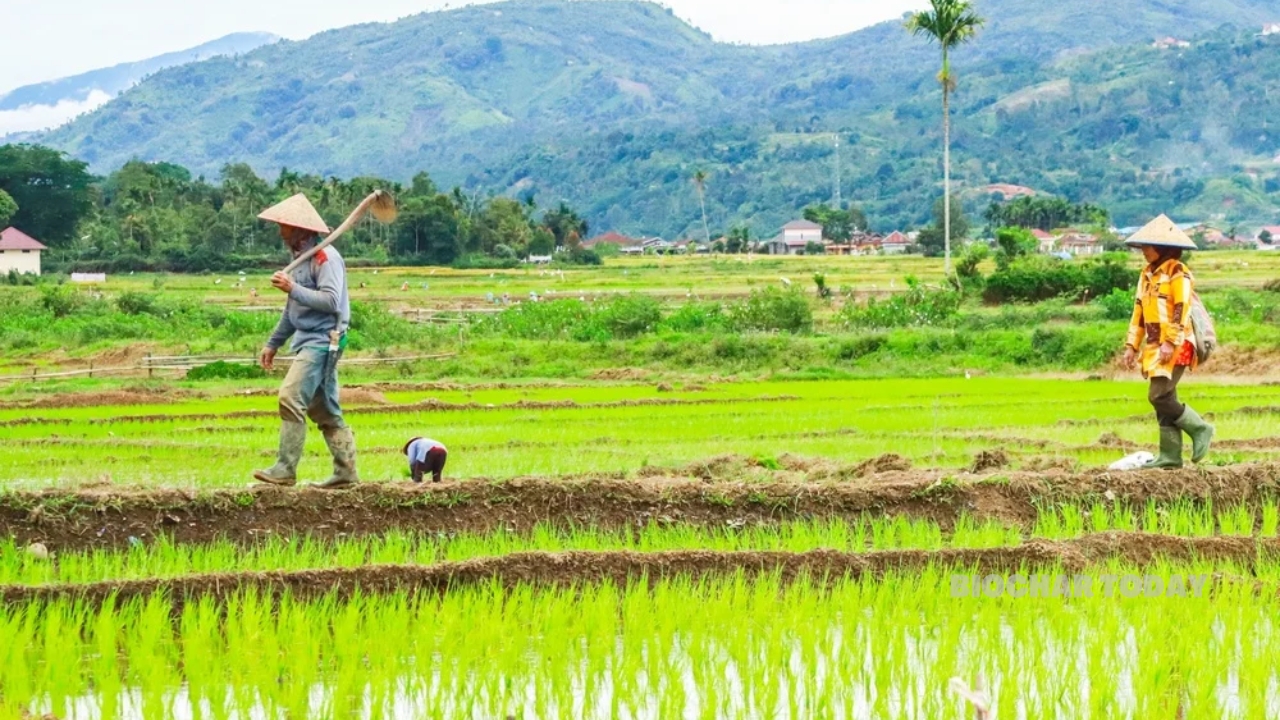
The study also delves into the territorial context for AP development, noting that most reviewed documents classify AWs by their applicability to each technology, with less research focusing on the optimal environments for developing each AP. For biochar, the review recommends its implementation in warm and tropical climatic regions. This is primarily because tropical crops generate waste suitable for pyrolysis, and these regions often provide the optimal temperatures for the pyrolysis process to produce a more suitable soil amendmentA soil amendment is any material added to the soil to enhance its physical or chemical properties, improving its suitability for plant growth. Biochar is considered a soil amendment as it can improve soil structure, water retention, nutrient availability, and microbial activity. More.
In summary, the research underscores the critical role of AW recycling for sustainable agroecosystems. Among the identified APs, while composting is a key technology for direct nutrient recycling, biochar stands out for its potential in carbon sequestration and soil remediation, offering significant contributions to a sustainable agricultural future.
Source: Morales-Mendoza, L. E., Gallardo-López, F., Hernández-Chontal, M. A., & Castillo-Zamudio, R. I. (2025). A GLOBAL VISION OF AGROECOLOGICAL PRACTICES FOR RECYCLING AGRICULTURAL WASTE: LIMITATIONS AND POTENTIALS IN TERRITORIAL CONTEXTS. Tropical and Subtropical Agroecosystems, 28(082)


Leave a Reply