
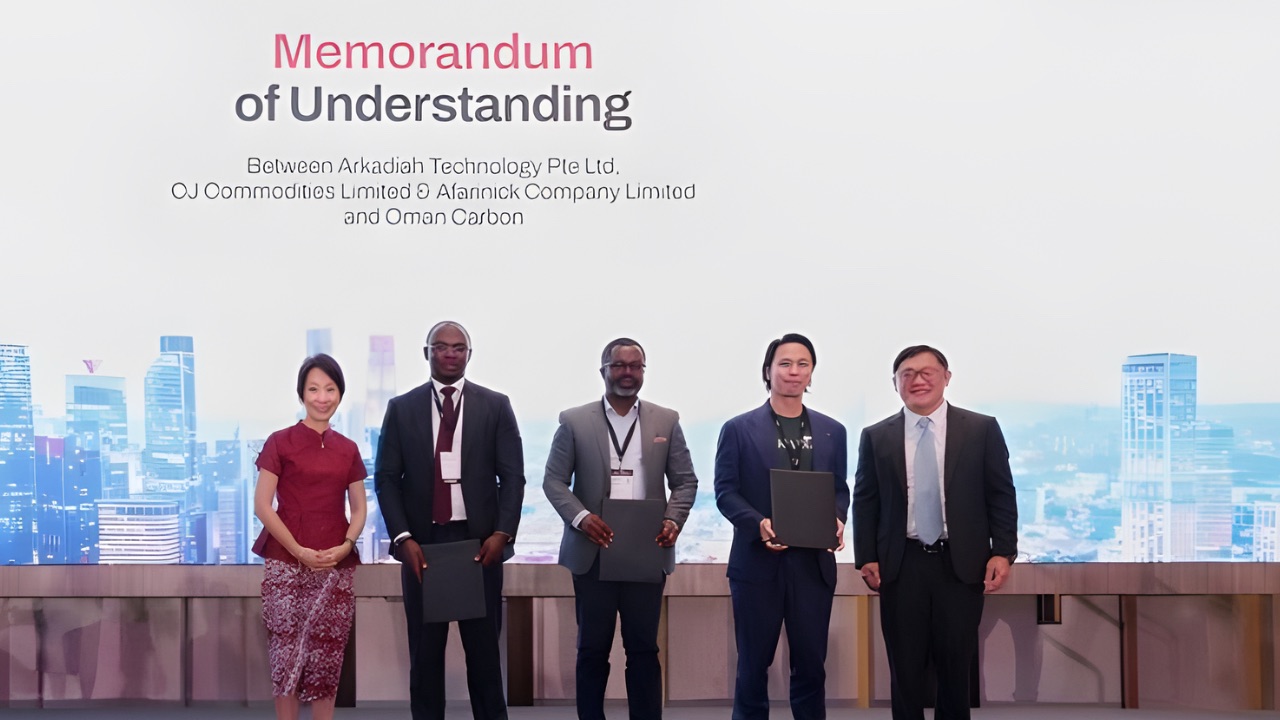
A significant new initiative is underway in Ghana, as a landmark Memorandum of Understanding (MoU) has been signed by three key players: Afarinick, CJ Commodities, and Oman Carbon. This collaboration, formalised at the Africa–Singapore Business Forum (ASBF) 2025, is poised to unlock high-integrity carbon assets from within the country’s vital cocoa value chain. The partnership is a strategic move to address climate change while creating a new, investable platform for sustainable development.
The core of the agreement is the launch of four scalable carbon projects: agroforestry, clean water, clean cookstoves, and most notably for the sector, biocharBiochar is a carbon-rich material created from biomass decomposition in low-oxygen conditions. It has important applications in environmental remediation, soil improvement, agriculture, carbon sequestration, energy storage, and sustainable materials, promoting efficiency and reducing waste in various contexts while addressing climate change challenges. More. These projects will be implemented across Ghana’s cocoa belt, with a goal of generating an estimated 4.0 million tCO₂e (tonnes of carbon dioxide equivalent) removals over the next ten years. This effort is projected to generate substantial value, estimated at US$50–80 million, for the stakeholders involved.
Oman Carbon will play a crucial role in the project’s success, leading the structuring and ensuring robust monitoring, reporting, and verification (MRV) processes. This commitment to transparency and traceability is designed to provide confidence to international investors and buyers, ensuring the carbon credits generated are high-integrity and Paris-aligned. The partnership offers a diversified portfolio of carbon asset classes and guarantees scalability, leveraging the extensive reach of Ghana’s cocoa sector.
This collaborative model has garnered support from high-level officials, including Ghana’s President, John Dramani Mahama, and Singapore’s Minister for Sustainability and the Environment, Grace Fu, highlighting the potential of such cross-border partnerships. The project is seen as more than just a sustainability drive; it represents a long-term value creation opportunity for farmers, investors, and the global climate effort. By integrating biochar and other carbon-negative practices, the initiative positions Ghana’s cocoa sector at the forefront of the global carbon market.





Leave a Reply