

Soil contamination with organic pollutants, from pesticides to crude oil, is a growing global problem that affects agricultural productivity and human health. A review published in the journal BiocharBiochar is a carbon-rich material created from biomass decomposition in low-oxygen conditions. It has important applications in environmental remediation, soil improvement, agriculture, carbon sequestration, energy storage, and sustainable materials, promoting efficiency and reducing waste in various contexts while addressing climate change challenges. More by Nandita Das and Piyush Pandey explores a promising, nature-based solution: rhizoremediation combined with biochar application. Their analysis highlights how this synergistic approach leverages plant-microbe interactions to accelerate the breakdown of harmful chemicals, all while supporting a rapidly expanding biochar market that is projected to grow to an estimated $3.99 billion by 2032.
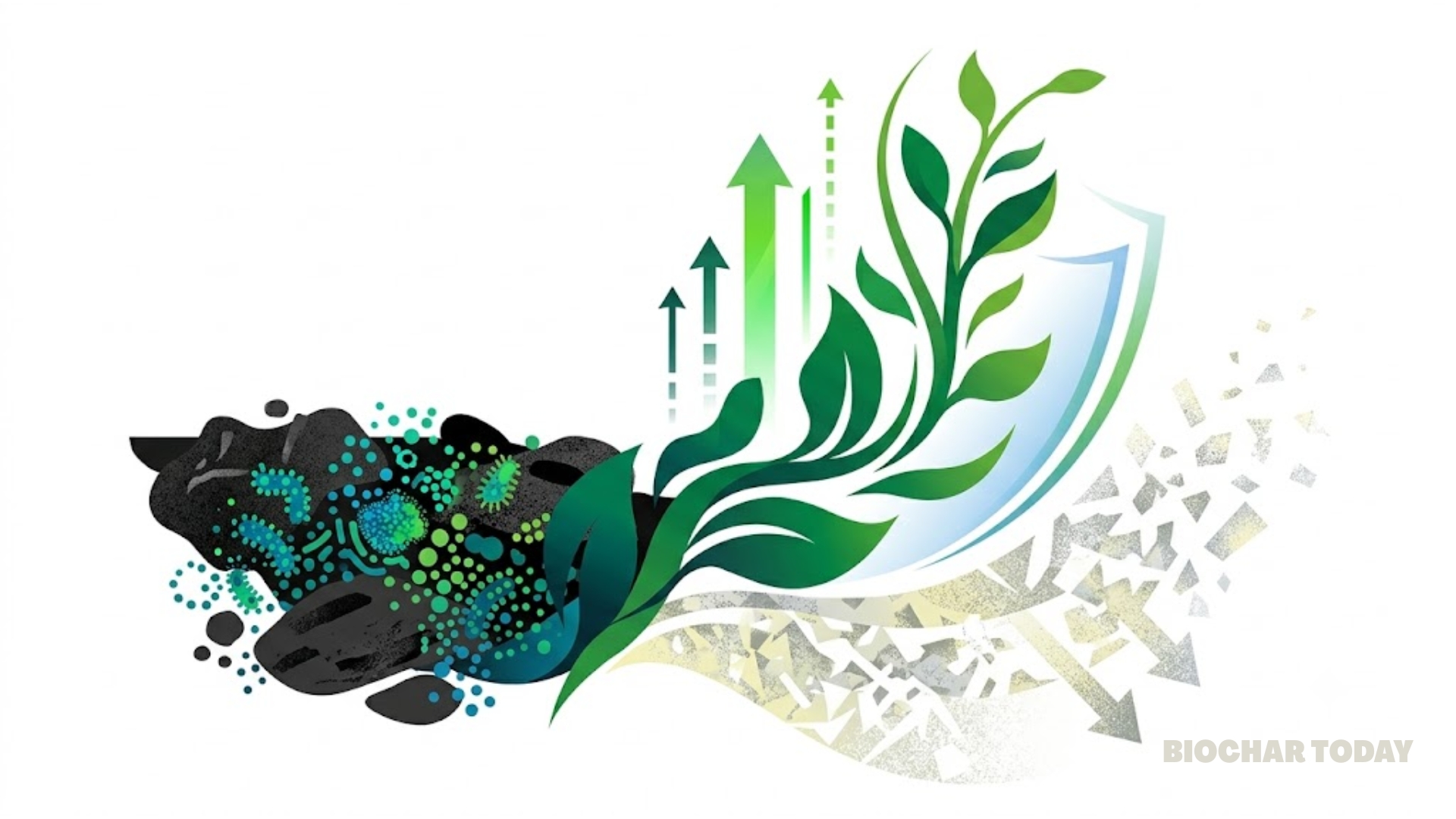
Rhizoremediation is a biological process that uses the symbiotic relationship between plant roots and soil microorganisms to degrade contaminants. While it’s a promising, low-cost method , its effectiveness can be limited by low microbial activity and the limited bioavailability of pollutants. This is where biochar comes in. Biochar acts as a catalyst in this process by enhancing the bioavailability of organic chemicals and stimulating soil microbes. It also improves the soil’s physical properties, such as water-holding capacity, and provides essential nutrients to both plants and microbes. The synergistic application of biochar and rhizoremediation can therefore significantly increase contaminant degradation and promote plant growth.
The review highlights several examples of this combined approach successfully degrading various organic pollutants. For instance, in soil contaminated with polycyclic aromatic hydrocarbons (PAHs), biochar amendments reduced the levels of these pollutants by more than 50%. One study showed that adding 500°C wheat straw biochar to PAH-contaminated soil planted with ryegrass enhanced remediation, reducing PAHs by 62.5%. For crude oil contamination, biochar treatments led to a 47% to 76% removal rate of total petroleum hydrocarbons (TPH), significantly higher than control treatments. The use of biochar also enhanced the removal of pesticides like atrazine and antibiotics, with one system using magnetic chicken-bone biochar achieving a 96% removal of tetracycline.
The efficiency of biochar depends on its specific characteristics, such as the feedstockFeedstock refers to the raw organic material used to produce biochar. This can include a wide range of materials, such as wood chips, agricultural residues, and animal manure. More used and the pyrolysisPyrolysis is a thermochemical process that converts waste biomass into bio-char, bio-oil, and pyro-gas. It offers significant advantages in waste valorization, turning low-value materials into economically valuable resources. Its versatility allows for tailored products based on operational conditions, presenting itself as a cost-effective and efficient More temperature. Engineered biochar can be produced through chemical, physical, and biological modifications to enhance its properties. For example, biochar created at higher pyrolysis temperatures (over 500°C) is more effective at absorbing antibiotics due to its large surface area and microporosity. This engineered approach allows for tailored solutions for different types of pollutants.
Looking beyond the remediation process, the review also connects this technology to the broader global bioeconomy. The global biochar market was valued at an estimated $2.05 billion in 2023 and is projected to reach $3.99 billion by 2032, with a compound annual growth rate (CAGR) of 13.9% from 2024 to 2032. The agriculture sector is the dominant application, accounting for over 77% of the total revenue in 2023. This growth is driven by increasing demand for sustainable practices and waste management solutions, positioning biochar as a promising opportunity for economic expansion and ecosystem restoration. The feedstock used to create biochar, such as agricultural and woody waste, can be sourced from polluted environments, creating a circular economy where waste is transformed into a valuable tool for remediation and plant growth.
While this technology holds immense promise, the authors note that most studies have been conducted in controlled laboratory settings. There is a need for more extensive field trials to evaluate the long-term effectiveness of biochar in diverse environments. Additionally, challenges such as optimizing production methods and ensuring cost-effectiveness must be addressed to unlock the full potential of biochar as a sustainable solution for environmental management.
Source: Das, N., & Pandey, P. (2025). Biochar-driven rhizoremediation of soil contaminated with organic pollutants: engineered solutions, microbiome enrichment, and bioeconomic benefits for ecosystem restoration. Biochar, 7(101).



Leave a Reply