
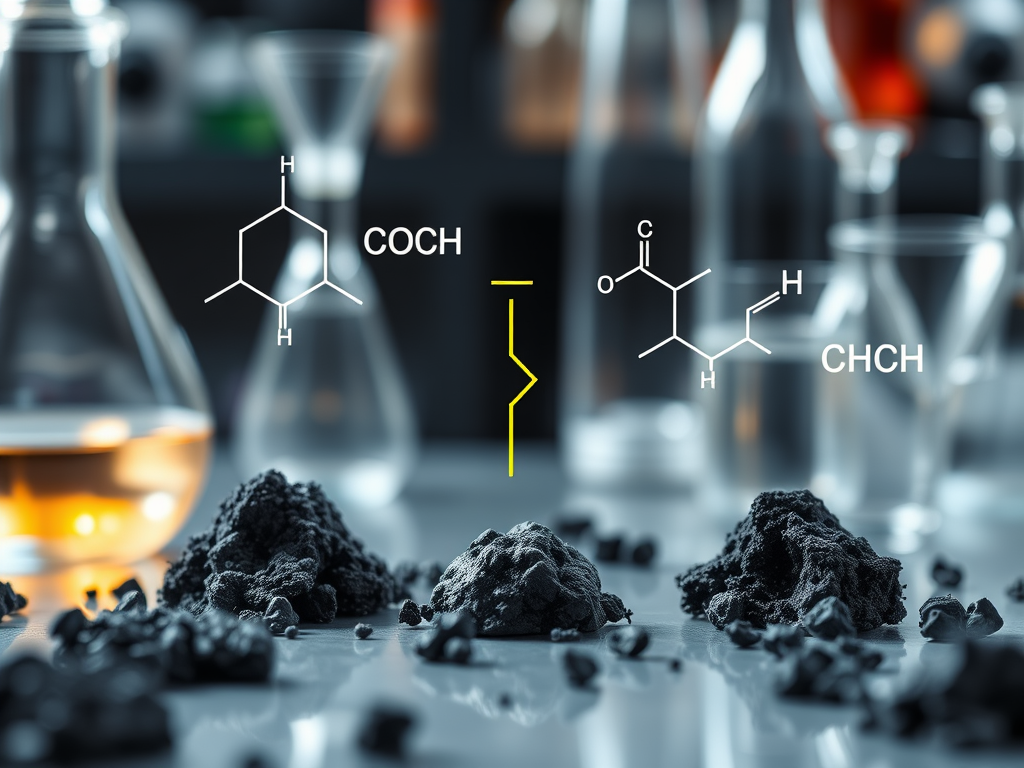
The shift from fossil fuels to renewable resources is a critical global imperative for economic and environmental sustainability. In this context, the development of innovative, heterogeneous catalysts is essential for advancing a bio-based economy. A recent study by Joao Carlos Alves Macedo, Maryam Shirinkar, Richard Landers, and André Henrique Rosa, published in BiomassBiomass is a complex biological organic or non-organic solid product derived from living or recently living organism and available naturally. Various types of wastes such as animal manure, waste paper, sludge and many industrial wastes are also treated as biomass because like natural biomass these More, investigates the use of modified sugarcane bagasse biocharBiochar is a carbon-rich material created from biomass decomposition in low-oxygen conditions. It has important applications in environmental remediation, soil improvement, agriculture, carbon sequestration, energy storage, and sustainable materials, promoting efficiency and reducing waste in various contexts while addressing climate change challenges. More, embedded with ruthenium and iron particles, as a green catalyst. Their research focuses on efficiently converting levulinic acid (LA) to gamma-valerolactone (GVL), a highly promising platform chemical, using formic acid (FA) as the sole hydrogen source.
Levulinic acid, recognized as a top ten promising platform chemical by the U.S. Department of Energy, is derived from lignocellulosic biomass and serves as a versatile precursor for various value-added compounds, including GVL. GVL itself is gaining significant traction due to its low toxicity, high boiling point, and favorable biodegradability, making it suitable for fuel additives, green solvents, and intermediates in chemical and pharmaceutical industries. Traditionally, GVL synthesis from LA has relied on hydrogen gas from fossil sources, but this study explores a more sustainable approach using FA as the hydrogen donor in the presence of a catalyst.
The researchers synthesized a novel bimetallic catalyst, BC_500Fe/3, from sugarcane bagasse biochar, pyrolyzed at varying temperatures and embedded with ruthenium and iron particles. They systematically assessed the efficiency of both raw and modified biochar in the LA to GVL conversion process. The gelification method using alginate was found to enhance the ruthenium and iron content on the surface of the biochar, which is crucial for its catalytic performance.
Under optimized conditions (0.5 g of BC_500Fe/3 catalyst at 180circC for 3 hours, with 4 mmol LA, 8 mmol FA, and 10 mL of water), the modified biochar catalyst achieved a remarkable GVL yield of 73.0pm9.2. This performance is superior to many ruthenium-based catalysts reported in literature under similar conditions. The enhanced catalytic activity of BC_500Fe/3 is attributed to an optimal iron to carbon ratio and the presence of iron on the biochar surface, which facilitates the adsorption of LA, a crucial step in the catalytic mechanism.
The study also investigated the recyclability of the catalyst, demonstrating consistent performance over the first three reaction cycles. Although a reduction in catalytic activity was observed in subsequent cycles, this was primarily linked to the loss of catalyst mass during the recovery process. Importantly, metal leachingLeaching is the process where nutrients are dissolved and carried away from the soil by water. This can lead to nutrient depletion and environmental pollution. Biochar can help reduce leaching by improving nutrient retention in the soil. More, particularly of ruthenium, remained negligible across all catalyst samples, ranging between 0.00018 and 0.00050 wt%. These values are significantly lower than those reported in comparable studies, indicating good catalyst stability.
Another significant finding was that, contrary to some literature, the addition of triethylamine or sodium formate did not enhance the catalyst’s activity; instead, it led to a decrease in GVL yield. This suggests that the BC catalyst is highly efficient in a base-free aqueous medium containing formic acid.
From an economic standpoint, the estimated production cost of the catalyst was determined to be approximately USD 5574.84/kg. This is roughly half the commercial value of a similar Ru/C (5%) catalyst, which stands at USD 11,778.83/kg. The material costs, particularly for ruthenium, account for the majority of the total cost, highlighting the importance of developing more affordable alternatives.
This research underscores the significant potential of biomass waste-derived biochar as a sustainable and cost-effective catalyst for advancing biomass conversion processes. The high GVL yield, combined with the catalyst’s stability and lower cost compared to commercial alternatives, paves the way for further advancements in bio-based chemical production and a more sustainable economy.
Source: Macedo, J. C. A., Shirinkar, M., Landers, R., & Rosa, A. H. (2025). Exploring Biomass Waste-Derived Biochar as a Catalyst for Levulinic Acid Conversion to gamma-Valerolactone: Insights into Synthesis, Characterization, and Catalytic Performance. Biomass, 5(2), 29.



Leave a Reply