
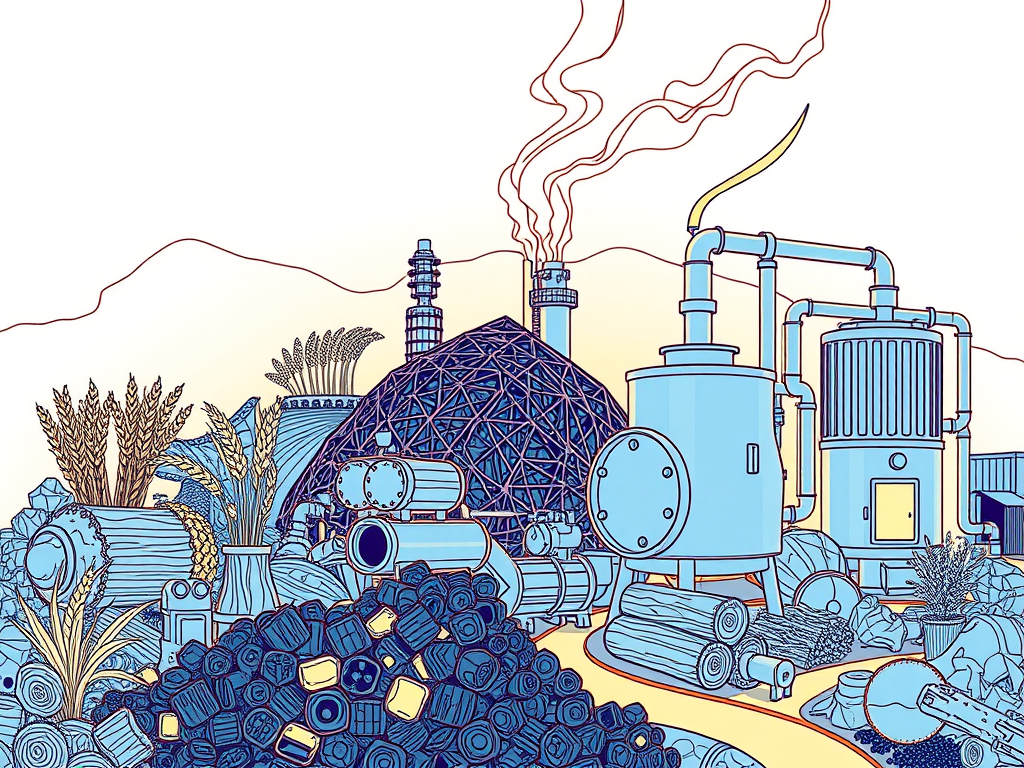
In a recent article published in Industrial Crops & Products, authors Faisal Mahmood et al. review the production of biocharBiochar is a carbon-rich material created from biomass decomposition in low-oxygen conditions. It has important applications in environmental remediation, soil improvement, agriculture, carbon sequestration, energy storage, and sustainable materials, promoting efficiency and reducing waste in various contexts while addressing climate change challenges. More and its application in synthesizing carbon-based materials for supercapacitors. The research indicates that biochar, a carbon-rich substance, is derived from thermochemical processes, including pyrolysisPyrolysis is a thermochemical process that converts waste biomass into bio-char, bio-oil, and pyro-gas. It offers significant advantages in waste valorization, turning low-value materials into economically valuable resources. Its versatility allows for tailored products based on operational conditions, presenting itself as a cost-effective and efficient More, hydrothermal carbonization, gasificationGasification is a high-temperature, thermochemical process that converts carbon-based materials into a gaseous fuel called syngas and solid by-products. It takes place in an oxygen-deficient environment at temperatures typically above 750°C. Unlike combustion, which fully burns material to produce heat and carbon dioxide (CO2), gasification More, and flash carbonization.
These processes involve heating biomassBiomass is a complex biological organic or non-organic solid product derived from living or recently living organism and available naturally. Various types of wastes such as animal manure, waste paper, sludge and many industrial wastes are also treated as biomass because like natural biomass these More in oxygen-controlled environments, yielding biochar, a sustainable and low-cost material. The characteristics of biochar can be modified by adjusting the thermochemical process and operating conditions. Biochar can be transformed through physical and chemical modifications into carbon materials like porous carbon, doped biochar, carbon nanotubes, graphene, and carbon quantum dots. These materials are crucial in supercapacitors, energy storage devices known for their high power density and rapid charge-discharge capabilities. The use of biochar not only enhances the value of waste biomass but also supports the development of green energy technologies.
Biomass sources for biochar production include agricultural waste (e.g., rice husk, wheat straw), forest waste (e.g., wood, branches), bio-based industrial waste (e.g., lignin from paper industry), municipal solid waste, and sewage sludge. For example, the yield of biochar from municipal solid waste varies from 19.4% to 48.4%, depending on the waste’s composition and processing conditions. Pyrolysis, a common method for biochar production, involves heating biomass in the absence or limited presence of oxygen.
This review demonstrates biochar production as a dual-benefit strategy, addressing waste while producing materials for energy applications.
SOURCE: Mahmood, F., Ali, M., Khan, M., Mbeugang, C. F. M., Isa, Y. M., Kozlov, A., … & Li, B. (2025). A review of biochar production and its employment in synthesizing carbon-based materials for supercapacitors. Industrial Crops & Products, 227, 120830.




Leave a Reply