
Key Takeaways
- Engineered magnetic biochars (MBCs) can achieve adsorption capacities up to four times higher than pristine versions.
- Magnetization enables the easy separation of biocharBiochar is a carbon-rich material created from biomass decomposition in low-oxygen conditions. It has important applications in environmental remediation, soil improvement, agriculture, carbon sequestration, energy storage, and sustainable materials, promoting efficiency and reducing waste in various contexts while addressing climate change challenges. More particles from treated media using external magnetic fields, overcoming the scalability limits of traditional filtration.
- Mineral-doped MBCs can immobilize over 85% of arsenic and cadmium in soil, significantly reducing toxin uptake in crops like rice.
- MBCs serve as effective catalysts in advanced oxidation processes, degrading persistent pollutants like antibiotics and pesticides into non-hazardous by-products.
- These materials improve soil fertility by increasing carbon content, stabilizing nitrogen, and serving as slow-release fertilizers.
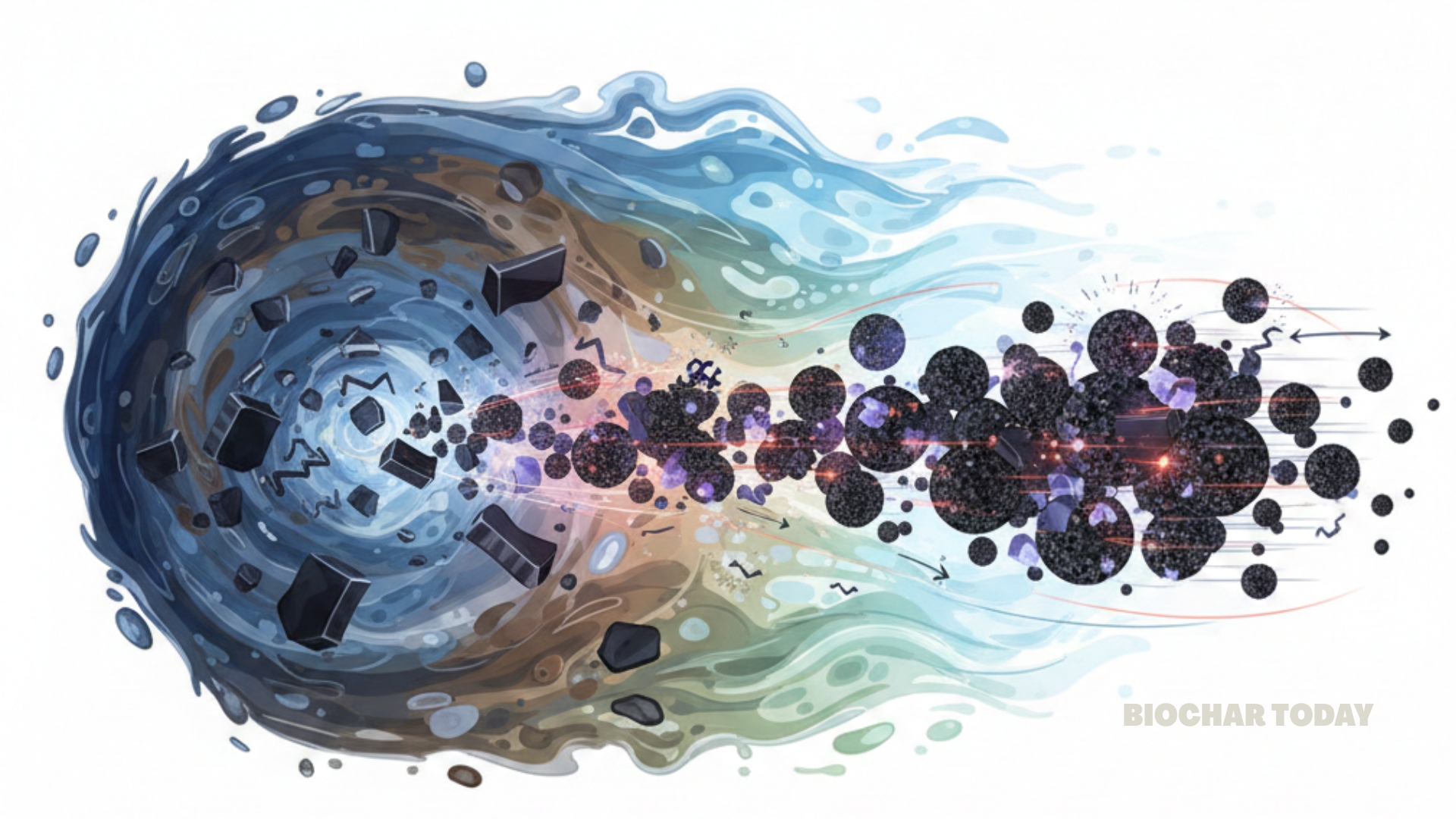
The recent review published in the journal Biochar by Aycha Dalloul, Helmi Hamdi, and their research team highlights a significant advancement in environmental technology through the co-modification of biochar. While traditional biochar has long been recognized for its porous structure and ability to improve soil, its practical use has been limited by the difficulty of recovering small particles from water and a lack of specialized chemical reactivity. By combining magnetization with mineral impregnation, the researchers have developed an engineered material that not only cleans water and soil more effectively but also addresses the logistical challenge of post-treatment separation. This evolution from simple charcoalCharcoal is a black, brittle, and porous material produced by heating wood or other organic substances in a low-oxygen environment. It is primarily used as a fuel source for cooking and heating. More to high-tech magnetic nanocomposites represents a major step toward scalable, sustainable agri-environmental management.
The primary breakthrough discussed by the authors is the dramatic increase in the functional performance of modified magnetic biochars compared to their original forms. When biochar is treated with magnetic iron precursors and further enriched with minerals like magnesium, aluminum, or calcium, its ability to trap pollutants rises sharply. For instance, wheat straw biochar modified with hematite saw its lead adsorption capacity jump by 42 percent, while other engineered forms reached capacities exceeding 450 milligrams per gram. This is particularly vital for treating industrial wastewater and agricultural runoff, where heavy metals like lead, cadmium, and copper pose severe risks to human health and local ecosystems. The magnetic property is the key to efficiency, as it allows users to pull the pollutant-laden biochar out of the water with a simple external magnetic field, avoiding the need for expensive and energy-intensive filtration or centrifugation.
Beyond water treatment, the study emphasizes the role of these materials in restoring contaminated agricultural land. When applied to soil, magnetic biochar helps raise the pHpH is a measure of how acidic or alkaline a substance is. A pH of 7 is neutral, while lower pH values indicate acidity and higher values indicate alkalinity. Biochars are normally alkaline and can influence soil pH, often increasing it, which can be beneficial More level and provides active sites that lock heavy metals in place, preventing them from being absorbed by food crops. In rice paddies, calcium-doped magnetic biochar significantly reduced arsenic accumulation in the plants while simultaneously promoting their growth. Other trials showed that these materials could reduce the bioavailability of copper in the soil by as much as 76 percent. By shifting the soil microbial community toward beneficial bacteria that help stabilize metals, the biochar creates a healthier environment for cultivation. This dual action of detoxification and soil enhancement provides a clear path for farmers to reclaim degraded land and ensure food safety.
The research also explores the catalytic potential of magnetic biochar in breaking down persistent organic pollutants like antibiotics and pesticides. Through advanced oxidation processes, the biochar acts as a platform to activate chemicals that shred organic contaminants into harmless by-products. For example, nitrogen-doped versions have shown a 99.6 percent efficiency rate in removing antifungal drugs from water. This versatility extends to the circular economy, where the biochar can capture excess nutrients like nitrogen and phosphorus from waste streams and then be reapplied to fields as a slow-release fertilizer. This approach not only prevents the pollution of water bodies through nutrient runoff but also reduces the reliance on synthetic chemical fertilizers.
Looking ahead, the authors argue that moving from laboratory findings to large-scale field applications is the next essential phase. The ability to tailor the surface of biochar for specific pollutants through chemical modification makes it a highly adaptable tool for various environmental challenges. While the production process must be optimized for cost and energy efficiency, the long-term benefits of using these materials for carbon sequestration, pollutant removal, and agricultural improvement are substantial. By integrating nutrient recycling with heavy metal stabilization, engineered magnetic biochars offer a comprehensive strategy for protecting natural resources and supporting global food security in an increasingly contaminated world.
Source: Dalloul, A., Jellali, S., El-Azazy, M., Abu-Dieyeh, M., Sayadi, S., & Hamdi, H. (2026). Biochar co-modification by magnetization and mineral impregnation: a step towards improved agri-environmental applications. Biochar, 8(22).



Leave a Reply