
Key Takeaways
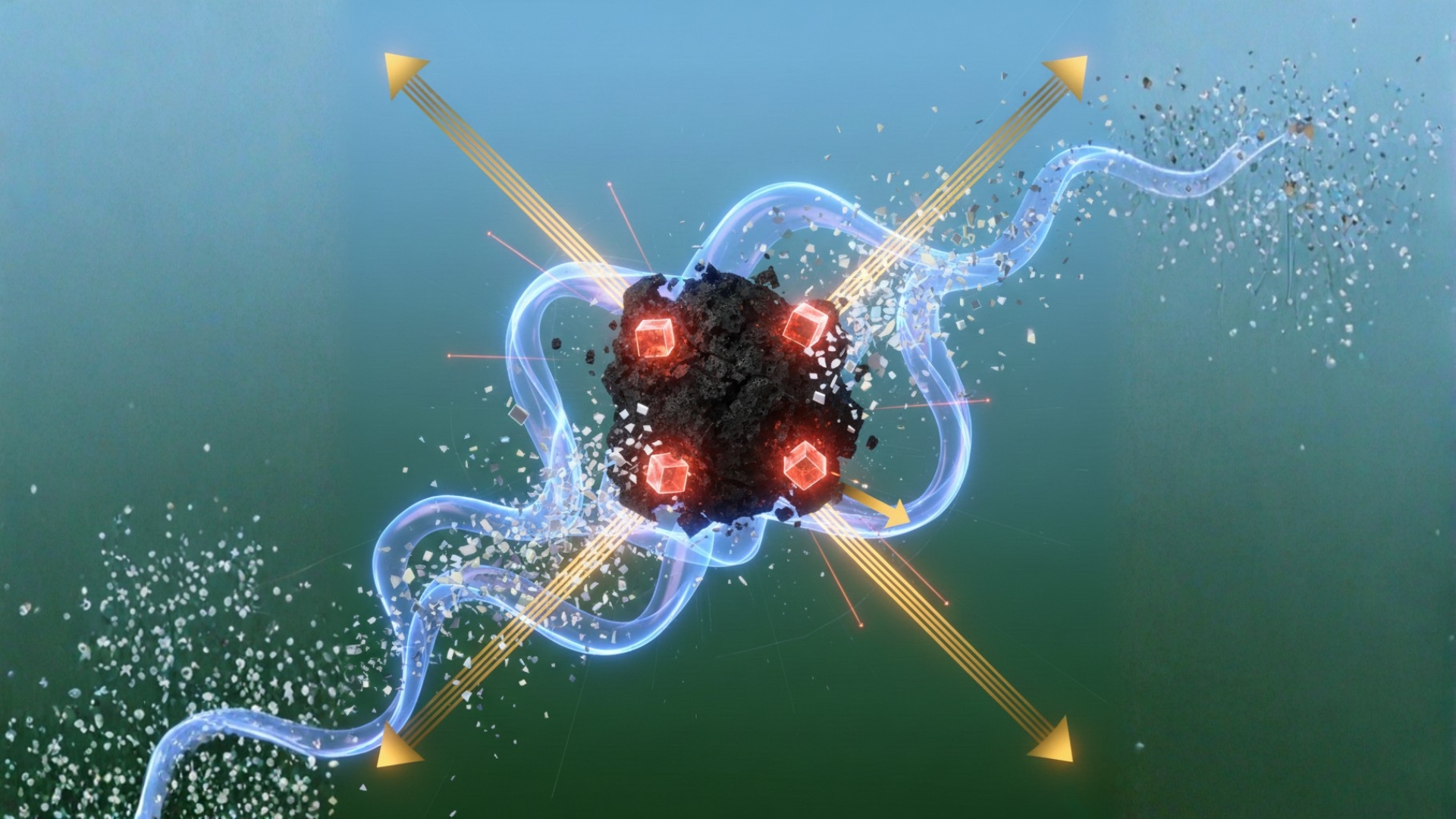
- A biocharBiochar is a carbon-rich material created from biomass decomposition in low-oxygen conditions. It has important applications in environmental remediation, soil improvement, agriculture, carbon sequestration, energy storage, and sustainable materials, promoting efficiency and reducing waste in various contexts while addressing climate change challenges. More/copper oxide composite catalyst was developed for enhanced light utilization.
- Coupling this catalyst with persulfate activation significantly improved the degradation of tetracycline hydrochloride.
- The combined system showed a 4.12-fold increase in the reaction rate constant compared to single photocatalysis.
- Over 95% of the antibiotic was removed in 90 minutes under optimal conditions.
- The degradation process exhibited toxicity alleviation, reducing the environmental risk of the byproducts.a
Antibiotics are emerging pollutants that pose a serious threat to human health due to environmental contamination and the proliferation of bacterial resistance. Tetracycline hydrochloride, or TC-HCl, is a major aquatic contaminant, and conventional wastewater treatments are often ineffective at degrading it. In a recent article published in the Arabian Journal of Chemistry, researchers Ya Pang, Xue Li, Xu Li, Song Zhou, Kun Luo, Jiang Fang Yu, and Yong Song introduce an efficient, synergistic system for the photodegradation of TC-HCl. Their work focuses on developing a novel catalyst based on biochar (BC) loaded with cuprous oxide (Cu2O), coupled with the oxidant persulfate (PS).
The core of the system is the BC/Cu2O catalyst. Cu2O is a promising semiconductor material for photocatalysis because of its ability to absorb visible light. However, its application is limited by the rapid recombination of photo-generated electrons and holes. The biochar component, derived from biomassBiomass is a complex biological organic or non-organic solid product derived from living or recently living organism and available naturally. Various types of wastes such as animal manure, waste paper, sludge and many industrial wastes are also treated as biomass because like natural biomass these More waste, is a cost-effective and highly conductive substrate. By loading cubic Cu2O nanoparticles onto the macroporous biochar, the researchers effectively suppress this recombination, as confirmed by electrochemical impedance spectroscopy. This enhanced electron transfer ability significantly improves the utilization efficiency of the photo-generated electrons.
The system’s high efficiency comes from the synergy achieved by activating persulfate with the photocatalyst. Persulfate acts as an electron acceptor, capturing photogenerated electrons from the catalyst to generate highly reactive sulfate radicals (SO4⋅−). This simultaneous generation of active species and improved charge separation leads to a dramatic boost in performance. Under visible light, the BC/Cu2O/PS system achieved 98% removal of 50 mg/L TC-HCl within 90 minutes. This performance was significantly superior to all control systems, including the single photocatalysis system (63% removal). The calculated reaction rate constant (kobs) for the synergistic system was 0.0355 min−1, representing a 4.12-fold enhancement over the PS-free system. This enhancement proves a genuine synergistic interaction beyond simple additive effects.
Mechanistic studies identified the dominant reactive species in the degradation process as the hole (h+), sulfate radical (SO4⋅−), hydroxyl radical (⋅OH), and superoxide radical (O2⋅−). The effect of operational parameters was also investigated, revealing that increasing the catalyst dosage up to 0.005 g boosted degradation, but higher loads led to reduced light penetration. Persulfate concentration also had an optimum range; increasing it from 0.05 mM to 0.2 mM accelerated degradation, but higher concentrations led to radical quenching.
A Response Surface Model (RSM) analysis highlighted that solution pHpH is a measure of how acidic or alkaline a substance is. A pH of 7 is neutral, while lower pH values indicate acidity and higher values indicate alkalinity. Biochars are normally alkaline and can influence soil pH, often increasing it, which can be beneficial More and persulfate concentration had the most significant linear influence on TC-HCl degradation. The degradation efficiency was highest around pH 5 and was also high at pH 9, likely due to increased reactive species generation under alkaline conditions.
The researchers also inferred the degradation pathways and assessed the toxicity of the intermediate byproducts using ECOSAR software. The TC-HCl molecule was primarily attacked by sulfate or hydroxyl radicals at the C8-C10 positions, leading to hydroxylation, dealkylation, and eventual cleavage of the carbon rings. Although a few intermediates showed higher toxicity than the parent TC-HCl, the toxicity of most products was alleviated during the process. Crucially, the system achieved a high 76.6% mineralization (TOC removal) , indicating that the concentration of the short-lived, more toxic byproducts was negligible and the overall environmental risk was reduced. This comprehensive study provides an efficient, low-cost strategy for antibiotic remediation, offering significant potential for addressing a major global pollution issue.
Source: Pang, Y., Li, X., Li, X., Zhou, S., Luo, K., Yu, J. F., & Song, Y. (2025). Photodegradation of tetracycline hydrochloride by biochar/Cu₂O coupled with persulfate: Insights into the factors and intermediates toxicity. Arabian Journal of Chemistry, 18(12), 352025.




Leave a Reply