
Persistent Organic Pollutants (POPs)—like pesticides, polycyclic aromatic hydrocarbons (PAHs), and chlorinated solvents—are serious hazards to both human health and the environment. Traditional clean-up methods are often too costly, energy-intensive, or may cause secondary pollution. Although bioremediation, which uses microorganisms to break down contaminants, is a greener alternative , its success is frequently hampered by the low survival rate and environmental sensitivity of the microbes. An innovative solution is emerging from a review published in the journal BiocharBiochar is a carbon-rich material created from biomass decomposition in low-oxygen conditions. It has important applications in environmental remediation, soil improvement, agriculture, carbon sequestration, energy storage, and sustainable materials, promoting efficiency and reducing waste in various contexts while addressing climate change challenges. More in 2025 by Wu, Huo, Qi, Zhang, Li, and Qiao , which highlights biochar-supported microbial systems as a transformative, highly efficient strategy for contaminant cleanup. This system combines the superior adsorption capabilities of biochar with the catalytic power of specialized microbes.
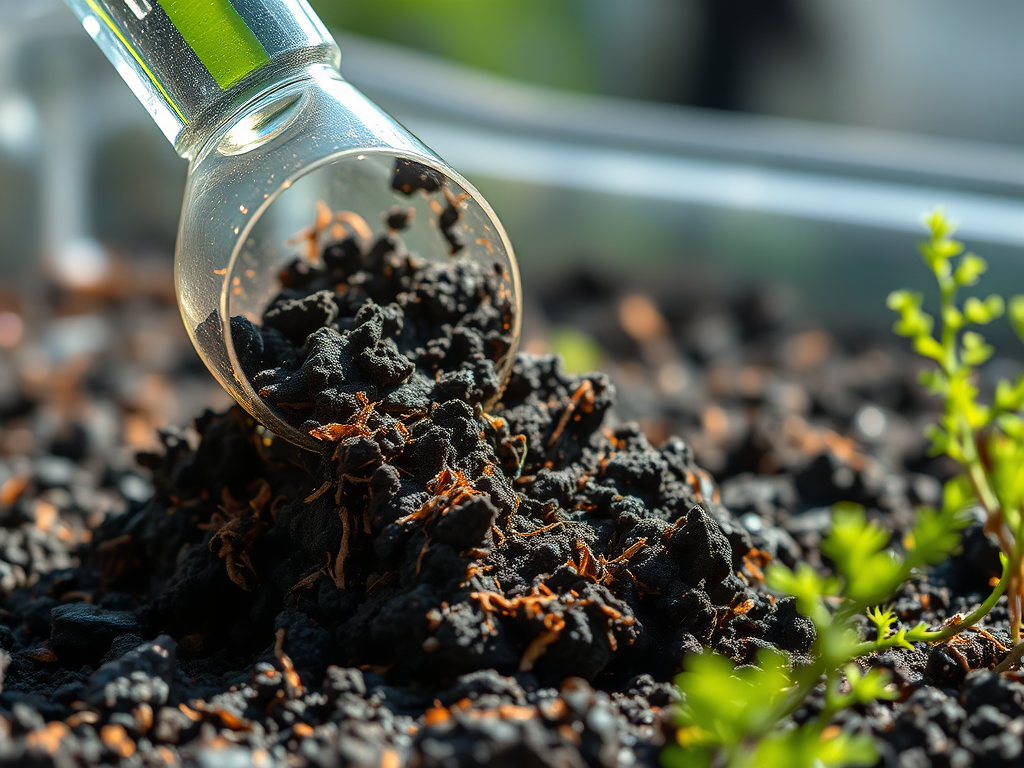
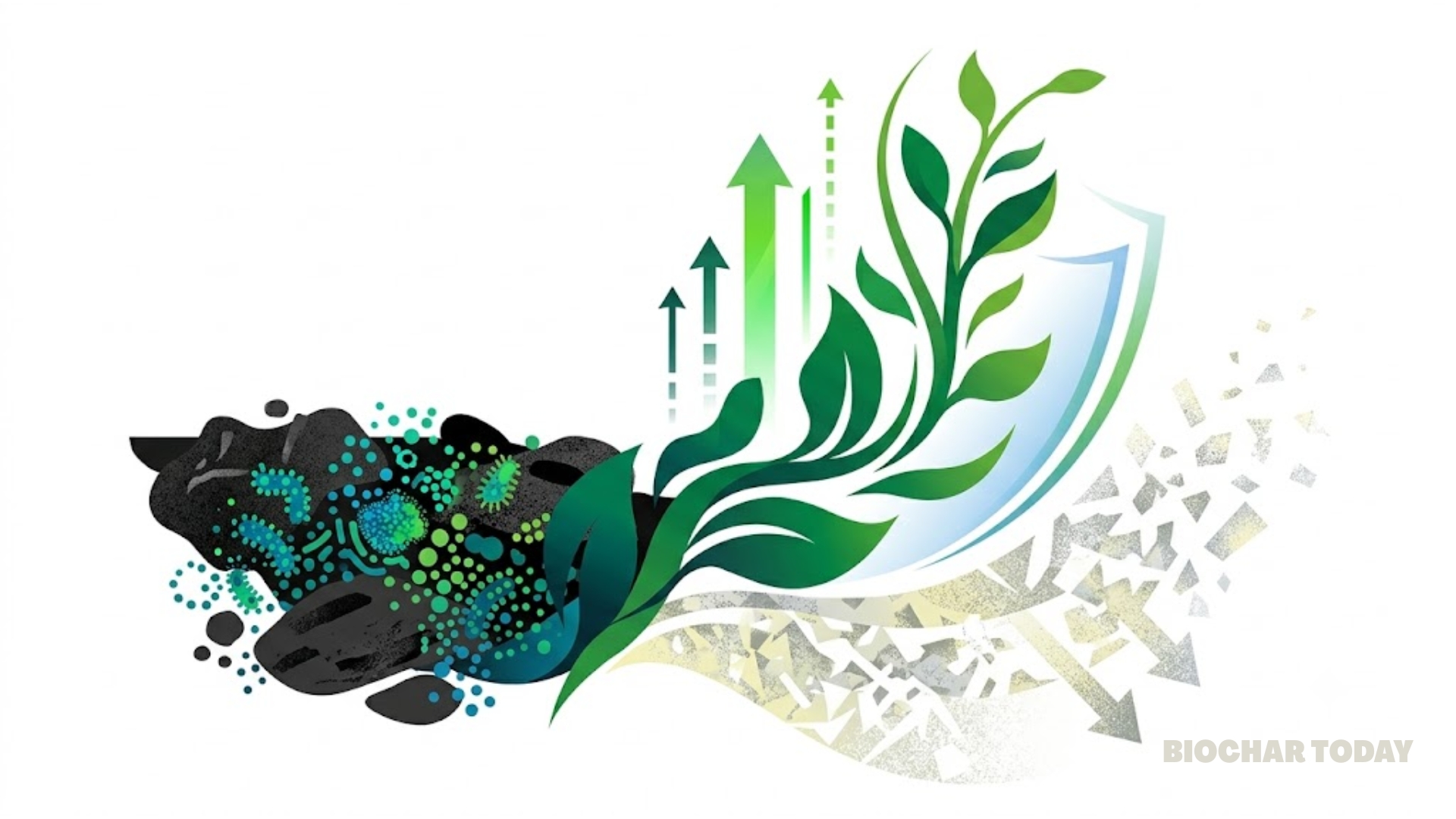
Biochar offers a unique set of properties that make it an ideal microbial carrier. Its porous structure, large surface area, and numerous functional groups create an excellent, protected microhabitat for microorganisms. The biochar acts like a sponge, first attracting and immobilizing the pollutants on its surface, concentrating them near the microbial cells. Simultaneously, it shields the microbes from environmental stress factors like sudden pHpH is a measure of how acidic or alkaline a substance is. A pH of 7 is neutral, while lower pH values indicate acidity and higher values indicate alkalinity. Biochars are normally alkaline and can influence soil pH, often increasing it, which can be beneficial More shifts and desiccation. This synergy significantly speeds up the breakdown of contaminants and can extend the treatment potential to a wider range of difficult pollutants, including persistent organic pollutants. In one case, a biochar-supported bacteria system designed to degrade the herbicide atrazine, formed a stable biofilm and achieved a removal efficiency that was 1.23–1.48 times higher than systems relying only on single or mixed-strain biofilms.
Building these high-performance systems involves various immobilization techniques to ensure the microbial load remains stable and active. The methods range from simple, cost-effective adsorption, which relies on non-specific forces, to more complex strategies like covalent bonding, which offers high stability but may risk microbial inactivation during the reaction. Entrapment—embedding microbes within the biochar pores or a polymer like sodium alginate—provides significant physical protection, especially useful in highly toxic or unstable environments. This protection is key to achieving long-term performance. For instance, a system immobilizing Serratia marcescens N80 on biochar maintained an impressive >80% removal efficiency of the herbicide thifensulfuron-methyl in soil after five reuse cycles. Furthermore, after 210 days of storage, its removal rate still held strong at 66.85%, a result that substantially outperformed free microbial cells. In soil contaminated with atrazine, immobilizing the degrading strain Acinetobacter lwoffii on iron-modified biochar improved degradation efficiency by approximately 20–40% compared with free-degrading strains. In industrial wastewater cleanup, immobilizing a degrading bacterium onto corn stover biochar resulted in a removal rate of polybrominated diphenyl ethers that was 63% and 83% higher than that of biochar alone and free bacteria, respectively.
While the lab-scale successes, particularly the quantitative gains in degradation efficiency and stability, are compelling, several challenges must be resolved before widespread field deployment. Concerns include maintaining microbial viability during long-term storage and transport, understanding the effects of biochar aging on performance, and ensuring the economic feasibility for large-scale application. A significant issue is the potential for biochar’s strong adsorption to make pollutants less available to the microbes for degradation—a negative effect known as reduced bioavailability. Future research is focused on overcoming these hurdles by developing functionalized composite biochars—for example, by introducing metal oxides or chitosan—to enhance stability and attachment. Another promising direction is using synthetic biology to engineer microbial strains for enhanced tolerance to harsh field conditions like high salinity or heavy-metal stress. By rigorously addressing these issues, biochar-supported microbial systems can move from laboratory innovation to become a sustainable and scalable platform for environmental rehabilitation.
Source: Wu, H., Huo, Y., Qi, F., Zhang, Y., Li, R., & Qiao, M. (2025). Biochar-supported microbial systems: a strategy for remediation of persistent organic pollutants. Biochar, 7(1), 113.



Leave a Reply