
Key Takeaways
- Agricultural waste materials like banana peels and rice husks can be transformed into a powerful water filter when treated with magnesium.
- The combined biocharBiochar is a carbon-rich material created from biomass decomposition in low-oxygen conditions. It has important applications in environmental remediation, soil improvement, agriculture, carbon sequestration, energy storage, and sustainable materials, promoting efficiency and reducing waste in various contexts while addressing climate change challenges. More filter effectively removes toxic heavy metals even when both pollutants are present in contaminated water simultaneously.
- Chemical interactions on the material surface allow it to trap lead and chromium through strong bonding mechanisms.
- The eco-friendly material can be cleaned and reused for multiple water treatment cycles without losing structural integrity. This recycling approach offers a low-cost, practical solution for treating toxic industrial wastewater from tanneries and factories.
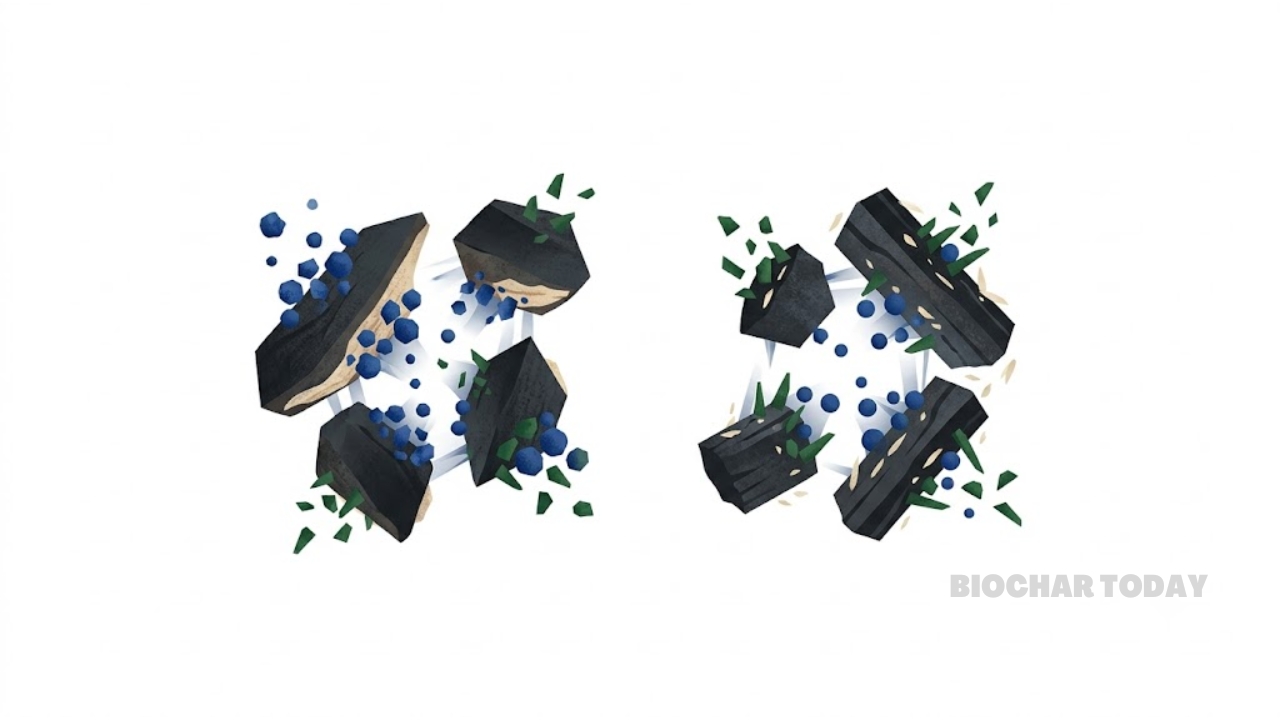
In a publication featured in Scientific Reports, researchers Tayyaba Kanwal, Rashid Iftikhar, Mathias Ernst, Kang Hoon Lee, and Muhammad Ali Inam have introduced an eco-friendly solution to address severe heavy metal contamination in industrial wastewater. Untreated industrial discharges, particularly from tannery operations in developing economic zones, release alarming concentrations of toxic metals such as lead and hexavalent chromium into surrounding soils and waterways. These hazardous pollutants accumulate in local ecosystems, posing serious long-term health risks including kidney damage, respiratory disorders, skin inflammation, and cancer. To combat this pressing environmental threat, the research team engineered a specialized biochar material by combining equal proportions of agricultural biomassBiomass is a complex biological organic or non-organic solid product derived from living or recently living organism and available naturally. Various types of wastes such as animal manure, waste paper, sludge and many industrial wastes are also treated as biomass because like natural biomass these More residues, specifically banana peels and rice husks, followed by activation with magnesium oxide.
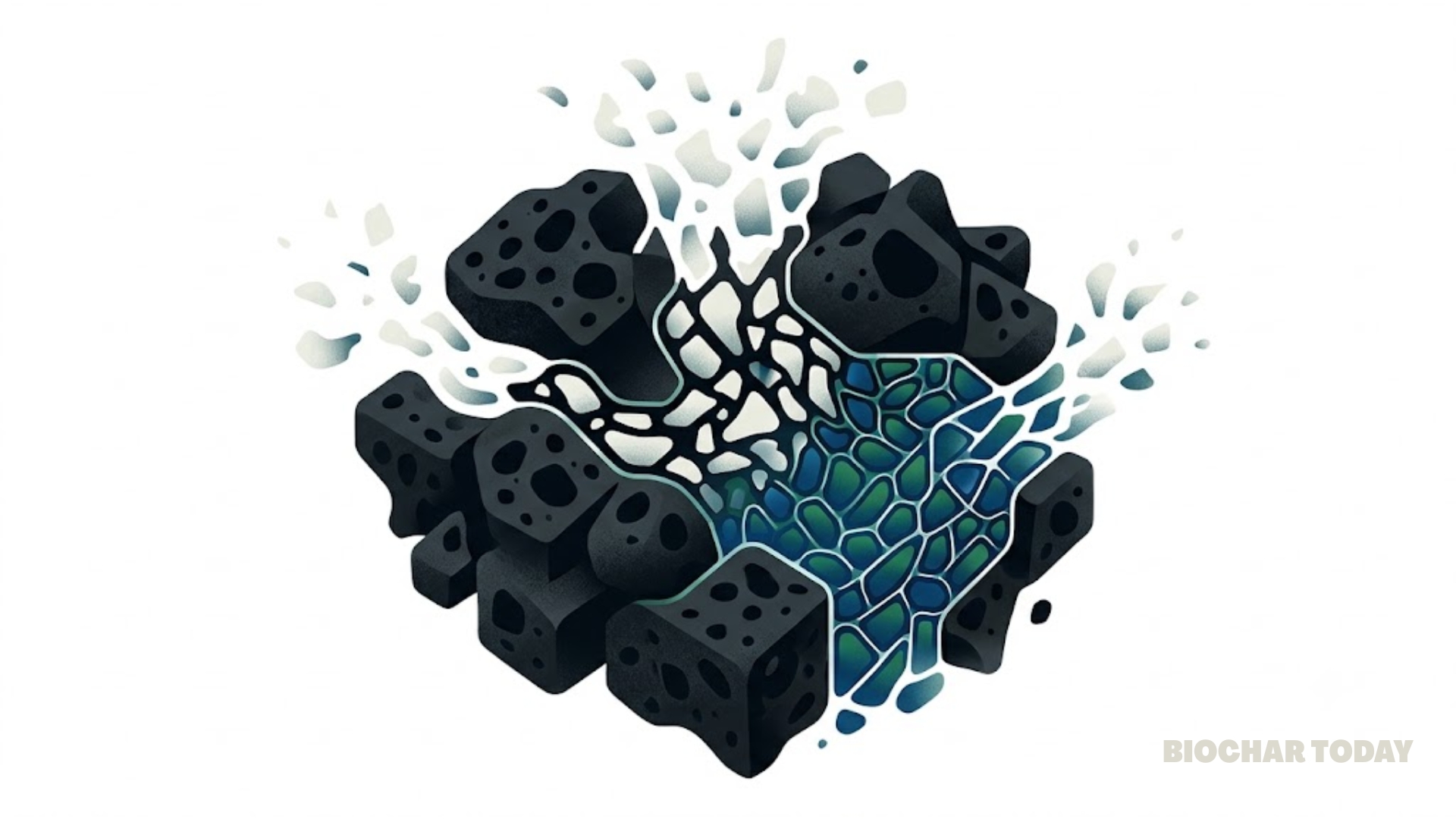
The performance tests revealed that this composite biochar possesses exceptional capabilities for removing toxic metal contaminants from aqueous solutions. When evaluated in single pollutant environments, the material achieved a complete 100 percent removal rate for lead at pHpH is a measure of how acidic or alkaline a substance is. A pH of 7 is neutral, while lower pH values indicate acidity and higher values indicate alkalinity. Biochars are normally alkaline and can influence soil pH, often increasing it, which can be beneficial More 4. Under acidic conditions at pH 2, the biochar successfully eliminated 94 percent of hexavalent chromium within two hours of treatment time. The superior performance stems from high surface chemical reactivity and a porous matrix structure, where magnesium compounds generate abundant active sites that readily capture metal ions through targeted surface interactions.
Real-world industrial effluents contain multiple coexisting contaminants, making mixed environment testing critical for practical applications. When evaluated in a binary solution containing both lead and hexavalent chromium simultaneously, the biochar demonstrated remarkable efficiency. At pH 2, the material captured 99 percent of lead while maintaining an 88.5 percent removal rate for hexavalent chromium. Rather than competing destructively for surface space, the coexisting metal species exhibited a synergistic effect under elevated concentration conditions, where the presence of lead facilitated chromium capture through bimetallic complex formation.
Spectroscopic and crystallographic analyses uncovered the chemical mechanisms responsible for this dual removal success. For hexavalent chromium, the biochar facilitates chemical reduction into less toxic trivalent chromium, followed by surface complexation with silicon-rich sites and electrostatic attraction. Meanwhile, lead removal relies primarily on ligand exchange and complexation with oxygen-bearing functional groups. In mixed solutions, the formation of direct lead-oxygen-chromium bonds creates stable mineral structures that trap both heavy metals permanently within the adsorbent matrix.
Beyond high efficiency, the material demonstrates practical commercial viability through its operational reusability. Regeneration experiments showed that after treatment with a mild sodium hydroxide solution to desorb bound metals, the biochar retained pollutant removal capacity across five consecutive treatment cycles. Although minor site deactivation occurs over repeated uses, the composite maintains sufficient structural durability for industrial scale-up. By converting abundant agricultural waste into a high-value water purification material, this research offers a sustainable, low-cost strategy for tanneries and manufacturing facilities to treat toxic effluents effectively.
Source: Kanwal, T., Iftikhar, R., Ernst, M., Lee, K. H., & Inam, M. A. (2026). Adsorption behavior of lead and chromium onto MgO impregnated biochar derived from banana peels and rice husk in binary environment. Scientific Reports.



Leave a Reply