
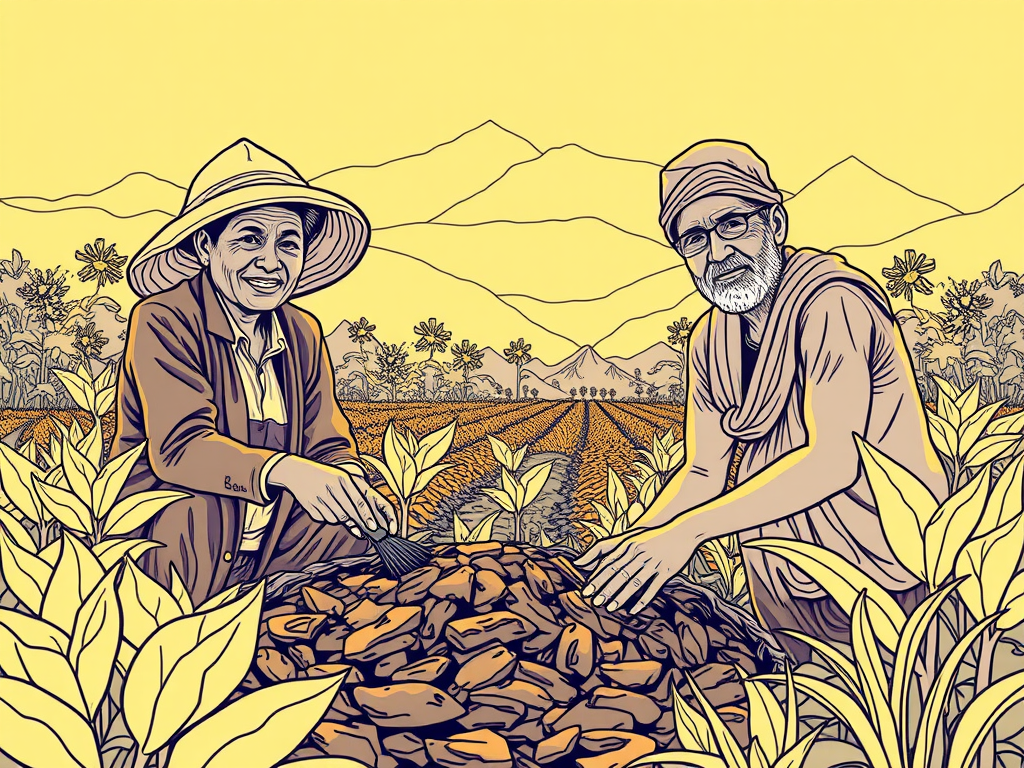
In a recent short communication published in the Journal of Environmental Science and Agricultural Research, Michael Shafer, Director of the Warm Heart Foundation, Thailand, presents a compelling argument for biocharBiochar is a carbon-rich material created from biomass decomposition in low-oxygen conditions. It has important applications in environmental remediation, soil improvement, agriculture, carbon sequestration, energy storage, and sustainable materials, promoting efficiency and reducing waste in various contexts while addressing climate change challenges. More as a crucial tool for global resilience, especially for vulnerable communities in the Global South. While high-tech climate solutions like carbon credits and direct air capture are often the focus of climate change discussions, Shafer emphasizes the need for accessible, community-driven strategies that prioritize adaptation and thriving in the face of climate challenges. Biochar, a form of charcoalCharcoal is a black, brittle, and porous material produced by heating wood or other organic substances in a low-oxygen environment. It is primarily used as a fuel source for cooking and heating. More produced through pyrolysisPyrolysis is a thermochemical process that converts waste biomass into bio-char, bio-oil, and pyro-gas. It offers significant advantages in waste valorization, turning low-value materials into economically valuable resources. Its versatility allows for tailored products based on operational conditions, presenting itself as a cost-effective and efficient More, stands out as a versatile and low-cost solution with far-reaching benefits.
Understanding climate resilience involves the capacity to withstand climate change impacts before disasters and respond effectively afterward. Developed nations often have the resources for both mitigation and recovery. However, communities in the Global South frequently lack these resources, highlighting the importance of solutions like biochar. Unlike traditional charcoal, which contributes to deforestation, biochar is created by heating biomassBiomass is a complex biological organic or non-organic solid product derived from living or recently living organism and available naturally. Various types of wastes such as animal manure, waste paper, sludge and many industrial wastes are also treated as biomass because like natural biomass these More in the absence of oxygen. This process stabilizes about 40% of the carbon, preventing its re-entry into the atmosphere and mitigating climate change by reducing emissions from practices like open-field burning. Furthermore, this process enriches soil health and boosts agricultural productivity.
For the 530 million smallholder farmers, predominantly in the Global South, biochar offers multiple benefits that directly address immediate threats posed by climate change, such as droughts, floods, storms, and rising temperatures. One key advantage is its ability to combat drought by retaining moisture in the soil, helping communities adapt to increasingly erratic rainfall patterns and safeguarding food security. Similarly, by enhancing soil structure and water retention, biochar can reduce runoff and flooding, thereby protecting crops and infrastructure from extreme weather events. As global temperatures rise and impact agricultural productivity, biochar can enhance soil fertility and resilience, helping farmers sustain crop yields.
Beyond agricultural benefits, biochar production, when executed correctly, generates minimal smoke, offering a significant reduction in PM2.5 emissions. These emissions are linked to millions of annual deaths, disproportionately affecting populations in the Global South. Additionally, with approximately 85% of the world’s population relying on charcoal for cooking, transitioning to biochar can lessen the dependence on firewood, helping to protect vital forest ecosystems and alleviate deforestation. Biochar also enriches soil, potentially reversing topsoil loss and contributing to sustainable agricultural practices.
The implications of widespread biochar adoption extend beyond immediate carbon removal and local resilience. The global resilience demonstrated by smallholder farmers, who number approximately 2.5 billion worldwide, holds significant importance for developed nations. Even a modest adoption of biochar practices by a fraction of this population could yield substantial climate benefits. As smallholders become more resilient, the pressure on affluent nations to address climate challenges may diminish. Moreover, developed countries face many similar challenges as those in the Global South, meaning advancements made by these poorer communities will ultimately have a positive effect globally. Michael Shafer concludes that biochar’s potential goes beyond carbon removal, providing a practical, low-cost, and globally applicable approach to resilience that directly addresses the urgent needs of millions and the world as a whole.
Source: Shafer, M. (2025). Biochar: Not Just Carbon Removal but a Path to Global Resilience. Journal of Environmental Science and Agricultural Research, 3(3), 1-2.


Leave a Reply