
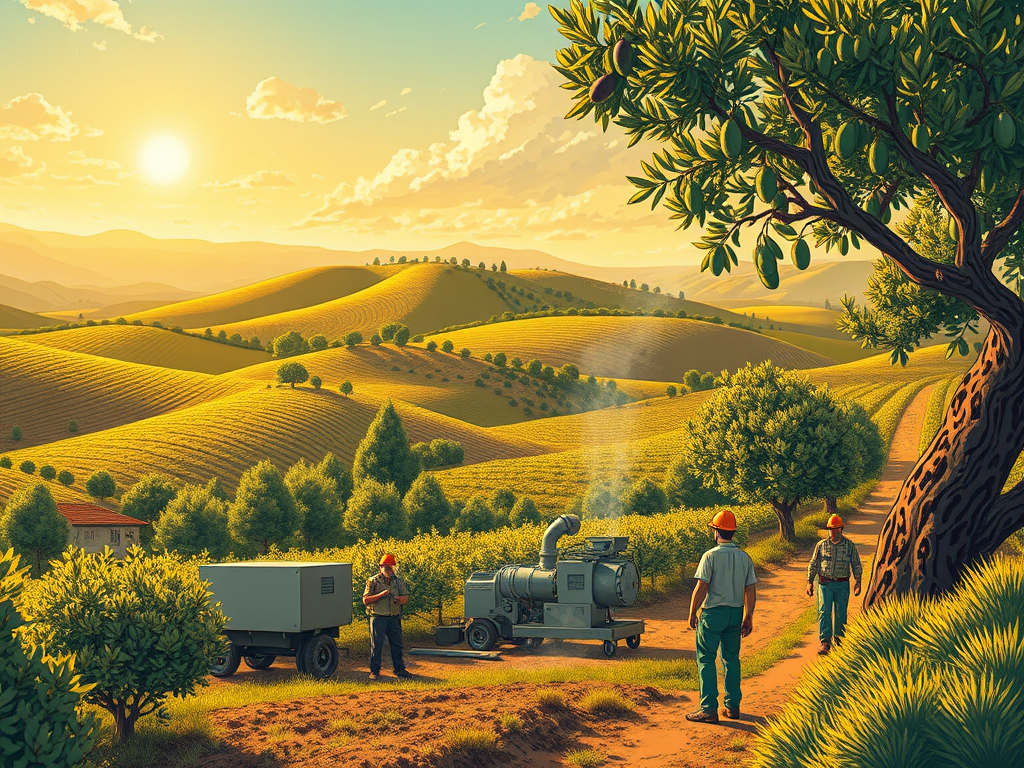
In an effort to advance circular economy practices, the EMBEDDED project, launched in June 2025, is focused on converting agricultural and forestry waste into valuable biomaterials. Operating under the Horizon Europe programme, this 36-month initiative aims to create modular, portable units that produce biocharBiochar is a carbon-rich material created from biomass decomposition in low-oxygen conditions. It has important applications in environmental remediation, soil improvement, agriculture, carbon sequestration, energy storage, and sustainable materials, promoting efficiency and reducing waste in various contexts while addressing climate change challenges. More and other bioproducts from by-products of olive oil production, wine-making, and cork harvesting—waste streams that are often underutilized across Europe.
The project’s core technology uses mobile pyrolysisPyrolysis is a thermochemical process that converts waste biomass into bio-char, bio-oil, and pyro-gas. It offers significant advantages in waste valorization, turning low-value materials into economically valuable resources. Its versatility allows for tailored products based on operational conditions, presenting itself as a cost-effective and efficient More units to create high-quality biochar. Beyond this, it employs a “cascading valorization” approach to derive additional products, such as biofertilizers, bioactive extracts, and eco-friendly construction boards, from the same raw waste. This not only sequesters carbon and mitigates greenhouse gas emissions but also establishes localized, sustainable value chains. The demonstration phase of the project will deploy five pilot units in Spain, Portugal, Ireland, and the Czech Republic, intending to process more than 50 tonnes of biomassBiomass is a complex biological organic or non-organic solid product derived from living or recently living organism and available naturally. Various types of wastes such as animal manure, waste paper, sludge and many industrial wastes are also treated as biomass because like natural biomass these More. This effort is projected to prevent an estimated 1.5 tonnes of CO₂ emissions for every tonne of biochar produced.
For the growing Spanish biochar sector, the EMBEDED project represents a significant development. As a coordinating country and a site for one of the demonstration pilots, Spain is at the forefront of this innovation. The project is poised to introduce climate-positive business models and foster “km.0 circular value chains” within Spanish communities. This model supports regional circular economies by offering a profitable and environmentally sound alternative to traditional waste disposal, leveraging the country’s abundant agrifood and forestry by-products to create sustainable products and economic opportunities.
SOURCE: EMBEDED: Circular Biochar & Board Innovation
Biochar Today recently spoke with a biochar producer in Spain, Carboliva, about how they use olive pulp and stones to produce biochar from an abundant waste stream. Check out our industry briefing on the topic for a closer look: Carboliva: Pioneering Biochar from Spain’s Olive Heritage


Leave a Reply