
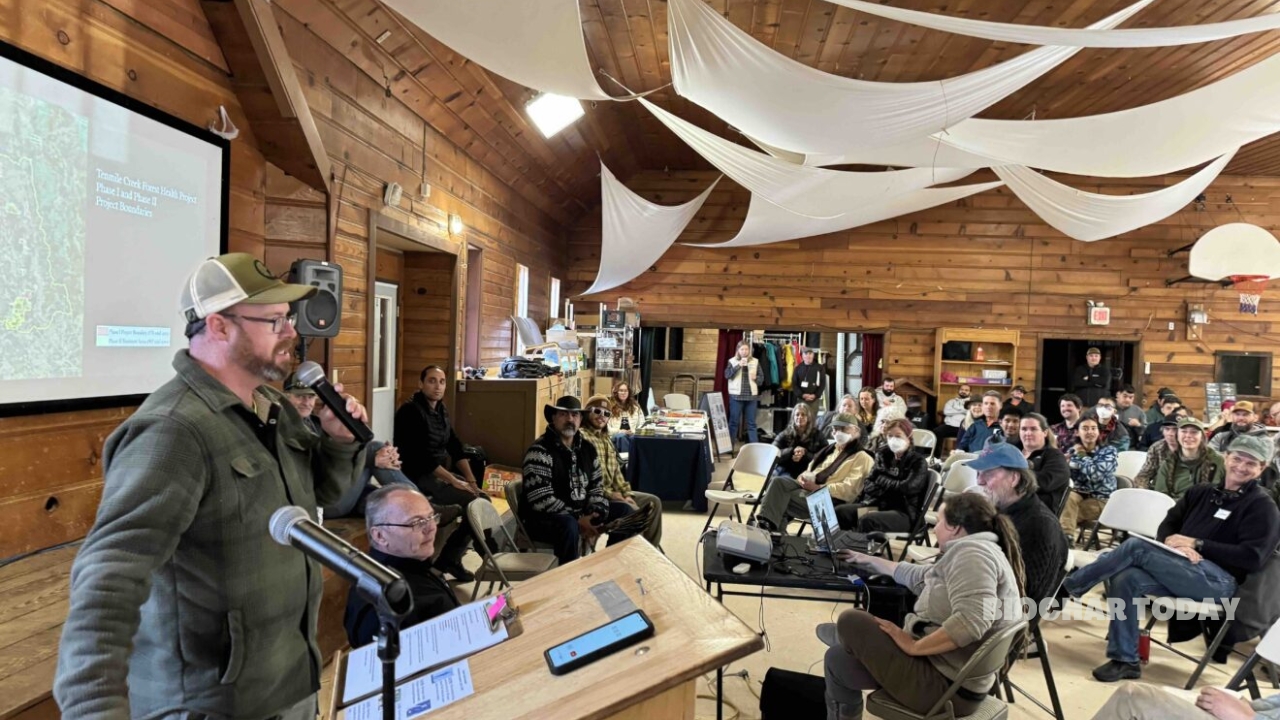
The Forest Health Extravaganza II event in Laytonville, California, featured Ben O’Neill of Elkridge Tree Service as a key contributor to discussions on ecological restoration. Organized by the Eel River Recovery Project (ERRP) and the Northern Mendocino Ecosystem Recovery Alliance, the event served as a collaborative platform for tribes, practitioners, and landowners to address the vitalization of Mendocino County’s woodlands. O’Neill’s contribution focused on the practical application of forest management techniques that transition from traditional waste disposal to proactive soil and watershed health improvement.
The primary challenge addressed during the gathering was the management of excessive biomass—specifically “slash”—resulting from necessary forest thinning and wildfire mitigation efforts. In many United States forest ecosystems, this debris has historically been treated as a waste product, often piled and burned in a manner that releases significant carbon dioxide and impacts air quality. Furthermore, degraded forest soils in these regions frequently suffer from poor nutrient retention and reduced water-holding capacity, which compromises the survival rates of native seedlings and increases the forest’s vulnerability to future drought and disease.
To address these systemic issues, O’Neill and other regional experts advocated for the conversion of excess forest biomassBiomass is a complex biological organic or non-organic solid product derived from living or recently living organism and available naturally. Various types of wastes such as animal manure, waste paper, sludge and many industrial wastes are also treated as biomass because like natural biomass these More into biocharBiochar is a carbon-rich material created from biomass decomposition in low-oxygen conditions. It has important applications in environmental remediation, soil improvement, agriculture, carbon sequestration, energy storage, and sustainable materials, promoting efficiency and reducing waste in various contexts while addressing climate change challenges. More. By utilizing pyrolysis—a process of heating organic material in a low-oxygen environment—practitioners can transform wood waste into a stable, carbon-rich soil amendmentA soil amendment is any material added to the soil to enhance its physical or chemical properties, improving its suitability for plant growth. Biochar is considered a soil amendment as it can improve soil structure, water retention, nutrient availability, and microbial activity. More. The event also featured workshops hosted by the California Biochar Coalition, which demonstrated how this material could be “charged” with nutrients and applied to the forest floor. This solution effectively redistributes the beneficial properties of overgrown organic material back into the earth, stabilizing the landscape and restoring natural watershed hydrology.
The outcomes of this integrated approach include enhanced soil microbiology and long-term carbon sequestration within the Tenmile Watershed and surrounding areas. By incorporating biochar into local forest health projects, such as the 900-acre Tenmile Watershed Forest Health Project, the region has seen improved drought resilience and extended vegetation growth periods. These results provide a scalable framework for community-led fire protection and ecosystem restoration, ensuring that local neighborhoods in California can maintain vitality while reducing the risks associated with modern wildfire environments.





Leave a Reply