
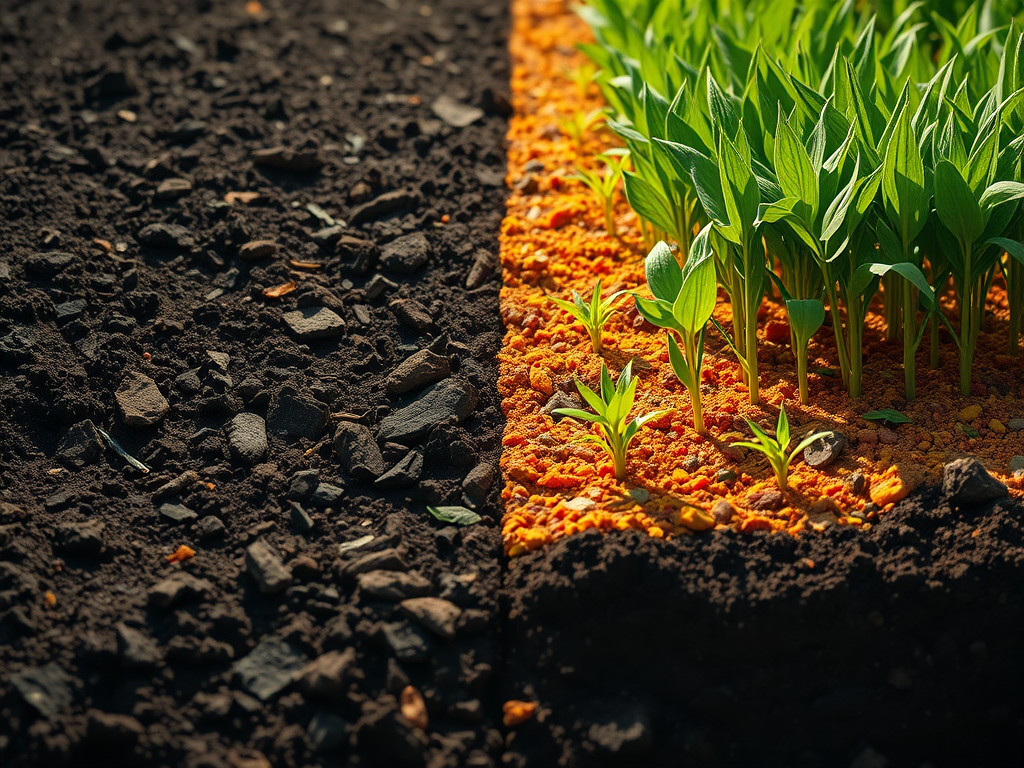
With agricultural soils worldwide facing increasing pollution from toxic heavy metals such as cadmium, lead, chromium, and arsenic, there is an urgent global challenge to protect soil health and ensure food safety. These dangerous elements, which often enter the soil through industrial wastewater, fertilizers, and manure, can accumulate in crops and threaten human health. A promising strategy to combat this pervasive issue is the use of element-doped biocharBiochar is a carbon-rich material created from biomass decomposition in low-oxygen conditions. It has important applications in environmental remediation, soil improvement, agriculture, carbon sequestration, energy storage, and sustainable materials, promoting efficiency and reducing waste in various contexts while addressing climate change challenges. More, a technology reviewed by researchers from Shenyang Agricultural University in a study published in Agricultural Ecology and Environment. The review, authored by Ying Zhang, Jianhua Qu, Hongxuan Chu, Mengning Wang, Rui Yu, Siqi Wang, Tianqi Liu, Yue Tao, and Siyue Han, highlights how modifying biochar, a low-cost material made from crop residues, significantly improves its ability to immobilize and neutralize toxic metals in farmland.
This process involves “doping” the biochar with elements like nitrogen, oxygen, sulfur, and phosphorus to create special chemical groups on its surface. These modifications provide additional binding sites that greatly improve the material’s ability to lock contaminants in the soil and reduce their mobility. The review explains how each dopant functions to enhance the biochar’s effectiveness. For instance, nitrogen-doped biochar presents active nitrogen groups that strongly bond with metals like cadmium. Oxygen-doped biochar increases carboxyl and hydroxyl groups, which attract lead and chromium. Sulfur-doped biochar fixes mercury and cadmium through stable sulfur-metal interactions. In addition to immobilizing heavy metals, phosphorus-doped biochar can also supply nutrients that help crops grow.
Beyond the laboratory, field applications have shown encouraging results. For example, phosphorus-doped biochar successfully reduced the leachingLeaching is the process where nutrients are dissolved and carried away from the soil by water. This can lead to nutrient depletion and environmental pollution. Biochar can help reduce leaching by improving nutrient retention in the soil. More of lead and cadmium in soils. Approaches using multi-element doping have also been shown to improve crop growth by lowering the stress caused by metal toxicity. The authors of the review emphasize that element-doped biochar is not a temporary solution but a practical and scalable tool for sustainable agriculture. This approach promotes a circular economy by converting agricultural waste into a valuable soil amendmentA soil amendment is any material added to the soil to enhance its physical or chemical properties, improving its suitability for plant growth. Biochar is considered a soil amendment as it can improve soil structure, water retention, nutrient availability, and microbial activity. More, which helps reduce pollution and support recycling.
While the review demonstrates the significant promise of this technology, the researchers are calling for more real-world trials to evaluate the long-term stability of doped biochar under various farming conditions. They also suggest exploring strategies for multi-element doping to further enhance its performance. This technology has the potential to transform contaminated farmland into safe, productive soils, marking a crucial step forward in ensuring both food security and environmental sustainability. The research provides a comprehensive look at the mechanisms behind this powerful soil remediation method, offering a sustainable and effective way to combat a global environmental threat.
Source: Zhang, Y., et al. (2025). Synthesis, mechanism, and application of element-doped biochar for heavy metal contamination in agricultural soils. Agricultural Ecology and Environment. doi.org/10.48130/aee-0025-0004




Leave a Reply