
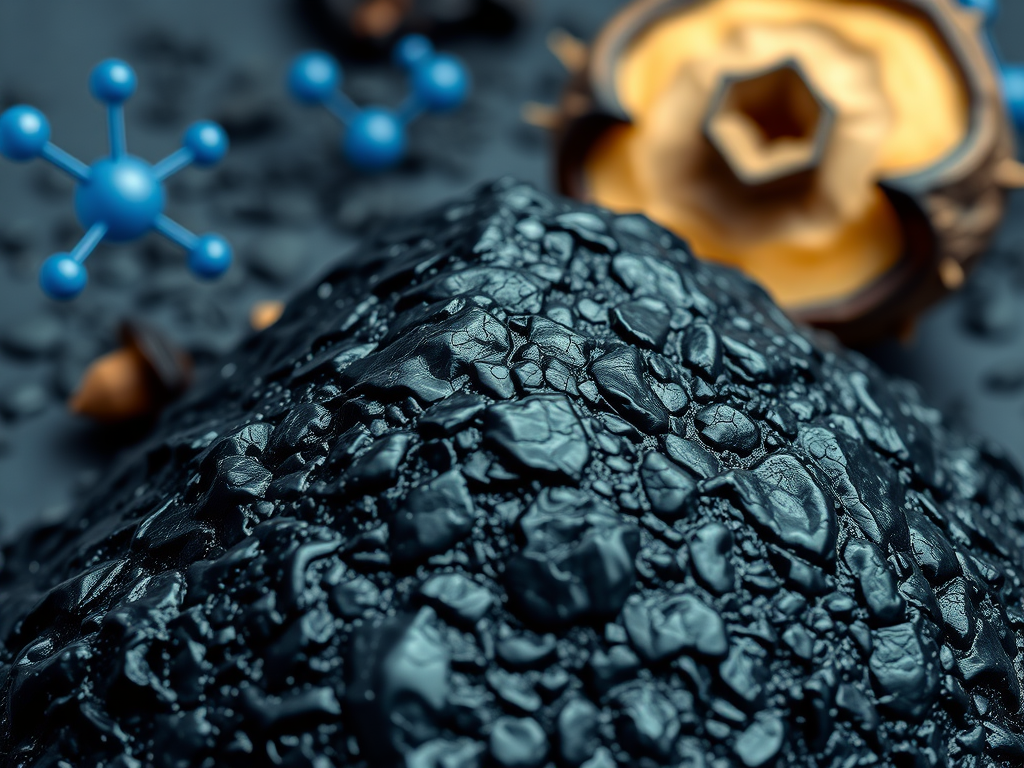
In a recent study published in Scientific Reports, a team of researchers including Syeda Minnat Chistie, Sneha Ullhas Naik, Pragathi Rajendra, Apeksha, Ranjeet Kumar Mishra, Gadah Albasher, Sampath Chinnam, Gautham P. Jeppu, Zeenat Arif, and Javaria Hameed, explored a promising method for tackling water pollution caused by textile industries. Their work focuses on producing and characterizing magnetic biocharBiochar is a carbon-rich material created from biomass decomposition in low-oxygen conditions. It has important applications in environmental remediation, soil improvement, agriculture, carbon sequestration, energy storage, and sustainable materials, promoting efficiency and reducing waste in various contexts while addressing climate change challenges. More from waste areca nut husk (ANH) to effectively remove methylene blue (MB) dye from wastewater.
Textile industries are significant contributors to water pollution due to their discharge of untreated colored effluents, which negatively impact the environment. Methylene blue, a common cationic dye used in various industries, poses substantial health risks to humans and aquatic life even in small concentrations. Traditional water treatment methods often come with high costs and challenges in managing secondary sludge. This has led researchers to investigate more sustainable and economical solutions like biochar.
Biochar has gained attention for its environmental remediation potential due to its simple design, ease of operation, large surface area, and cost-effectiveness. The current study specifically looked into slow pyrolysisPyrolysis is a thermochemical process that converts waste biomass into bio-char, bio-oil, and pyro-gas. It offers significant advantages in waste valorization, turning low-value materials into economically valuable resources. Its versatility allows for tailored products based on operational conditions, presenting itself as a cost-effective and efficient More of ANH to create magnetic biochar, a novel approach for dye removal. The researchers produced biochar at two different temperatures, 600 °C and 800 °C. The biochar produced at 800 °C (ANHB800) exhibited superior characteristics, including increased carbon content (62.93%), a higher heating value (33.02 MJ/kg), and a larger BET surface area (112 m²/g) compared to the 600 °C variant.
To further enhance its properties, the biochar underwent acid treatment and magnetization. Treatment with 5M H₂SO₄ significantly increased the BET surface area to 265 m²/g and reduced ashAsh is the non-combustible inorganic residue that remains after organic matter, like wood or biomass, is completely burned. It consists mainly of minerals and is different from biochar, which is produced through incomplete combustion. Ash Ash is the residue that remains after the complete More content to 9.96%. Remarkably, the magnetic biochar produced at 800 °C showed an even greater BET surface area, reaching up to 385 m²/g. Magnetic nanoparticles play a crucial role by enhancing active sites, improving electrostatic interactions, and simplifying the recovery process, thus boosting the efficiency and sustainability of dye removal.
The efficacy of the magnetic biochar in removing methylene blue dye was thoroughly investigated under various conditions, including different pHpH is a measure of how acidic or alkaline a substance is. A pH of 7 is neutral, while lower pH values indicate acidity and higher values indicate alkalinity. Biochars are normally alkaline and can influence soil pH, often increasing it, which can be beneficial More levels, contact times, temperatures, dosages, and concentrations. The results were impressive: the biochar achieved an 85.47% adsorption of MB dye at a dosage of 0.3 g/L, a concentration of 100 ppm, 30 °C, and a 60-minute contact time at pH 7. The maximum adsorption capacity was determined to be 785.34 mg/g, fitting well with the Langmuir isotherm model, which suggests monolayer adsorption of MB onto the biochar surface. Kinetic studies further revealed that the adsorption process is best described by a pseudo-second-order model, with an R² value of 0.994, indicating that chemisorption is the primary mechanism at play.
This research highlights the significant potential of waste areca nut husk as a feedstockFeedstock refers to the raw organic material used to produce biochar. This can include a wide range of materials, such as wood chips, agricultural residues, and animal manure. More for producing highly effective magnetic biochar. The developed material offers a sustainable and efficient solution for removing hazardous methylene blue dye from industrial wastewater, contributing to cleaner water bodies and a healthier environment. The ease of magnetic separation also adds to its practical applicability for large-scale industrial use.
Source: Chistie, S. M., Naik, S. U., Rajendra, P., Apeksha, Mishra, R. K., Albasher, G., Chinnam, S., Jeppu, G. P., Arif, Z., & Hameed, J. (2025). Production and characterization of magnetic Biochar derived from pyrolysis of waste areca nut husk for removal of methylene blue dye from wastewater. Scientific Reports, 15(1), 23209.



Leave a Reply