
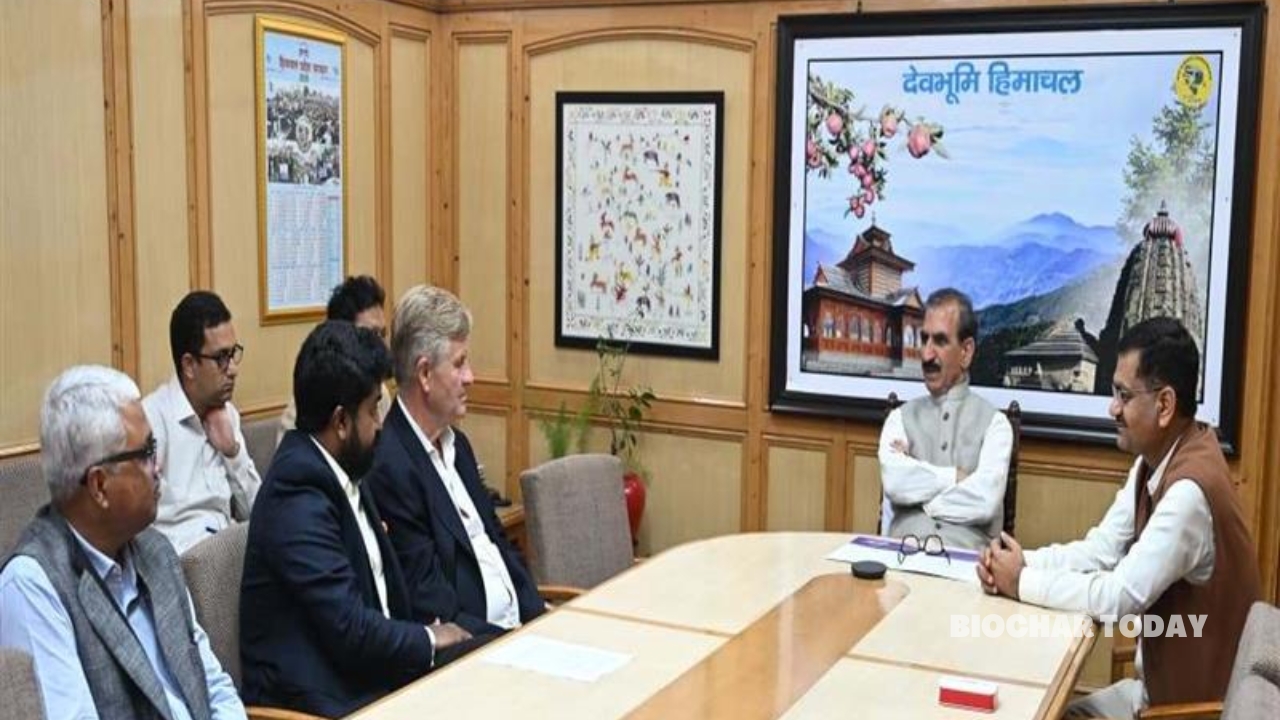
The Government of Himachal Pradesh in India has advanced its climate-smart initiatives through a strategic partnership between Dr. Y.S. Parmar University of Horticulture and Forestry, the state Forest Department, and ProClime Services Private Limited. Chief Minister Thakur Sukhvinder Singh Sukhu recently reviewed the ongoing establishment of India’s first indigenous production facilities located at Neri and Jahu within the Hamirpur district. This tripartite initiative integrates local environmental remediation with market-based carbon finance frameworks. The underlying program aims to extend climate-smart agriculture and agro-forestry protocols across 50,000 hectares of eligible agricultural landscapes within the region, thereby placing 13.5 million tonnes of carbon dioxide emissions under systematic corporate and state management.
Managing sub-tropical regional ecosystems involves addressing several major ecological and economic challenges. A primary concern is the accumulation of problematic forest biomassBiomass is a complex biological organic or non-organic solid product derived from living or recently living organism and available naturally. Various types of wastes such as animal manure, waste paper, sludge and many industrial wastes are also treated as biomass because like natural biomass these More, including highly flammable pine needles and aggressive invasive species such as lantana, which increase the risk of devastating forest wildfires and compromise native biodiversity. Furthermore, local smallholder farming communities frequently suffer from low agricultural resilience, degraded soil profiles, and limited long-term alternative livelihood opportunities. Navigating international carbon markets also presents structural difficulties, as projects must deploy sophisticated verification systems to generate measurable, verifiable emissions reductions that meet strict international environmental criteria.
The collaborative solution relies on constructing localized production plants that process collected regional biomass into high-quality stable carbon. The facilities purchase collected feedstockFeedstock refers to the raw organic material used to produce biochar. This can include a wide range of materials, such as wood chips, agricultural residues, and animal manure. More directly from the community at a base rate of Rs. 2.50 per kilogram, providing financial incentives tied directly to biomass quality. This model transforms hazardous materials like pine needles, bamboo, and lantana into valuable agricultural inputs. The initiative also deploys advanced geographic information systems (GIS), remote sensing technologies, and digital data collection frameworks to guarantee scientific rigor and satisfy rigorous international validation standards for carbon accounting.
The operational projections for these infrastructure developments indicate significant environmental and economic outcomes over a ten-year horizon. The processing facilities are expected to generate approximately 28,800 carbon credits, offering a substantial fiscal and regulatory boost to the state’s broader green initiatives. On the ground, integrating this material into regional farming systems is expected to enhance soil health, augment local biodiversity, and lower vulnerability to climate shocks. Furthermore, the commercial supply chain provides direct employment and structured financial incentives to rural populations, demonstrating a viable model that aligns local community development with international carbon finance.



Leave a Reply