
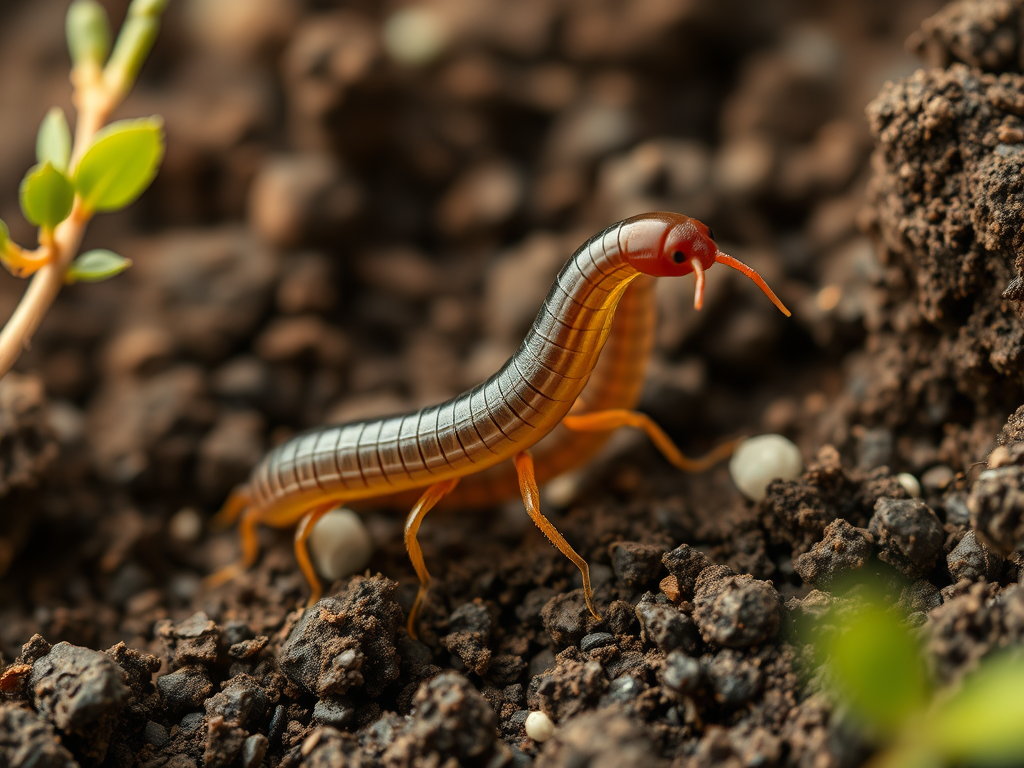
BiocharBiochar is a carbon-rich material created from biomass decomposition in low-oxygen conditions. It has important applications in environmental remediation, soil improvement, agriculture, carbon sequestration, energy storage, and sustainable materials, promoting efficiency and reducing waste in various contexts while addressing climate change challenges. More is is often used for soil amendmentA soil amendment is any material added to the soil to enhance its physical or chemical properties, improving its suitability for plant growth. Biochar is considered a soil amendment as it can improve soil structure, water retention, nutrient availability, and microbial activity. More and carbon sequestration. However, its potential risks to soil organisms, such as nematodes, have recently received increased attention due to biochar’s inevitable dissolution and oxidation in the environment. Dissolved biochar (DBC) is an essential component of biochar that can be easily absorbed and utilized by organisms. A study by Wang et al. published in the journal Biochar in 2025 investigated the effects of DBC on the nematode Caenorhabditis elegans. The study used culture assays and RNA-seq analysis to investigate the responses of C. elegans to various DBC concentrations. The findings revealed a “hormetic effect” of DBC, where low concentrations promoted nematode growth, but high concentrations inhibited it. This suggests the need for careful management of biochar application in agriculture to balance its benefits and risks to soil organisms.
The researchers found that DBC, particularly its smaller particles, could be ingested by the nematodes. This feeding behavior suggested that DBC did not pose an immediate toxicity risk at the tested concentrations. However, exposure to DBC did affect nematode movement, with all treated groups showing a greater frequency of body bending compared to the control group. This increased body bending likely indicates a stimulatory effect on the nematode’s neuromuscular system rather than overt toxicity.
The study also revealed a dose-dependent effect on the worms’ body size. Low DBC concentrations (250–500 mg/L) significantly increased the average body length, while a high concentration (1000 mg/L) caused it to decrease. The brood size, however, did not show any significant changes across the different DBC treatments. This hormetic effect on body size may be due to the bioactive properties of DBC’s organic components, such as humic and fulvic acids, which can enhance nutrient availability and promote growth at lower concentrations. In contrast, the growth inhibition at the highest concentration might be attributed to the accumulation of biochar particles in the gut, leading to energy deficits or stress pathway activation.
Transcriptome analysis of the nematodes revealed a dose-dependent increase in the number of differentially expressed genes (DEGs). The number of DEGs rose from 482 at a low concentration to 2,963 at the highest concentration. This indicated that while low concentrations had a minimal effect on the worms’ biological systems, higher concentrations induced widespread changes in gene expression. These changes were primarily related to metabolic processes, the stress response, and cellular processes. At low concentrations, DBC exposure mainly affected genes involved in metabolic and neurodegenerative pathways, while at high concentrations, it led to the enrichment of pathways related to necroptosis and cancer, suggesting severe cellular damage.
Weighted gene co-expression network analysis (WGCNA) identified several gene modules that were strongly correlated with specific traits. For instance, genes from the dyf family were found to be critical for body length, as they play a key role in ciliary function, which is vital for cell signaling and organismal growth. The study concluded that DBC has dual, dose-dependent effects on C. elegans, reinforcing the need for caution when applying biochar in agriculture to maximize benefits while minimizing potential ecological risks to soil organisms.
Source: Wang, X., Li, J., Luo, L., Li, G., Xu, Y., Ruan, W., & Zhang, G. (2025). The dose-dependent effects of dissolved biochar on C. elegans: insights into the physiological and transcriptomic responses. Biochar, 7(1), 1-18. doi:10.1007/s42773-025-00493-9



Leave a Reply