
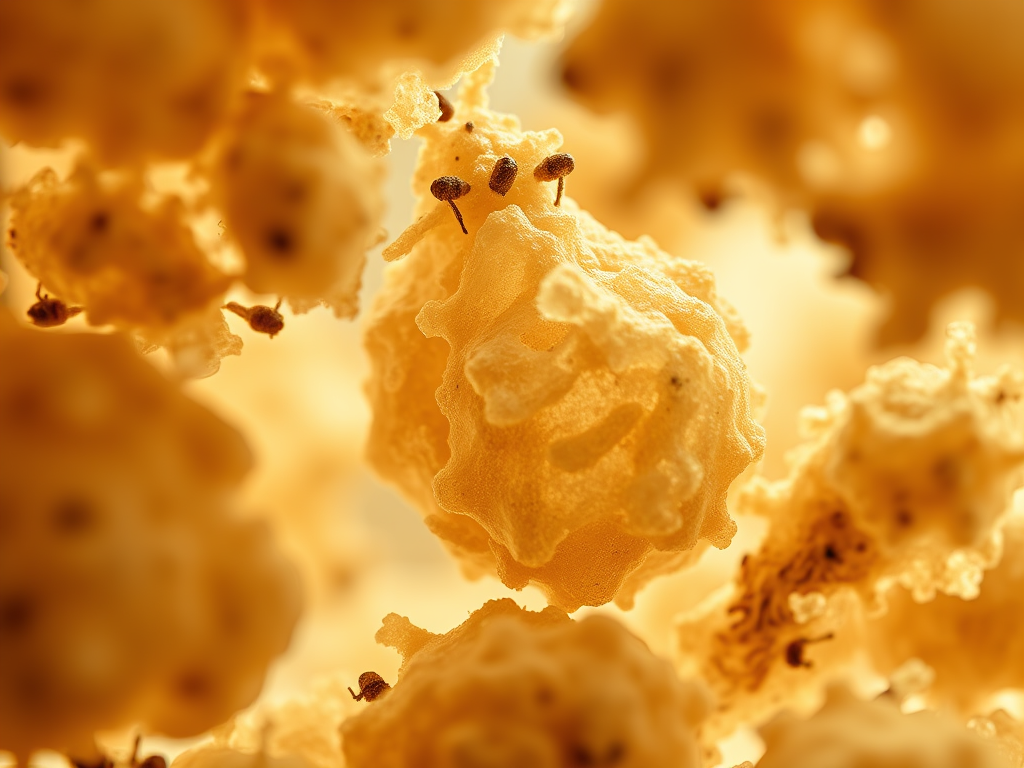
In the quest to improve soil health and nutrient availability, a recent study published in the journal BiocharBiochar is a carbon-rich material created from biomass decomposition in low-oxygen conditions. It has important applications in environmental remediation, soil improvement, agriculture, carbon sequestration, energy storage, and sustainable materials, promoting efficiency and reducing waste in various contexts while addressing climate change challenges. More by Wang et al., offers compelling insights into how straw-derived biochar can be effectively integrated with phosphate-solubilizing bacteria (PSB). This research investigates the intricate interactions between two types of PSB—gram-negative Acinetobacter pittii and gram-positive Bacillus subtilis—and cotton straw biochars produced at various temperatures, shedding light on the mechanisms that enhance bacterial immobilization and, consequently, soil phosphorus availabilityPhosphorus is another essential nutrient for plant growth, but it can sometimes be locked up in the soil and unavailable to plants. Biochar can help release phosphorus from the soil and make it more accessible to plants, reducing the need for chemical fertilizers. More.
The study highlights that while the integration of biochar and PSB is a promising solution for phosphorus-deficient soils, the specific mechanisms governing bacterial immobilization and the influence of biochar’s physical and chemical properties have remained unclear. Using cotton straw, a plentiful agricultural waste product, to create biochar is both cost-effective and environmentally sustainable, promoting carbon sequestration and reducing waste. The unique woody structure and high cellulose and lignin content of cotton straw make it an excellent material for producing a stable and porous biochar, which supports bacterial colonization.
A key finding of the research is that higher pyrolysisPyrolysis is a thermochemical process that converts waste biomass into bio-char, bio-oil, and pyro-gas. It offers significant advantages in waste valorization, turning low-value materials into economically valuable resources. Its versatility allows for tailored products based on operational conditions, presenting itself as a cost-effective and efficient More temperatures for biochar production lead to significantly enhanced EPS production by the PSB. Specifically, biochar produced at 600°C and 700°C showed a marked increase in EPS secretion. For A. pittii, polysaccharide concentrations reached up to 4.8 mg/mL, and protein concentrations up to 2.5 mg/mL with CS700. B. subtilis showed similar trends, with polysaccharide levels peaking at 4.4 mg/mL and protein levels at 2.4 mg/mL with CS700. This increased EPS acts as an adaptive mechanism, allowing bacteria to attach more effectively to biochar surfaces with altered physicochemical properties.
The study employed atomic force microscopy (AFM) to quantify adhesion forces between PSB and biochar. The results showed that the strongest adhesion for both bacterial strains occurred with biochar pyrolyzed at 700°C (CS700), with B. subtilis exhibiting an adhesion force of 4.409 nN and A. pittii peaking at 4.147 nN. This strong adhesion is critical for resisting detachment and initiating robust biofilm formation. The observed increase in adhesion at 300°C was also notable, attributed to an optimal balance of surface functional groups and chemical properties.
While the extended Derjaguin-Landau-Verwey-Overbeek (XDLVO) model was used to predict interaction energy, discrepancies between the model’s predicted high adhesion barriers and the observed attraction suggested that forces beyond Lifshitz-van der Waals interactions also play a significant role in PSB immobilization. Factors such as hydrodynamic forces, steric effects, and bacterial surface proteins are crucial in bacterial cell attraction. The research also highlighted that physicochemical properties of biochar, such as larger surface area, higher water holding capacityWater holding capacity is the amount of water that soil can retain. Biochar can significantly increase the water holding capacity of soil, improving its ability to withstand drought conditions and support plant growth. More, less negative zeta-potential, increased ashAsh is the non-combustible inorganic residue that remains after organic matter, like wood or biomass, is completely burned. It consists mainly of minerals and is different from biochar, which is produced through incomplete combustion. Ash Ash is the residue that remains after the complete More content, and higher electrical conductivity, all contribute to enhanced PSB immobilization.
The proposed immobilization mechanism involves four distinct phases: planktonic interaction, secondary minimum entrapment, primary barrier transcendence, and initial reversible adherence, all collectively facilitating biofilm formation. Environmental factors like temperature, ionic strength, and pHpH is a measure of how acidic or alkaline a substance is. A pH of 7 is neutral, while lower pH values indicate acidity and higher values indicate alkalinity. Biochars are normally alkaline and can influence soil pH, often increasing it, which can be beneficial More also critically influence this dynamic process. For instance, a less negative zeta-potential on the biochar surface can reduce repulsion, thus enhancing adhesion.
The findings of this study provide a deeper understanding of PSB-biochar interactions, which can ultimately improve the effectiveness of soil inoculants and enhance phosphorus availability for plant growth and environmental sustainability. Future research will focus on examining how environmental factors like plant interactions, soil composition, and water flow affect biochar-bacteria interface dynamics, and assessing the long-term ecological impact of these biochar-PSB inoculants.
Source: Wang, Z., Chen, B., Cao, Y., Xing, S., Zhang, B., Wang, S., & Tian, H. (2025). Insights into the interfacial dynamics and interaction mechanisms between phosphate-solubilizing bacteria and straw-derived biochar. Biochar, 7(1), 55.





Leave a Reply