
Key Takeaways
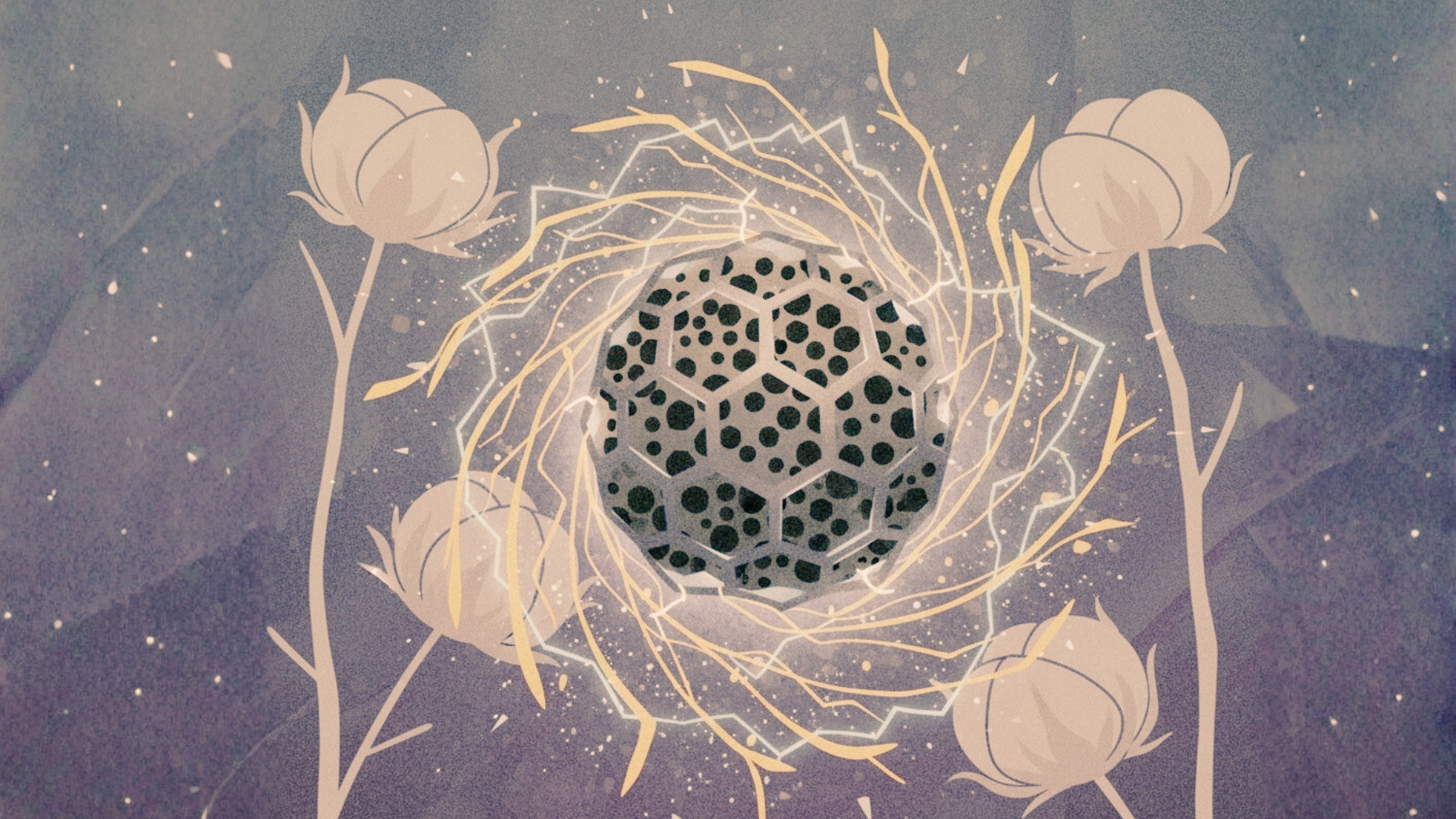
- Converting agricultural waste, like cotton stalks, into modified charcoalCharcoal is a black, brittle, and porous material produced by heating wood or other organic substances in a low-oxygen environment. It is primarily used as a fuel source for cooking and heating. More (biocharBiochar is a carbon-rich material created from biomass decomposition in low-oxygen conditions. It has important applications in environmental remediation, soil improvement, agriculture, carbon sequestration, energy storage, and sustainable materials, promoting efficiency and reducing waste in various contexts while addressing climate change challenges. More) creates high-performance materials for renewable energy devices.
- A single, streamlined chemical process can make the biochar extremely porous and infuse it with nitrogen, which is vital for quick energy transfer.
- Biochar made from cotton stalk showed the best results, reaching a very high specific surface area (1470.99m2/g) and the highest energy storage capacity (212.6F/g) in a supercapacitor.
- BiomassBiomass is a complex biological organic or non-organic solid product derived from living or recently living organism and available naturally. Various types of wastes such as animal manure, waste paper, sludge and many industrial wastes are also treated as biomass because like natural biomass these More feedstocks that are naturally rich in a component called lignin and low in ashAsh is the non-combustible inorganic residue that remains after organic matter, like wood or biomass, is completely burned. It consists mainly of minerals and is different from biochar, which is produced through incomplete combustion. Ash Ash is the residue that remains after the complete More are the ideal starting materials for making these superior electrode materials.
- This work expands the potential for using common farm residues to create low-cost, effective components for next-generation batteries and fuel cells.
A recent study by Xu Chen, Xuan Tao, and colleagues, published in Industrial Crops & Products, investigated how to turn common agricultural and forestry residues into high-performance materials for energy storage and catalysis. The work focused on synthesizing nitrogen-doped biochar (N-doped biochar) using a single, efficient technique and systematically mapping the relationships between the original plant material, the final biochar structure, and its performance in key electrochemical applications, namely supercapacitors and the oxygen reduction reaction (ORR). This utilization direction of biomass is highly valued in the pursuit of sustainable development and carbon neutrality.
The researchers employed a novel synchronous pyrolysis-activation-ammoniation method on ten different types of biomass, ranging from corn straw to pinewood. This technique combines pyrolysisPyrolysis is a thermochemical process that converts waste biomass into bio-char, bio-oil, and pyro-gas. It offers significant advantages in waste valorization, turning low-value materials into economically valuable resources. Its versatility allows for tailored products based on operational conditions, presenting itself as a cost-effective and efficient More (heating without oxygen) with chemical activation using potassium hydroxide (KOH) and nitrogen doping using ammonia (NH3). The results confirmed that this synergistic approach significantly boosted both the material’s specific surface area (SBET) and its nitrogen content. Across all samples, SBET exceeded 799 m2/g and the nitrogen content was greater than 3.44 wt%.
The cotton stalk biochar (CSKB) emerged as the star performer, exhibiting the highest specific surface area of 1470.99 m2/g and a maximum nitrogen content of 8.61 wt%. The porous structure primarily featured abundant micropores and narrow mesopores, which is ideal for allowing the electrolyte to move quickly through the material, minimizing mass transfer resistance in an energy device. The synchronous process universally converted various biomasses into this high-porosity, high-nitrogen material, proving the universality of the method.
The excellent structural properties translated directly into top-tier electrochemical performance. In a supercapacitor test, the cotton stalk biochar achieved a high specific capacitance of 212.6 F/g at a current density of 0.5 A/g. Crucially, it maintained an 84% capacity retention even when cycled quickly at 10 A/g. This indicates low internal resistance and efficient charge transport. In fact, the cotton stalk biochar showed the lowest charge transfer resistance (Rct) and solution resistance (Rs) among all ten samples. These low resistance values reflect its superior conductivity and fast ion transport ability.
In the oxygen reduction reaction (ORR) evaluation, which is a key process for fuel cells and metal-air batteries, the cotton stalk biochar also showed superior catalytic activity. It achieved a favorable half-wave potential (E1/2) of 0.791 V and a limiting current density (JL) of 5.77 mA/cm2. The high performance in both applications is attributed to its rich surface chemistry, which includes large amounts of pyridinic-N, pyrrolic-N, and quaternary-N. These nitrogen species and the high surface area created by the hierarchical pore structure provide abundant active sites, enhance oxygen adsorption, and promote efficient electron transfer, which is essential for accelerating the ORR kinetics.
The study successfully clarified the relationship between the starting biomass and the final material’s performance: biomass rich in lignin and low in ash content is most conducive to preparing this type of superior porous, N-doped carbon. The presence of lignin showed a strong positive correlation with both high SBET and high nitrogen content. Conversely, high ash content blocked microporous channels, which reduced the SBET. The research confirms that selecting the right agricultural residue—like cotton stalk, which has a high lignin content and low ash—is the first critical step in designing multifunctional, high-performance biochar for next-generation energy equipment. This work provides important guidance for scientists and industry leaders aiming to maximize the value of biomass waste in the transition to renewable energy.
Source: Chen, X., Tao, X., Wang, Y., Shi, X., Pan, Z., Chen, W., & Fang, Z. (2025). Biomass synchronous pyrolysis-activation-ammoniation for N-doped biochar: Relationship among biomass, biochar, and electrochemical performance. Industrial Crops & Products, 237, 122284.



Leave a Reply