
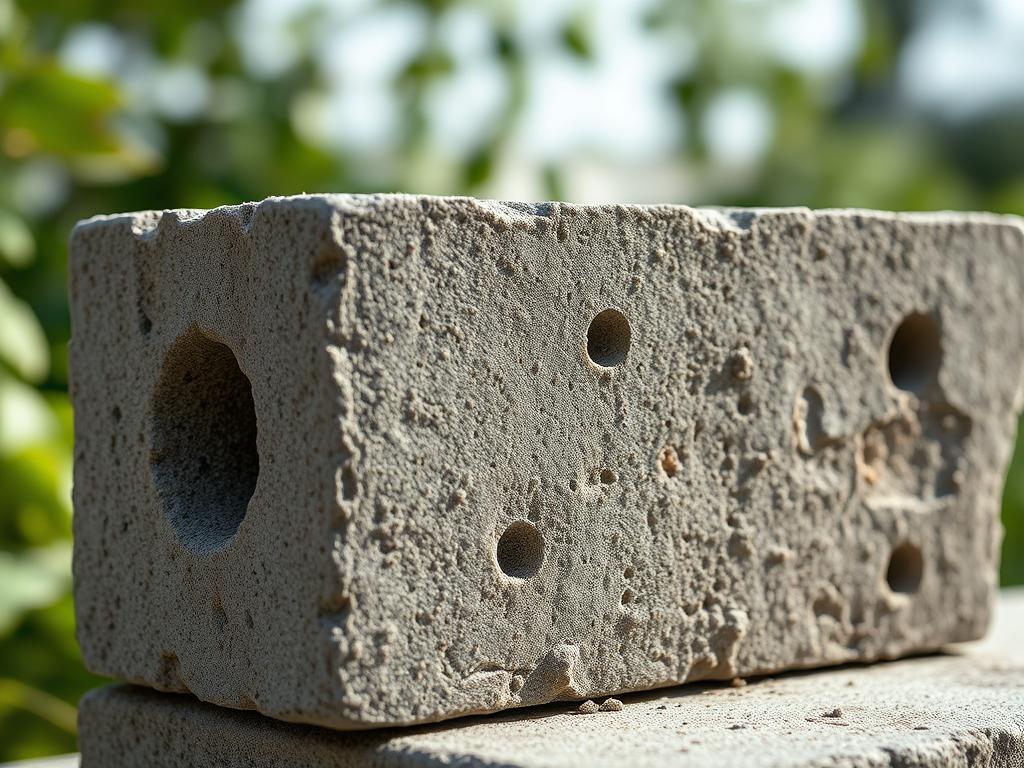
For decades, concrete has been an indispensable part of our modern world, forming the backbone of our cities and infrastructure. But its widespread use comes at a high environmental cost. The production of cement, a key component of concrete, is one of the largest industrial emitters of carbon dioxide, contributing about 7% of global CO2 emissions. This has driven a critical need for sustainable alternatives, and a recent study published in Scientific Reports offers a promising solution: using biocharBiochar is a carbon-rich material created from biomass decomposition in low-oxygen conditions. It has important applications in environmental remediation, soil improvement, agriculture, carbon sequestration, energy storage, and sustainable materials, promoting efficiency and reducing waste in various contexts while addressing climate change challenges. More to create a stronger, more eco-friendly concrete.
The study, led by Ravi Patel, Jarvis Stobbs, and Bishnu Acharya, investigated replacing a portion of cement with biochar, a carbon-rich material made from waste biomassBiomass is a complex biological organic or non-organic solid product derived from living or recently living organism and available naturally. Various types of wastes such as animal manure, waste paper, sludge and many industrial wastes are also treated as biomass because like natural biomass these More. The goal was to see if this “green” concrete could match or even surpass the performance of traditional concrete, all without using petroleum-derived superplasticizers. Biochar is not only a way to repurpose waste; it’s also excellent at carbon sequestration, meaning it can trap carbon from the atmosphere. This makes it a potential game-changer for reducing the carbon footprint of the construction industry.
The research tested different concrete mixtures, replacing cement with biochar at concentrations ranging from 0% to 5% by weight. The results were compelling. The optimal amount of biochar was found to be 2%. At this concentration, the biochar-infused concrete significantly outperformed the control group (regular concrete) in key strength tests. Specifically, its compressive strength increased by 18.95%, splitting tensile strength by 19.64%, and flexural load at fracture by 12%.
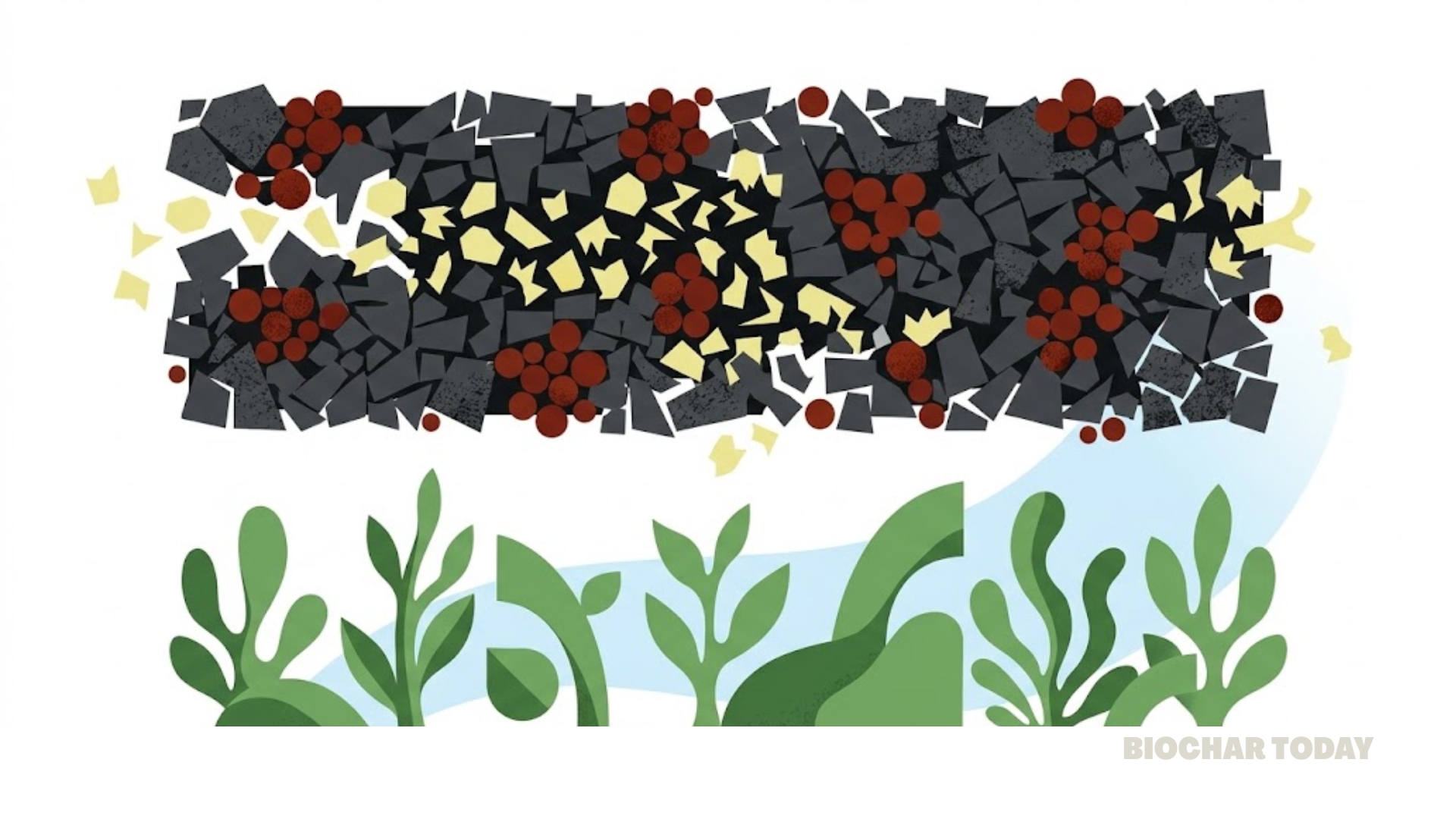
So, how does biochar achieve this impressive performance? The study found a couple of reasons. First, biochar’s porous structure helps it act as “water-pockets” within the concrete. This allows for a more uniform and effective curing process, which boosts the cement’s hydration reaction and leads to more of the hydrated products that provide concrete’s ultimate strength. Second, the finely powdered biochar fills in tiny gaps and voids, creating a denser, less porous structure. The researchers confirmed this with synchrotron-based micro-computed tomography (SR-µCT), a non-destructive imaging technique that revealed the 2% biochar sample had 1.05% porosityPorosity of biochar is a key factor in its effectiveness as a soil amendment and its ability to retain water and nutrients. Biochar’s porosity is influenced by feedstock type and pyrolysis temperature, and it plays a crucial role in microbial activity and overall soil health. Biochar More, compared to 1.75% for the control sample. This reduced porosity translates directly to better mechanical strength and lower water absorption.
The researchers also looked at the cost, comparing the price of ingredients for both traditional and biochar-infused concrete. While the initial cost of biochar concrete was slightly higher, a fascinating finding emerged when considering Canada’s carbon credit program. This program offers a credit for every ton of carbon sequestered. Since biochar can sequester approximately three tons of carbon dioxide per ton of biochar used, this program could offset the higher production cost. With the carbon credit, the cost of biochar concrete became lower than that of the control concrete. The 2% biochar sample, identified as the optimal mix, was found to be the most cost-effective solution when considering the carbon credit program.
The study concluded that biochar is a viable and sustainable alternative for partially replacing cement in concrete. It not only enhances the concrete’s mechanical strength and reduces its porosity but also provides a pathway for carbon sequestration, turning a significant industrial pollutant into a valuable resource. However, the study also cautions that using too much biochar can have a negative impact. Higher concentrations (3% and 5% in this study) resulted in reduced strength and durability due to an increase in voids and water absorption.
This research highlights the significant potential of biochar for creating high-performance, sustainable building materials. As the world continues to seek ways to mitigate climate change, innovations like biochar-based concrete could play a crucial role in making the construction industry greener and more resilient.
Source: Patel, R., Stobbs, J., & Acharya, B. (2025). Study of biochar in cementitious materials for developing green concrete composites. Scientific Reports, 15(22192).



Leave a Reply