
Key Takeaways
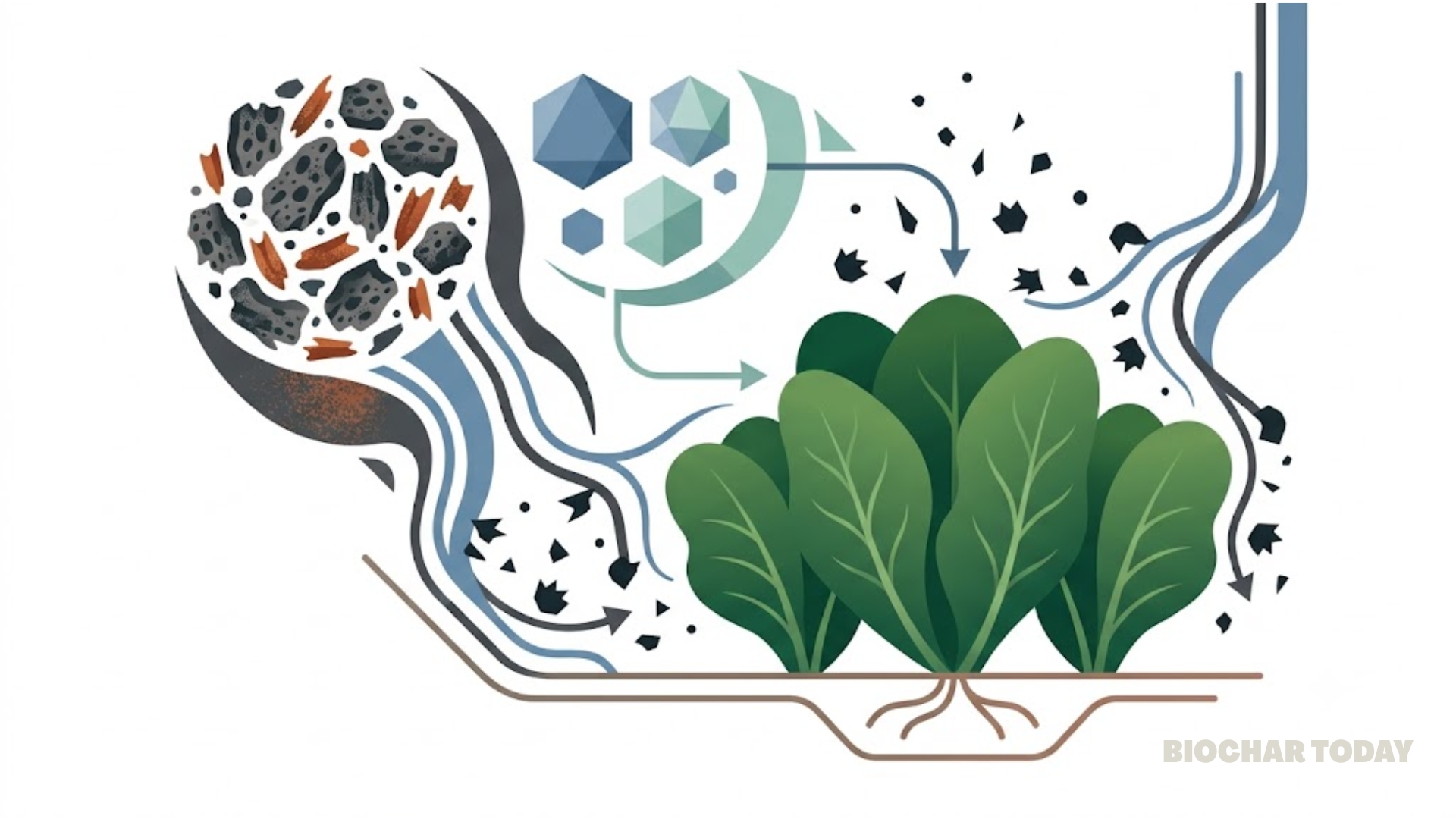
- Applying rice husk biocharBiochar is a carbon-rich material created from biomass decomposition in low-oxygen conditions. It has important applications in environmental remediation, soil improvement, agriculture, carbon sequestration, energy storage, and sustainable materials, promoting efficiency and reducing waste in various contexts while addressing climate change challenges. More at high rates enhances lettuce height and leaf count under cadmium stress.
- Combining biochar with silica fertilizer lowers soil and plant cadmium levels compared to untreated conditions.
- Biochar treatments alone significantly reduce cadmium concentrations in plant tissues.
- Neither biochar nor silica application showed a statistically significant synergistic interaction effect.
- Even under optimal treatment combinations, lettuce cadmium levels remain above safety guidelines for human consumption.
Cadmium accumulation in agricultural soils presents a direct risk to crop health and human safety. The heavy metal enters farming systems through mining activities, phosphate fertilizers, and urban waste irrigation, disrupting plant photosynthesis, cellular structure, and nutrient absorption. Leafy vegetables like lettuce are particularly vulnerable because they readily absorb and translocate heavy metals into their edible shoots, creating a potential route for human ingestion. Finding sustainable soil amendments that stabilize heavy metals and safeguard vegetable production is therefore a priority for agricultural researchers.
Biochar and silica-based materials have emerged as leading candidates for soil remediation. Rice husk biochar features a porous surface structure and functional groups that bind heavy metals, reducing their mobility and bioavailability in the soil matrix. At the same time, silica supplements reinforce plant cellular walls and enhance physiological defenses against metal toxicity. Although both amendments have demonstrated individual success in promoting plant stress tolerance, evaluating how their combination influences crop growth and metal uptake provides critical insights for managing contaminated farmland.
Higher application rates of rice husk biochar noticeably improve morphological growth parameters in lettuce exposed to cadmium stress. Applying biochar at forty-five tons per hectare produces the tallest plants and the highest leaf counts compared to control conditions. Biochar improves the physical and chemical properties of the growing medium, increasing essential macronutrient availability and supporting active cell division. Despite these morphological gains, fresh plant weight remains largely unaffected by biochar or silica additions, suggesting that cadmium toxicity limits total biomassBiomass is a complex biological organic or non-organic solid product derived from living or recently living organism and available naturally. Various types of wastes such as animal manure, waste paper, sludge and many industrial wastes are also treated as biomass because like natural biomass these More accumulation beyond visual structural changes.
In terms of metal uptake, biochar applications significantly decrease cadmium concentrations in lettuce shoot tissue. The highest biochar application rate yields the lowest plant metal concentrations compared to unamended soils. Silica applications show descriptive reductions in metal uptake, but their standalone effects and overall statistical interaction with biochar do not prove significant. The combination of forty-five tons per hectare of biochar and three grams per three kilograms of soil of silica achieves the lowest recorded soil and plant cadmium concentrations in the study.
Linear regression analysis shows a weak relationship between total soil cadmium levels and plant metal accumulation. Soil cadmium concentrations account for less than a quarter of the variation observed in plant cadmium uptake. This weak correlation indicates that soil amendments alter cadmium mobility and root absorption processes, decoupling total soil metal content from actual plant bioaccumulation. Additional factors such as soil cation exchange capacity, organic matter interactions, and local micro-environments play dominant roles in governing metal uptake.
Despite the observed improvements in growth and metal reduction, environmental safety challenges remain. Every treatment combination tested yields plant cadmium levels exceeding international food safety limits. The lowest cadmium concentration achieved in the study remains sixty percent above established consumption thresholds. Consequently, while rice husk biochar aids plant growth and reduces metal uptake, relying solely on these amendments is inadequate for ensuring food safety in heavily contaminated soils, highlighting the need for higher application rates or multi-stage remediation strategies.
Source: Evitasari, D., Arifin, M., & Maroeto. (2026). Mitigation of Cadmium Stress in Lettuce (Lactuca sativa L.) Using Rice Husk Biochar and Silica Fertilizer. Jurnal Teknik Pertanian Lampung, 15(4), 1471–1482.


Leave a Reply