
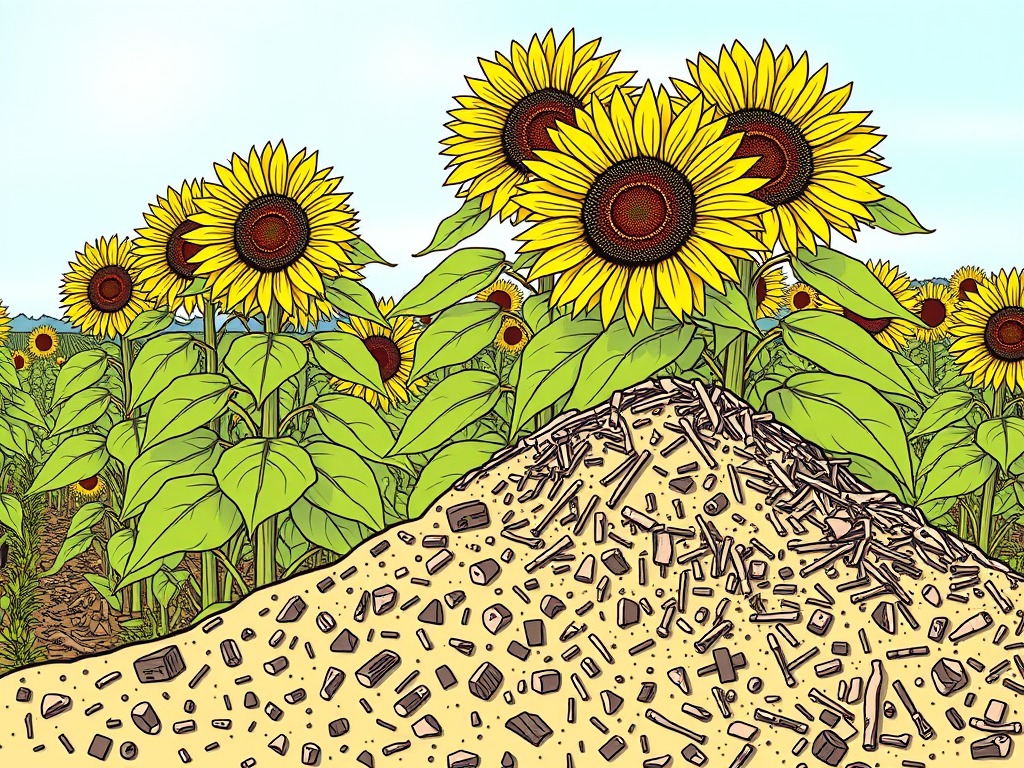
Heavy metal contamination, particularly from cadmium (Cd), poses a significant threat to agricultural soils and food safety worldwide. Industrialization and inadequate waste management have exacerbated this issue, leading to decreased soil quality and compromised crop yields. Cadmium is especially concerning due to its negative impact on soil characteristics and its toxicity to plants, animals, and humans. It interferes with crucial plant processes like photosynthesis, respiration, and nutrient uptake, ultimately hindering growth and productivity. A recent study published in BMC Plant Biology by Rauf et al. explores a powerful organic amendment: co-composted biocharBiochar is a carbon-rich material created from biomass decomposition in low-oxygen conditions. It has important applications in environmental remediation, soil improvement, agriculture, carbon sequestration, energy storage, and sustainable materials, promoting efficiency and reducing waste in various contexts while addressing climate change challenges. More, demonstrating its remarkable potential to revitalize cadmium-stressed sunflower plants and remediate contaminated soil.
Biochar has gained attention for its ability to improve soil properties such as structure, water retention, and nutrient holding capacity, while also removing pollutants. While biochar alone is beneficial, its effectiveness in adsorbing contaminants can be limited by reduced functional groups. This is where co-composted biochar (COMBI) shines. COMBI, a mixture of normal biochar and compost, boasts higher organic matter content, carbon content, and cation exchange capacity compared to either component used individually. This synergistic combination allows for enhanced adsorption of heavy metals and improved soil fertility.
The researchers conducted an experiment to evaluate the impact of normal, modified, and co-composted biochar on sunflower growth in soil contaminated with 30 and 60 mg kg⁻¹ of cadmium. The results were compelling. While both normal and modified biochar improved sunflower growth and reduced Cd uptake, co-composted biochar delivered superior outcomes. Under 60 mg kg⁻¹ Cd stress, COMBI remarkably increased crop agronomic parameters, showing improvements ranging from 115% to 132% compared to control treatments. Specifically, plant height increased by 128%, root length by 120%, shoot fresh weight by 127%, root fresh weight by 121%, shoot dry weight by 126%, root dry weight by 118%, stem diameter by 126%, head diameter by 115%, number of achenes per head by 123%, and 1000-grain weight by 132%.
Beyond physical growth, COMBI significantly improved the physiological and biochemical responses of sunflowers. Chlorophyll content, vital for photosynthesis, increased by 122%. Water use efficiency (WUE) saw a 117% boost, photosynthetic rate (A) improved by 126%, transpiration rate (E) by 133%, stomatal conductance (gs) by 128%, and sub-stomatal conductance (Ci) by 131%. Relative water content (RWC) increased by 123%, while electrolyte leakage (EL), an indicator of cell damage, decreased by 121%. Furthermore, COMBI enhanced the plant’s natural defense mechanisms, increasing stress-related metabolites and antioxidant enzymes. Proline content increased by 123%, soluble sugars by 121%, lipid peroxidation by 118%, catalase (CAT) by 128%, ascorbate peroxidase (APX) by 124%, superoxide dismutase (SOD) by 133%, and glutathione reductase (GR) by 126% in Cd-contaminated soil. This suggests a stronger internal system for combating oxidative stress caused by cadmium.
One of the most critical findings was COMBI’s ability to immobilize cadmium in the soil, thereby reducing its uptake by the plant. The application of co-composted biochar led to a prominent reduction in Cd accumulation in the root (66%), shoot (77%), and most importantly, the grain (94%). This reduction in Cd uptake is crucial for ensuring food safety and minimizing health risks associated with heavy metal consumption. The study’s results indicate that co-composted biochar serves as an effective, practical approach to convert agricultural waste into valuable organic soil amendments, promoting sustainable agricultural practices in polluted areas.
In conclusion, the research by Rauf et al. highlights co-composted biochar as a highly effective and eco-friendly strategy for managing cadmium-contaminated soils. Its synergistic properties not only enhance crop growth, yield, and physiological resilience but also significantly reduce the transfer of toxic cadmium into the food chain, offering a promising solution for sustainable agriculture and improved food security.
Source: Rauf, M., Naveed, M., Munir, M., Ghafoor, A., Sattar, M. N., Ali-Dinar, H., Mohamed, H. A., Bashir, M. A., Asif, M., & Mustafa, A. Revitalizing cadmium-stressed sunflower: co-composted biochar improves growth, antioxidant responses, and soil remediation efficiency. BMC Plant Biology, 25(875).





Leave a Reply