
Key Takeaways
- Mixing natural cotton with synthetic polyester waste creates a much more powerful material than using either fabric alone.
- The gas released by cotton during heating creates tiny holes in the melted polyester, which greatly increases the available surface area.
- This new material can hold more energy and has a better surface for cleaning up environmental pollutants in soil and water.
- Converting old clothes into this charcoal-like substance provides a sustainable way to keep textile waste out of landfills.
- Higher processing temperatures make the resulting material more stable and better at trapping specific chemical contaminants.
The global textile industry currently faces a massive environmental hurdle, as millions of tons of fabric waste are discarded annually, often ending up in landfills due to the complexity of recycling blended synthetic and natural fibers. In a recent study published in ChemRxiv, researchers Taymee A. Brandon, Chad T. Jafvert, Cliff T. Johnston, Wen-Che Hou, and Inez Hua investigated a promising solution through a process called pyrolysisPyrolysis is a thermochemical process that converts waste biomass into bio-char, bio-oil, and pyro-gas. It offers significant advantages in waste valorization, turning low-value materials into economically valuable resources. Its versatility allows for tailored products based on operational conditions, presenting itself as a cost-effective and efficient More. By heating textile waste in the absence of oxygen, the team successfully converted discarded cotton, polyester, and wool into biocharBiochar is a carbon-rich material created from biomass decomposition in low-oxygen conditions. It has important applications in environmental remediation, soil improvement, agriculture, carbon sequestration, energy storage, and sustainable materials, promoting efficiency and reducing waste in various contexts while addressing climate change challenges. More with significant potential for environmental remediation. This approach offers a new loop in the circular economy, transforming what was once considered unrecyclable waste into a value-added product capable of cleaning soil and water systems.
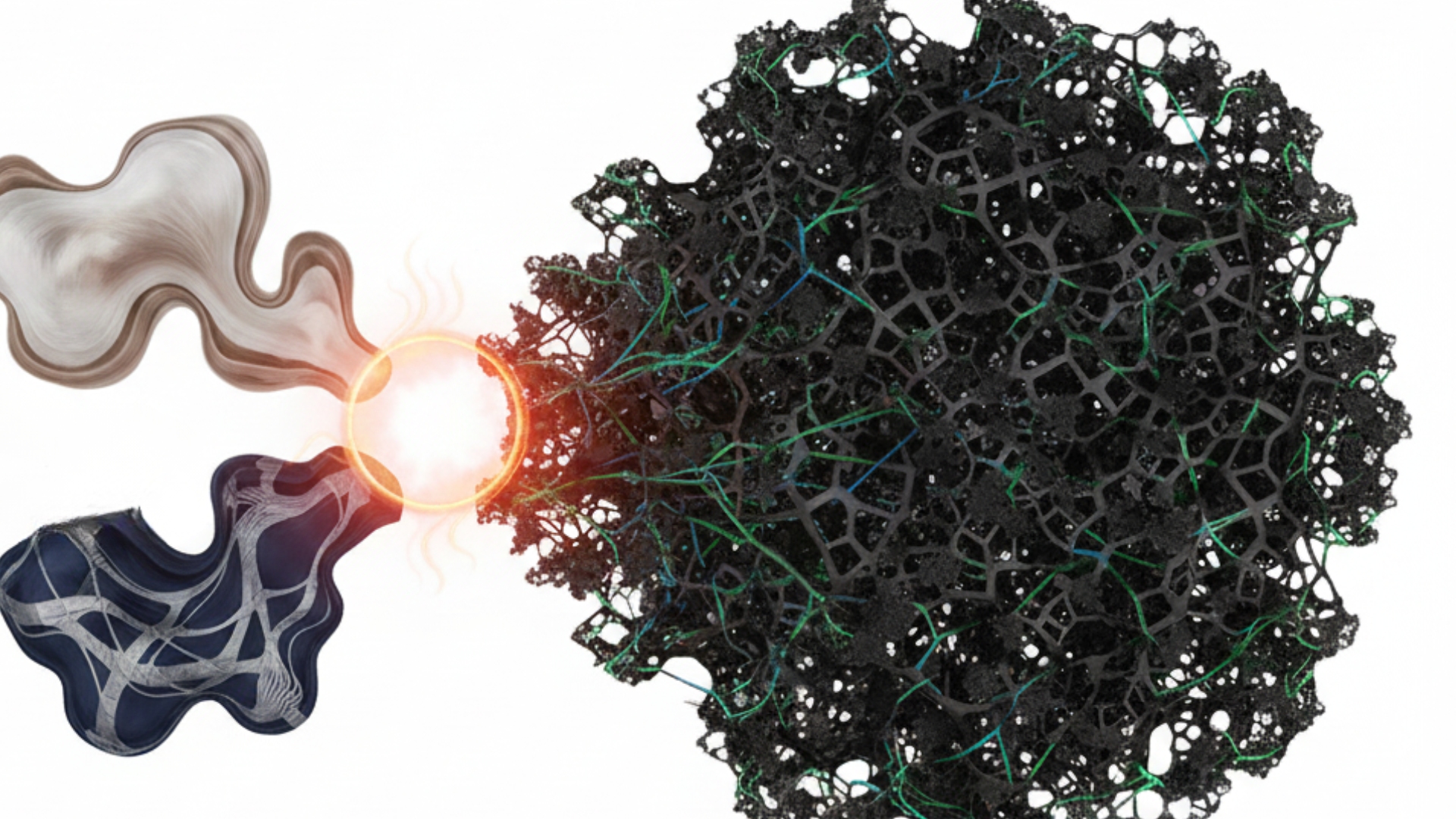
The research highlights a significant breakthrough in how mixed fabrics interact when heated together. When cotton and polyester were processed as a one-to-one blend at temperatures between 450 and 650 degrees Celsius, the resulting biochar exhibited a much higher surface area than the materials produced from individual textiles. Specifically, the blended biochar reached a maximum surface area of 621 square meters per gram at 450 degrees Celsius. This is a dramatic improvement over the surface area of pure cotton biochar, which measured only 71 square meters per gram at the same temperature, while pure polyester biochar showed almost no measurable surface area at all. This physical synergy suggests that as the cotton breaks down and releases gases, those vapors bubble through the molten polyester, acting as a natural foaming agent that creates an intricate network of pores.
Beyond the physical structure, the chemical composition of the textiles underwent profound changes as the temperature increased. The study found that higher temperatures led to advanced carbonization, where the carbon content in cotton biochar rose from approximately 44 percent in its raw state to over 91 percent when heated to 650 degrees Celsius. This process, known as coalification, makes the material more stable and energy-dense. The blended cotton and polyester biochar also showed a more negatively charged surface compared to pure cotton, a characteristic that makes it particularly effective at attracting and holding onto positively charged pollutants, such as certain surfactants found in wastewater.
Energy recovery is another vital benefit of this conversion process. The researchers measured the higher heating values of the biochars to determine their potential as solid fuels. The results showed that the co-pyrolyzed blend consistently possessed higher energy density than cotton biochar alone, particularly at higher temperatures. By the time the materials reached 550 degrees Celsius, the energy values for the cotton and polyester blend were comparable to other high-quality biochar types used for fuel. This means the process not only creates a tool for environmental cleaning but also produces a material that could potentially be used as a sustainable energy source, further reducing the reliance on traditional fossil fuels.
The study concludes that the improvements seen in the blended materials are driven primarily by physical interactions rather than new chemical reactions. Because no unique chemical species were detected during the gas analysis of the blend, the researchers believe the benefits come from the mechanical way the two materials melt and release gas together. This is an encouraging finding for the waste management industry, as it suggests that complex, mixed textile waste does not need to be meticulously separated to produce high-quality biochar. Instead, the inherent properties of natural and synthetic fibers can be leveraged to tailor the functionality of the final product for specific environmental or energy applications.
Source: Brandon, T. A., Jafvert, C. T., Johnston, C. T., Hou, W.-C., & Hua, I. (2026). Characterization of natural and synthetic textile-derived biochar from torrefaction to moderate pyrolysis. ChemRxiv.



Leave a Reply