
Key Takeaways
- Mixing different types of farm waste during heating creates a more complex and diverse biocharBiochar is a carbon-rich material created from biomass decomposition in low-oxygen conditions. It has important applications in environmental remediation, soil improvement, agriculture, carbon sequestration, energy storage, and sustainable materials, promoting efficiency and reducing waste in various contexts while addressing climate change challenges. More material.
- Using both corn stalks and rice husks results in a biochar that contains a wider variety of beneficial minerals.
- The combined material stays slightly alkaline, which helps balance the acidity of certain types of soil.
- This eco-friendly process recycles agricultural leftovers into a stable form that can help store carbon.
- The resulting biochar contains essential nutrients like nitrogen and potassium that support plant growth.
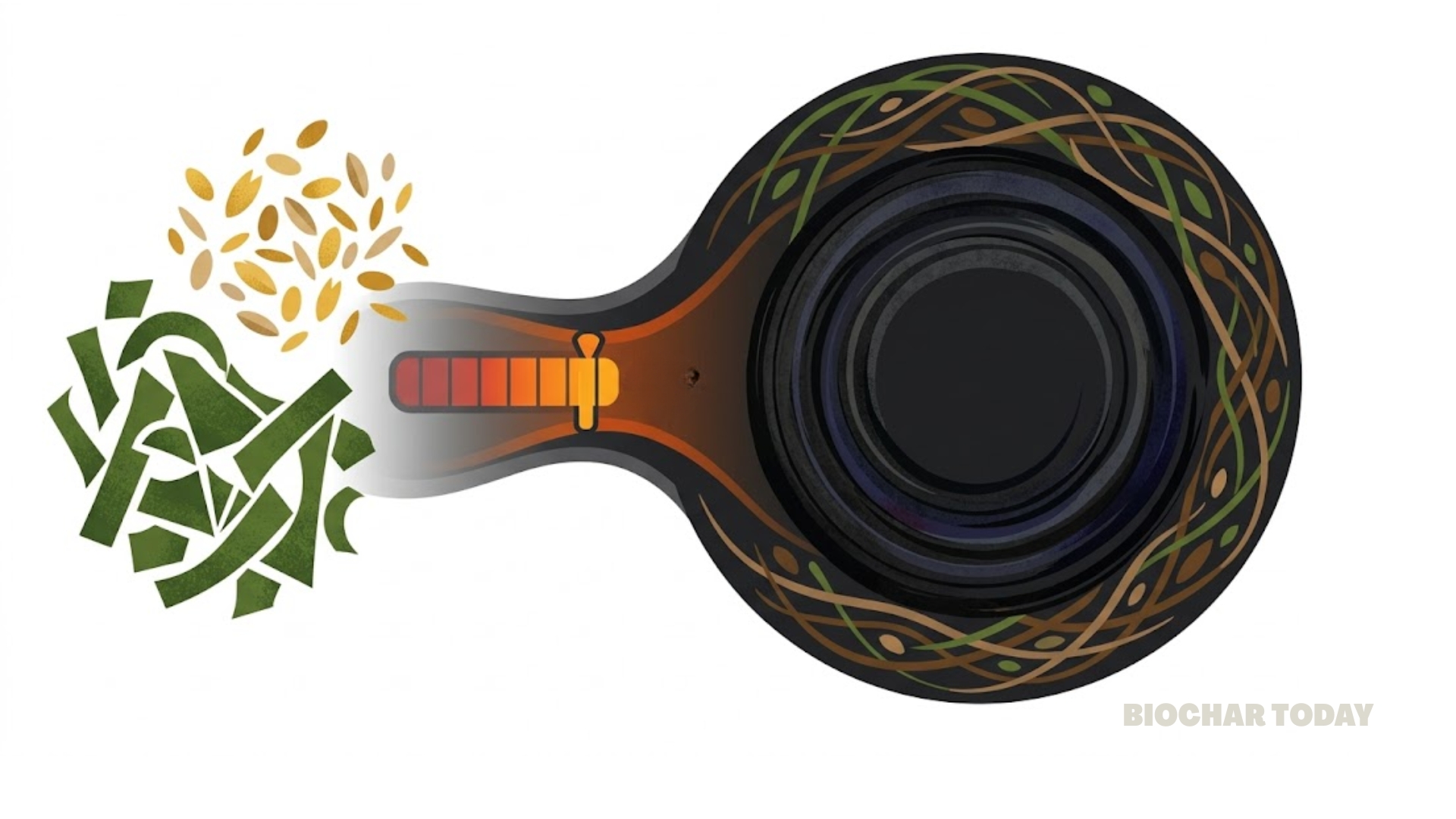
Published in Scientific Reports, researchers Zeynep Demir and Pinar Acar Bozkurt investigated how blending different agricultural leftovers affects the quality of biochar. By heating an equal mixture of corn stalks and rice husks at a moderate temperature, the team created a material that inherited the best traits of both plants. The study emphasizes that this co-pyrolysis method is not just about mixing two things together; it actually causes the materials to interact in ways that change their physical and chemical structure. These interactions are vital for creating a high-quality product that can be used for environmental cleanup or to improve farmland.
One of the most important findings of the research was the specific chemical makeup of the blended biochar. The analysis showed that the final product was rich in organic matter, making up nearly sixty-five percent of its weight. Because rice husks are naturally high in silica, the mixture biochar contained a significant amount of this mineral, which helps plants stay strong against drought and disease. Meanwhile, the corn stalk portion contributed essential nutrients like potassium and calcium, which are necessary for healthy soil. The researchers found that the mixture actually held onto nitrogen better than the corn stalks did alone, resulting in a product with higher total nitrogen content.
The physical structure of the biochar also changed significantly during the heating process. When the two materials were heated together, they formed a variety of particle sizes, ranging from very fine dust to coarser grains. This diversity in size is actually a benefit, as it creates more complex networks of pores and surfaces where water and nutrients can be trapped. Despite the particles becoming somewhat larger on average than the individual ingredients, the total surface area remained high. This suggests that the porous architecture of the rice husk was preserved, providing plenty of active sites for chemical reactions to occur when the biochar is added to water or soil.
The study also looked at the electrical characteristics and acidity of the biochar, which determine how it behaves in nature. All the samples tested had a negative surface charge, which is a common trait that allows biochar to attract and hold onto certain pollutants. The blended biochar was slightly alkaline, with a pHpH is a measure of how acidic or alkaline a substance is. A pH of 7 is neutral, while lower pH values indicate acidity and higher values indicate alkalinity. Biochars are normally alkaline and can influence soil pH, often increasing it, which can be beneficial More level of 7.69. This alkalinity is very useful for farming, as many agricultural soils around the world are too acidic for crops to grow well. Adding this biochar could help neutralize that acid and create a more comfortable home for the beneficial microbes that live in the dirt. Additionally, the material showed a moderate level of electrical conductivity, meaning it contains a healthy amount of soluble salts without being so salty that it would harm sensitive plants.
Visually, the biochar appeared as a complex, dark material with many irregular surfaces and visible pore networks. The researchers used advanced microscopes to see how the minerals were distributed throughout the carbon frame. They found a heterogeneous landscape where fragmented pieces and porous regions were scattered with bright spots of metal oxides. This structural variety confirms that the two different plant sources were successfully integrated into a single, functional composite. While the study took place in a controlled lab setting, the results suggest that this type of blended biochar could be a powerful tool for sustainable waste management and regenerative agriculture.
In conclusion, the research demonstrates that co-pyrolysis is an effective strategy for producing “designer” biochars with specific mineral and structural traits. By carefully choosing the right mixture of farm waste and controlling the temperature, it is possible to create a recycled material that supports both soil health and plant growth. This work provides a scientific foundation for using agricultural leftovers more wisely, helping to turn common waste into a valuable resource for a greener future.
Source: Demir, Z., & Bozkurt, P. A. (2026). Co-pyrolysis of agricultural biomassBiomass is a complex biological organic or non-organic solid product derived from living or recently living organism and available naturally. Various types of wastes such as animal manure, waste paper, sludge and many industrial wastes are also treated as biomass because like natural biomass these More for potentially functional biochar: combined influence of both feedstocks and structural characterization. Scientific Reports.


Leave a Reply