
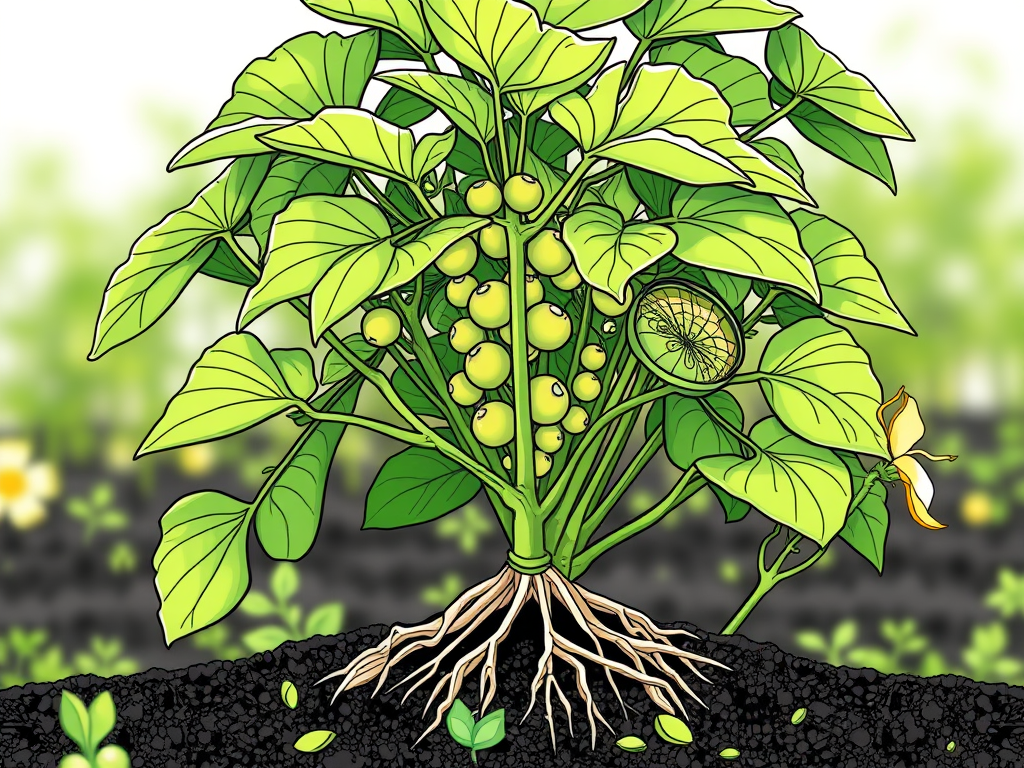
Sclerotium rolfsii is a devastating soil-borne pathogen causing collar rot in chickpea, leading to significant crop yield losses globally. Traditional chemical fungicides, while effective, pose environmental hazards and raise sustainability concerns. A recent study published in BMC Plant Biology by Prashant Paveen, Vipul Kumar, Rajeev Kumar Gupta, Ramesh Kumar Sadawarti, Saud Alamri, Manzer H. Siddiqui, and Hazem M. Kalaji, explores a sustainable, eco-friendly approach using an integrated combination of rice husk biocharBiochar is a carbon-rich material created from biomass decomposition in low-oxygen conditions. It has important applications in environmental remediation, soil improvement, agriculture, carbon sequestration, energy storage, and sustainable materials, promoting efficiency and reducing waste in various contexts while addressing climate change challenges. More (RHB), Cassia fistula extract, and Trichoderma harzianum to manage this pathogen in chickpea cultivation. This novel approach aims to enhance plant defense, manage soil-borne pathogens, and boost crop productivity.
The researchers treated chickpea plants with 3% RHB (52.3% carbon, pHpH is a measure of how acidic or alkaline a substance is. A pH of 7 is neutral, while lower pH values indicate acidity and higher values indicate alkalinity. Biochars are normally alkaline and can influence soil pH, often increasing it, which can be beneficial More 8.2), 450 ppm Cassia fistula extract, and Trichoderma harzianum. The RHB used in the study exhibited properties suitable for agricultural and biocontrol amendments, including a carbon content of 52% and an alkaline pH of 8.2, which aids in neutralizing acidic soil and promoting microbial growth. The biochar also contained essential macronutrients (0.5% nitrogen, 0.25% phosphorus, 2% potassium, 0.6% calcium, 0.3% magnesium, 0.07% sulfur) and micronutrientsThese are essential nutrients that plants need in small amounts, kind of like vitamins for humans. They include things like iron, zinc, and copper. Biochar can help hold onto these micronutrients in the soil, making them more available to plants. More (0.05% iron, 0.01% zinc, 0.008% manganese). Its cation exchange capacity (CEC) was 16.4 cmolc/kg, and its surface area was 159 m²/g, both contributing to nutrient retention and microbial interaction. High lignin content (28.7%) provided structural stability and porous spaces, creating a protective habitat for beneficial microbes like Trichoderma.
The integrated treatment significantly enhanced Trichoderma harzianum growth, achieving a great spore count. This combination proved optimal for T. harzianum proliferation while effectively suppressing Sclerotium rolfsii. The efficacy against S. rolfsii was prominent at higher concentrations of RHB and Cassia extract, with the least pathogen growth observed at 3% to 5% biochar and 450-500 ppm Cassia extract. Field analysis revealed that the combined treatment (RHB + Cassia extract + T. harzianum) significantly improved chickpea growth, resulting in a shoot length of 45.7 cm and a root mass of 4.73 g/plant, outperforming other combinations.
Crucially, the combination treatment led to a significant reduction in disease incidence, from 64% in the control group to 35%, representing a 45% decrease. This was directly correlated with an increase in the phenolic content of chickpea plants. The highest phenolic content (0.49 µg GAE g⁻¹) was observed in the combined treatment, a 19.5% increase compared to the control group’s 0.41 µg GAE g⁻¹. This suggests that phenolic compounds play a vital role in enhancing the plant’s defense mechanisms, with biochar, Cassia, and T. harzianum synergistically boosting phenolic synthesis. This integrative approach offers a sustainable, eco-friendly strategy for managing soil-borne pathogens and improving crop productivity, providing a robust solution for chickpea cultivation and contributing to global food security.
Source: Paveen, P., Kumar, V., Gupta, R. K., Sadawarti, R. K., Alamri, S., Siddiqui, M. H., & Kalaji, H. M. (2025). Integrated use of biochar, Cassia fistula, and Trichoderma for sustainable management of Sclerotium rolfsii in chickpea. BMC Plant Biology, 25(1), 895.




Leave a Reply