
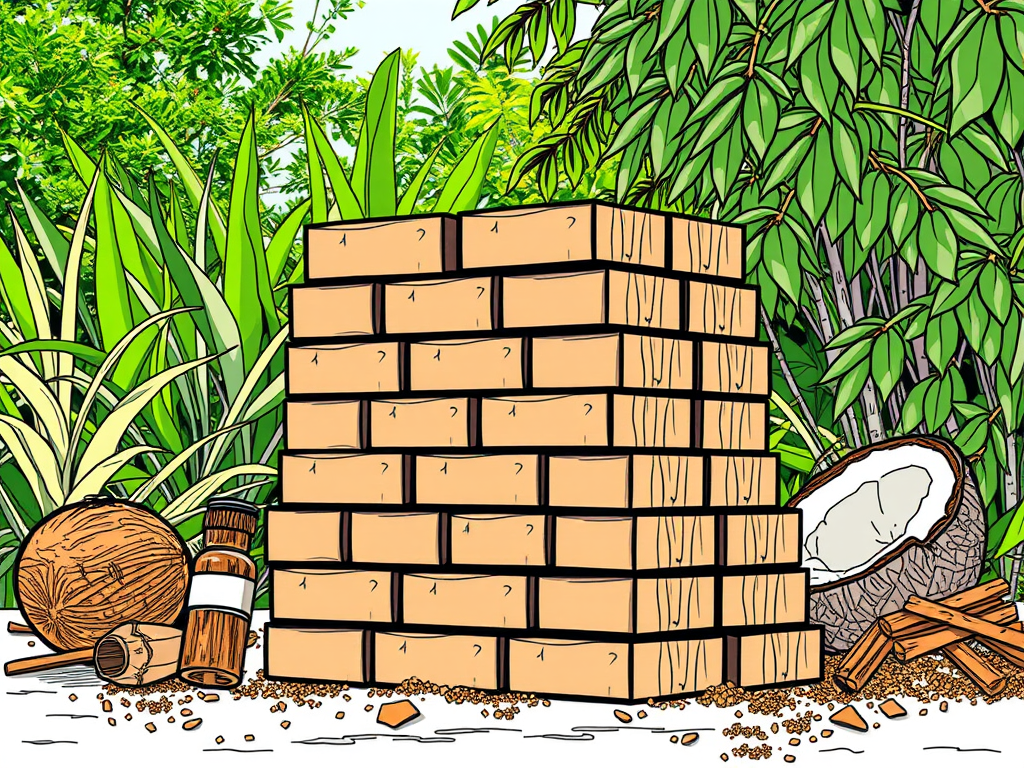
In a study published in AgriEngineering, Madhusanka et al., explored the production of sustainable fuel briquettes using coconut shell biocharBiochar is a carbon-rich material created from biomass decomposition in low-oxygen conditions. It has important applications in environmental remediation, soil improvement, agriculture, carbon sequestration, energy storage, and sustainable materials, promoting efficiency and reducing waste in various contexts while addressing climate change challenges. More and cinnamon sawdust, bound by non-edible, eco-friendly binders. The research highlights the potential of cassava peel starch, giant taro starch, and pine resin as effective binders in creating biomassBiomass is a complex biological organic or non-organic solid product derived from living or recently living organism and available naturally. Various types of wastes such as animal manure, waste paper, sludge and many industrial wastes are also treated as biomass because like natural biomass these More briquettes.
The study details the production process, which involves carbonizing coconut shells, crushing them, blending them with cinnamon sawdust, pressing the mixture into briquettes, and then sun-drying the briquettes for 12 days. The quality of the briquettes was assessed by measuring their calorific value, density, compressive strength, and shatter resistance.
The calorific values of the briquettes ranged from 26.07 to 31.60 MJ/kg, meeting the minimum industrial standards for fuel. The density of the briquettes varied from 0.83 to 1.14 g/cm³, indicating that they are compact enough for efficient combustion.
Cassava peel starch proved to be the most effective binder, producing high-density briquettes with superior durability and energy release. Briquettes using cassava peel starch showed a calorific value of 29.9 MJ/kg and a compressive strength of 2.11 MPa. Giant taro starch also improved the briquettes’ durability, offering better bonding than pine resin, although with slightly lower calorific values. Pine resin contributed to higher calorific values but reduced the compressive strength of the briquettes, making it less suitable for applications requiring high mechanical strength.
Proximate analysis of the briquettes revealed key differences based on the binder used. Cassava peel starch-based briquettes had a moisture content of 6.5% to 8.6%, volatile matterVolatile matter refers to the organic compounds that are released as gases during the pyrolysis process. These compounds can include methane, hydrogen, and carbon monoxide, which can be captured and used as fuel or further processed into other valuable products. More content of 15.2% to 23.5%, ashAsh is the non-combustible inorganic residue that remains after organic matter, like wood or biomass, is completely burned. It consists mainly of minerals and is different from biochar, which is produced through incomplete combustion. Ash Ash is the residue that remains after the complete More content of 2.1% to 3.2%, and fixed carbon content of 69% to 76.2%. Giant taro starch-based briquettes had a fixed carbon content of 63.2% to 75%, while pine resin-based briquettes had the highest fixed carbon content, ranging from 66.4% to 78.3%.
Overall, the study demonstrates the potential of using non-edible biomass waste and binders to produce sustainable, high-performance fuel.
Source: Madhusanka, L., Nilmalgoda, H., Wijethunga, I., Ampitiyawatta, A., & Koswattage, K. (2025). Agri-Eco Energy: Evaluating Non-Edible Binders in Coconut Shell Biochar and Cinnamon Sawdust Briquettes for Sustainable Fuel Production. AgriEngineering, 7(5), 132.




Leave a Reply