

Key Takeaways
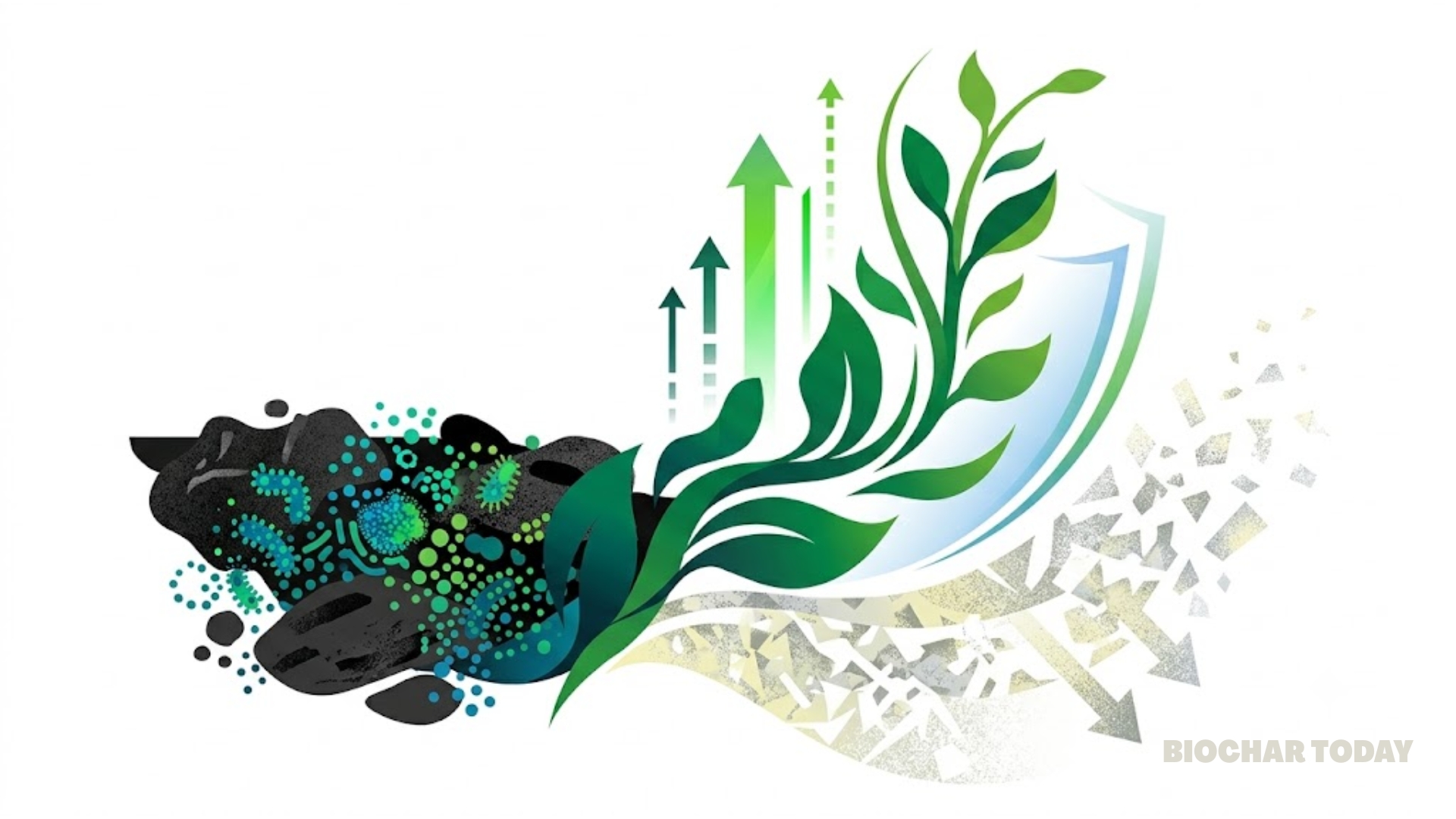
- Red Pepper Fields Can Fight Climate Change: By using the correct amount of woody biocharBiochar is a carbon-rich material created from biomass decomposition in low-oxygen conditions. It has important applications in environmental remediation, soil improvement, agriculture, carbon sequestration, energy storage, and sustainable materials, promoting efficiency and reducing waste in various contexts while addressing climate change challenges. More, red pepper farms can become a net sink for atmospheric carbon, removing more CO2 than they release.
- Residue is Key to Efficiency: When farmers return leftover plant stems and roots to the soil instead of removing them, they need over 55% less biochar to achieve the same carbon-sequestration goal, saving money and resources.
- The Sweet Spot is 1.8–6.7 Mg ha⁻¹: For the most carbon-efficient method (leaving residue in the soil), farmers only need to apply 1.8–6.7 Mg of biochar per hectare annually to make their field a net carbon-storing system.
- Yield and Soil Health Boosted: Applying biochar increased red pepper fruit yield by up to 18% and improved soil quality by decreasing soil compaction (bulk density) and boosting soil organic carbon content.
- A Model for Agriculture: This precise, data-backed strategy provides a roadmap for sustainable farming, showing how management practices must be integrated with soil amendments to achieve environmental and economic benefits.
A major two-year field study published in the journal Biochar offers a critical pathway for red pepper farmers to turn their fields into significant carbon sinks, finding that the management of crop residue drastically changes the required input of soil amendments. The research, led by Sohee Yoon and Sang Yoon Kim, found a precise and sustainable range for woody biochar application that not only improves crop yield and soil health but also ensures the entire farming system achieves a positive Net Ecosystem Carbon Budget (NECB), meaning it removes more carbon from the atmosphere than it releases. Critically, the team determined that returning leftover plant matter to the soil can cut the optimal biochar application rate by over 55%.
Woody biochar when mixed into agricultural fields, it acts as a long-term carbon reservoir. However, simply adding it is not enough; the true goal is to optimize the whole-system carbon balance. This is where the Net Ecosystem Carbon Budget becomes essential. The NECB accounts for every piece of carbon that enters the system (biochar, fertilizer, and the carbon fixed by the growing crop) and every piece that leaves (harvested crop and gaseous emissions like carbon dioxide). This study aimed to find the “sweet spot” of biochar application to achieve a positive NECB under the two most common farming practices: removing all crop residue or only harvesting the fruit and leaving the remaining plant matter (shoots and roots) in the ground.
The findings provide clear, quantitative guidance for sustainable farming. For fields where the entire red pepper plant biomassBiomass is a complex biological organic or non-organic solid product derived from living or recently living organism and available naturally. Various types of wastes such as animal manure, waste paper, sludge and many industrial wastes are also treated as biomass because like natural biomass these More is removed after harvest—a common practice when the residue is used for fuel or feed—the maximum amount of biochar is needed. To offset the carbon removal caused by harvesting all plant matter and to maintain a positive NECB, the optimal woody biochar application range was estimated to be 7.3–11.4 Mg d.w ha⁻¹. This high rate of application ensures enough stable carbon is added to overcome the carbon lost through respiration and crop removal.
The real breakthrough, however, lies in responsible residue management. For the scenario where farmers only remove the fruit and incorporate the shoots and roots back into the soil, the field’s overall carbon budget shifts dramatically. The returned plant residue acts as a significant additional carbon input, allowing the farmer to achieve the same carbon sequestration goal with a far lower biochar input. Under this best-practice scenario, the optimal biochar application level drops by over half, requiring only 1.8–6.7 Mg d.w ha⁻¹ to maintain a positive NECB. The inclusion of red pepper residue effectively cuts the mean optimal application rate from 9.4 Mg d.w ha⁻¹ to 4.3 Mg d.w ha⁻¹, demonstrating a clear path to saving resources while maximizing environmental benefits.
Beyond its central role in managing carbon, biochar application delivered direct benefits to the crop and the soil itself. The highest application rate (10 Mg d.w ha⁻¹) significantly boosted red pepper productivity, increasing fruit yield by up to 18% in the first year and 16% in the second year, compared to the control group with no biochar. Total crop biomass increased by an impressive 19–34% over the control. The physical and chemical structure of the soil also showed marked improvements. Biochar incorporation effectively decreased bulk density, a key measure of soil compaction, making the soil looser and more favorable for root growth. As expected, the treatment also increased the Soil Organic Carbon (SOC) content, which directly leads to improved water retention and nutrient cycling over time. By using an optimal, data-driven approach to biochar application, red pepper farming can be transformed into a system that not only feeds people but actively contributes to climate change mitigation and long-term soil health.
SOURCE: Yoon, S., Lee, Y., An, H., Melendez, J., & Kim, S. Y. (2025). Sustainable woody biochar application for improving net ecosystem carbon budget, yield and soil properties in red pepper cropping systems: a two-year field study. Biochar, 7(1), 112.



Leave a Reply