
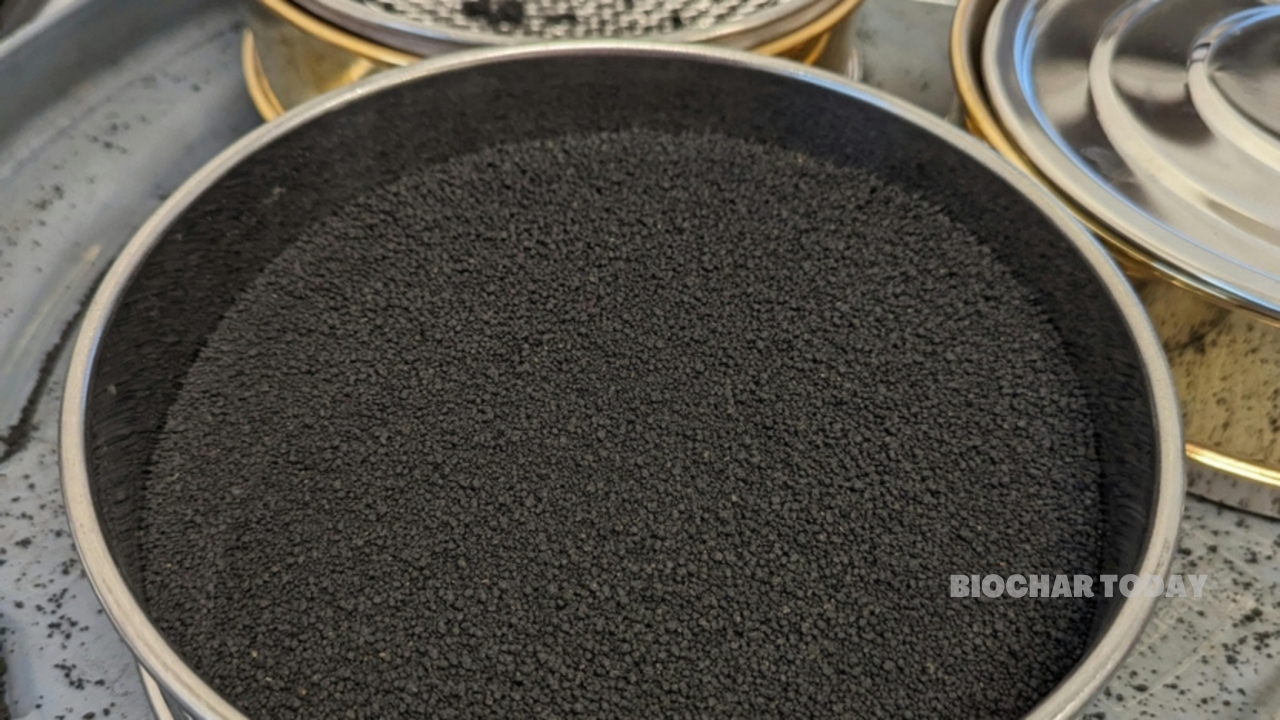
The Capital Regional District (CRD) in Canada has secured $7 million in federal funding to advance the development of a first-of-its-kind regional facility designed to process municipal biosolids into biocharBiochar is a carbon-rich material created from biomass decomposition in low-oxygen conditions. It has important applications in environmental remediation, soil improvement, agriculture, carbon sequestration, energy storage, and sustainable materials, promoting efficiency and reducing waste in various contexts while addressing climate change challenges. More. Announced jointly by federal, provincial, and municipal representatives, the investment originates from a national infrastructure fund designated for large-scale public initiatives that exceed the financial capacity of single local governments. The capital allocation enables the regional district to move forward with engineering, regulatory planning, and proponent selection for a dedicated municipal conversion facility in Greater Victoria, British Columbia.
The project addresses the persistent operational challenge of managing large volumes of wastewater residual solids generated by households and businesses throughout the Greater Victoria region. Wastewater currently undergoes initial treatment at the McLoughlin Point Wastewater Treatment Plant in Esquimalt, after which residual solids are transported to a separate facility at the Hartland Landfill for processing into biosolids. Conventional management pathways for municipal wastewater residuals present recurring environmental risks, including atmospheric greenhouse gas emissions, strict regional regulatory constraints, and significant long-term financial liabilities for local authorities.
To resolve these waste management bottlenecks, the CRD proposes constructing a specialized processing facility within the existing footprint of the Hartland Landfill to convert output biosolids directly into biochar. By applying high-temperature processing to municipal residual solids, the proposed plant will convert organic waste streams into a stable carbon matrix without requiring additional land acquisition or expanding landfill boundaries. The district is collaborating with British Columbia provincial authorities to establish applicable regulatory frameworks, refine project budgeting, and finalize proponent selection, with detailed operational plans slated for board submission in 2027.
The completed facility will achieve long-term carbon sequestration, permanently trapping carbon for hundreds of years that would otherwise release into the atmosphere as greenhouse gases. Furthermore, the initiative optimizes resource recovery by producing a functional material suitable for industrial, construction, agricultural, and forestry applications. Through this capital deployment, the CRD establishes a scalable operational precedent for Canadian municipalities seeking to integrate municipal wastewater treatment with carbon mitigation objectives.




Leave a Reply