
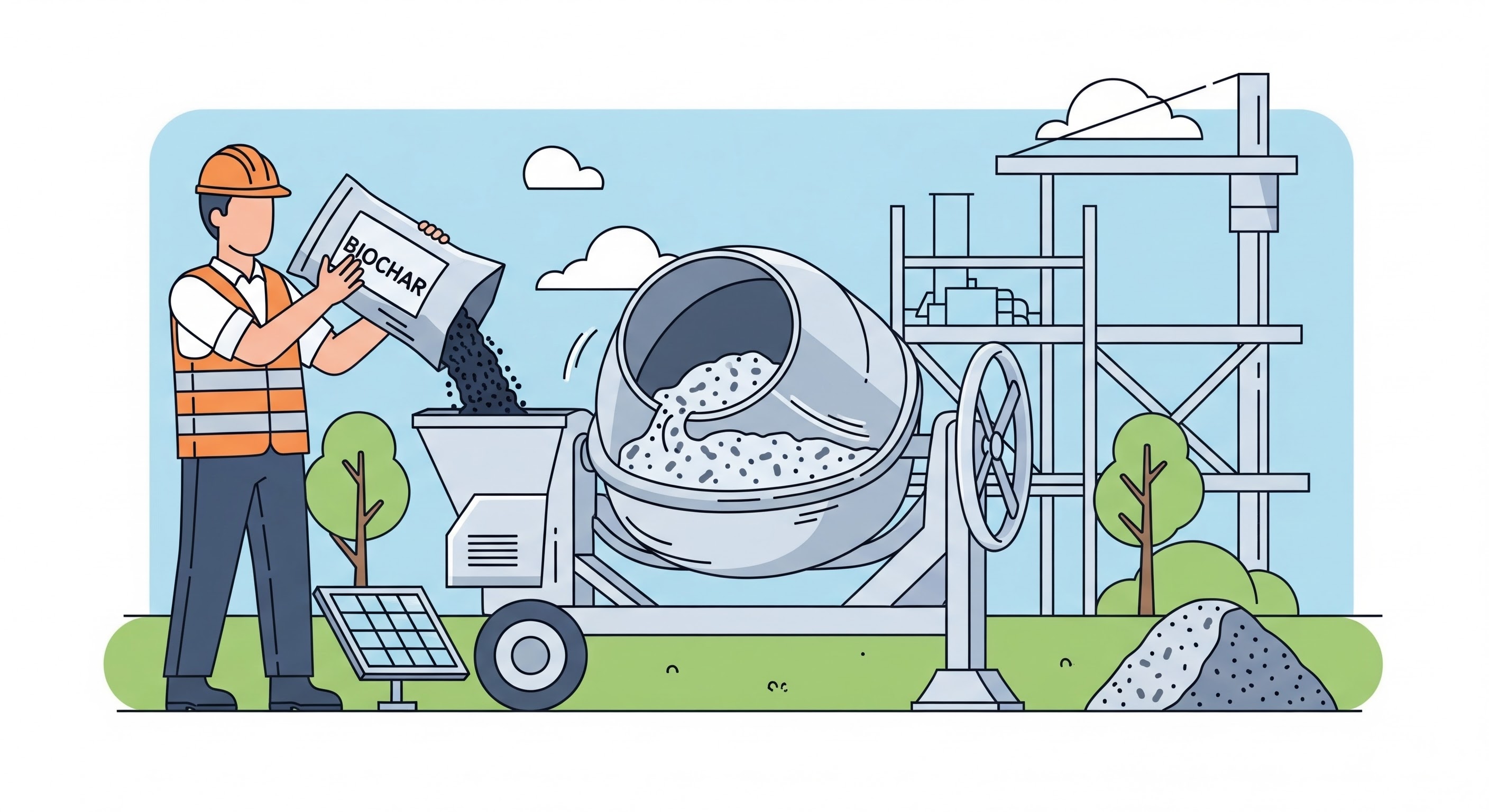
A new study has underscored the significant potential of biocharBiochar is a carbon-rich material created from biomass decomposition in low-oxygen conditions. It has important applications in environmental remediation, soil improvement, agriculture, carbon sequestration, energy storage, and sustainable materials, promoting efficiency and reducing waste in various contexts while addressing climate change challenges. More to create more sustainable and durable concrete. The research details how adding small amounts of biochar can not only sequester carbon but also enhance the mechanical properties of cement-based materials. The findings are particularly relevant for the construction industry, which is a major contributor to global CO2 emissions due to the energy-intensive production of cement.
The review of existing research found that incorporating biochar as a supplementary cementitious material can lead to impressive improvements. For instance, studies cited in the review show that a small percentage (typically 5-10% by cement weight) of biochar can increase compressive strength by nearly 19% and flexural strength by over 23%. This is attributed to biochar’s unique physical properties. Its porous structure allows it to act as a micro-filler, densifying the cement matrix, and its particles can also deflect the paths of cracks, thereby improving the material’s resistance to fracture.
Beyond the structural benefits, the use of biochar in concrete presents a dual-pronged approach to environmental sustainability. First, it directly sequesters stable carbon, removing it from the atmosphere and locking it into a long-lasting building material. Second, it can replace a portion of the cement, which is the most carbon-intensive component of concrete. This combination offers a powerful strategy for developing carbon-negative construction materials, turning biomassBiomass is a complex biological organic or non-organic solid product derived from living or recently living organism and available naturally. Various types of wastes such as animal manure, waste paper, sludge and many industrial wastes are also treated as biomass because like natural biomass these More waste streams into valuable resources and contributing to a more circular economy in the building sector.
SOURCE: Adding biochar to cement yields stronger, more environmentally friendly concrete




Leave a Reply