
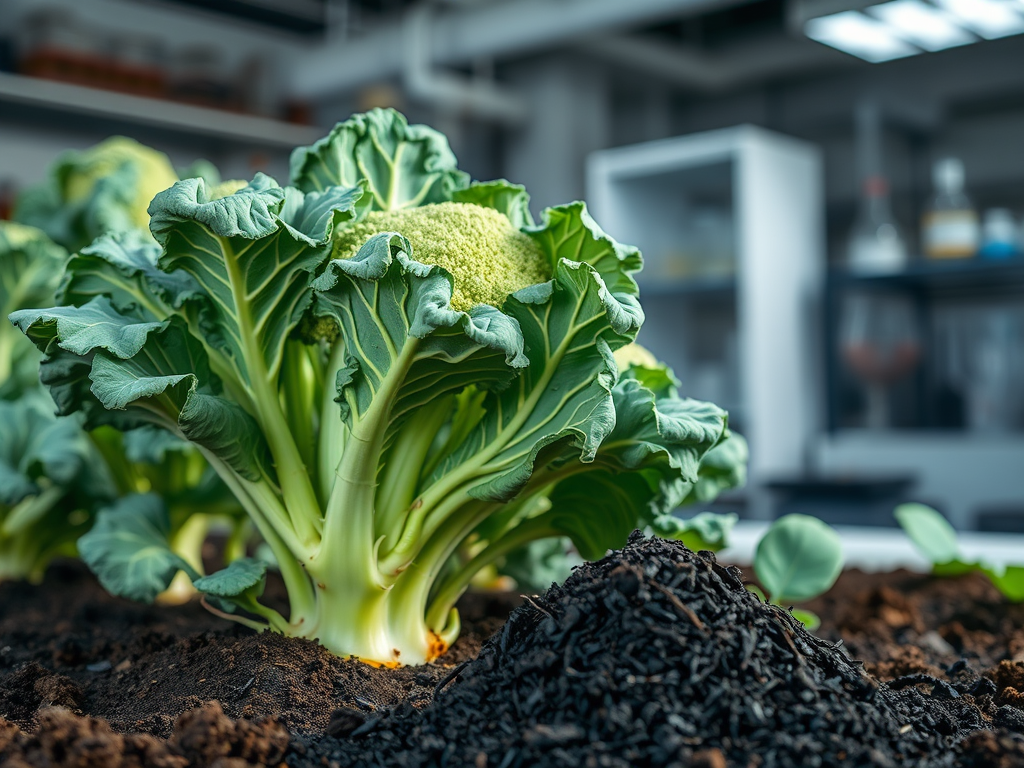
In a study published in the Journal of Energy Storage, Arévalo-Cid et al. , explored the potential of using biocharBiochar is a carbon-rich material created from biomass decomposition in low-oxygen conditions. It has important applications in environmental remediation, soil improvement, agriculture, carbon sequestration, energy storage, and sustainable materials, promoting efficiency and reducing waste in various contexts while addressing climate change challenges. More derived from broccoli as a sustainable material for supercapacitor electrodes. The researchers focused on broccoli’s ability to absorb and process nickel (Ni), a metal known to enhance energy storage capacity. They cultivated broccoli plants in soils with varying Ni concentrations and then converted the plants into biochar through pyrolysisPyrolysis is a thermochemical process that converts waste biomass into bio-char, bio-oil, and pyro-gas. It offers significant advantages in waste valorization, turning low-value materials into economically valuable resources. Its versatility allows for tailored products based on operational conditions, presenting itself as a cost-effective and efficient More.
The study found that biochar derived from broccoli grown in Ni-contaminated soil exhibited excellent electrochemical performance. The biochar-Ni nanocomposite showed a specific capacitance of 38 F/g at a scan rate of 100 mV/s and retained 94% of its capacitance over 5000 cycles at 10 A/g. A supercapacitor prototype using this material demonstrated a maximum energy density of 0.762 Wh/kg at 184 W/kg power density.
This research highlights the potential of using hyperaccumulator plants like broccoli to produce sustainable and high-performing materials for energy storage applications. The biochar-Ni nanocomposite offers a promising alternative to traditional electrode materials, which are often derived from non-renewable resources and involve energy-intensive production processes.
Source: Arévalo-Cid, P., Alcaraz, L., Sampaio, R. S., Lopez-Gómez, F. A., Carvalho, P. A., Montemor, M. F., & Alves, M. M. (2025). Biochar-Ni nanocomposites derived from broccoli as an efficient ecoconscious approach for sustainable supercapacitive materials. Journal of Energy Storage, 113, 115527. https://doi.org/10.1016/j.est.2025.115527


Leave a Reply