
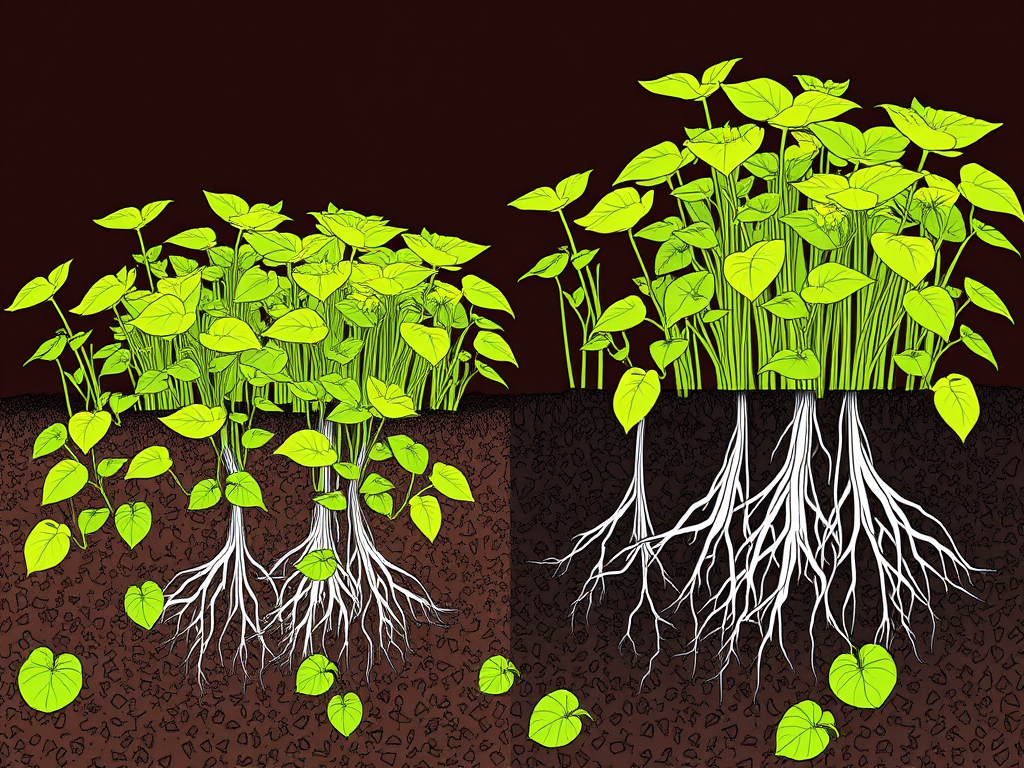
Landfills are a major source of atmospheric methane (CH4), a potent greenhouse gas. Mitigating these emissions is crucial for environmental sustainability, and bio-reactive systems using landfill soil covers offer an economically feasible solution. Recent research published in the Journal of Environmental Management by Rujie Zhang, Jianfei Ye, Jiahui Chen, Jiang Wu, Jie Wang, Xinyue Bai, Huaihai Chen, Qiyong Xu, and Dandan Huang explores the synergistic potential of combining plants and biocharBiochar is a carbon-rich material created from biomass decomposition in low-oxygen conditions. It has important applications in environmental remediation, soil improvement, agriculture, carbon sequestration, energy storage, and sustainable materials, promoting efficiency and reducing waste in various contexts while addressing climate change challenges. More in landfill cover soil (LCS) to enhance CH4 removal, particularly focusing on the intricate interactions within the rhizosphere.
The study systematically investigated the effectiveness of vegetated LCS systems by integrating three herbaceous plant species with two distinct biochar types: swine manure-derived biochar (MBC) and maize straw-derived biochar (SBC). The experiment was divided into three operational phases: Phase I with continuous CH4 input, Phase II with fluctuating CH4 input, and Phase III with resumed continuous CH4 input. The goal was to understand how plant-biochar combinations influence rhizosphere-mediated CH4 biofiltration processes, especially their resistance and resilience to varying CH4 supply.
During Phase I, the presence of vegetation played a critical role in shaping the microbial communities in the rhizosphere, the soil area directly influenced by plant roots. Solanum americanum-planted LCS demonstrated superior methanotrophic activity, which was linked to its favorable metabolite profile. Notably, swine manure-derived biochar (MBC) significantly outperformed maize straw-derived biochar (SBC) in enhancing CH4 removal efficiency. However, the resilience of these systems was tested during Phase II, when CH4 input fluctuated. MBC-amended soils showed diminished resistance to CH4 starvation, a phenomenon correlated with reduced availability of root-derived metabolites. In contrast, microbial communities in the rhizosphere with enhanced nutrient-importing capacities demonstrated greater retention of methanotrophic activity. The dominance of rhizosphere-mediated effects, driven by plants, was disrupted by these CH4 input fluctuations, highlighting the vulnerability of plant-driven systems to variable CH4 supply.
Crucially, biochar emerged as a vital factor in restoring methanotrophic activity when continuous CH4 input was reintroduced in Phase III. MBC proved more effective than SBC in this recovery phase, primarily by elevating soil organic carbon content and concurrently reducing ammonia nitrogen concentrations in the rhizosphere. These changes fostered a more robust recovery of the CH4 removal capacity. Overall, combined data from Phase I and III indicated that both plants and biochar significantly influenced CH4 removal efficiency, accounting for 45% and 38% of the variation, respectively, although their interaction contributed less (14.50%).
The study also delved into the microbial communities and soil properties. In Phase I, rhizosphere soil (RS) consistently exhibited greater microbial diversity than non-rhizosphere soil (NS) and non-planted soil, aligning with previous research that vegetated soils harbor more plant-root-associated microorganisms. While biochar treatments generally decreased the Shannon index for Solanum americanum rhizosphere soil (SA/RS), it increased for Solanum americanum non-rhizosphere soil (SA/NS). MBC treatments also resulted in higher Chao and Shannon indices compared to SBC treatments. However, in Phase II, the Shannon index declined more significantly under MBC treatments, suggesting MBC-amended soils were less resistant to gas fluctuations. By Phase III, biochar’s influence became more pronounced, with microbial composition clustering more distinctly according to biochar type.
Analysis of soil properties revealed a slight pHpH is a measure of how acidic or alkaline a substance is. A pH of 7 is neutral, while lower pH values indicate acidity and higher values indicate alkalinity. Biochars are normally alkaline and can influence soil pH, often increasing it, which can be beneficial More increase in most treatment groups across all phases, remaining within the optimal range for methane-oxidizing bacteria (MOB). MBC-amended soils generally maintained a higher pH than SBC-amended soils, a pattern consistent with biochar’s ability to elevate soil pH through soluble alkaline mineral release. Moisture content generally increased throughout the experiment, attributed to water production from methanotrophic activity. In Phase I, biochar significantly enhanced the total organic carbon (TOC) content of rhizosphere soil. For instance, MBC-amended soils saw TOC increase from 0.30 to 1.32−1.37 g kg−1. This higher TOC content is beneficial for microbial growth and activity.
The dominant methanotroph identified was Methylocystis, which was particularly abundant in Solanum americanum-planted soils. The study observed that biochar, particularly MBC, further enhanced the growth of Methylocystis in combination with plant benefits. Furthermore, the dominant methanotroph Methylocystis was negatively correlated with ammonia nitrogen (NH4+) content, emphasizing the benefit of MBC in reducing NH4+ levels.
This research highlights the synergistic potential of co-applying plants and biochar to enhance the resistance and resilience of soil microbial communities and methanotrophic activities in engineered ecosystems. While individual applications of plants or biochar showed vulnerabilities to environmental changes, the integration of specific plant-biochar combinations, such as MBC with Solanum americanum and SBC with Praxelis clematidea, optimized soil microbial functions and overall performance. These findings offer critical insights for developing more stable and efficient CH4 biofiltration systems under dynamic landfill conditions.
Source: Zhang, R., Ye, J., Chen, J., Wu, J., Wang, J., Bai, X., Chen, H., Xu, Q., Huang, D. (2025). Biochar-based rhizosphere engineering for enhanced CH4 removal in landfill cover soil. Journal of Environmental Management, 391, 126348.


![Eucalyptus Wood Waste-Derived Biochar Achieves a Ninety-Eight Percent Removal Efficiency for Benzo[ghi]perylene in Vehicle-Wash Wastewater](https://biochartoday.com/wp-content/uploads/2026/10/SCIENCE-BLOGS-2026-2026-10-19T160523.703.jpg)


Leave a Reply