
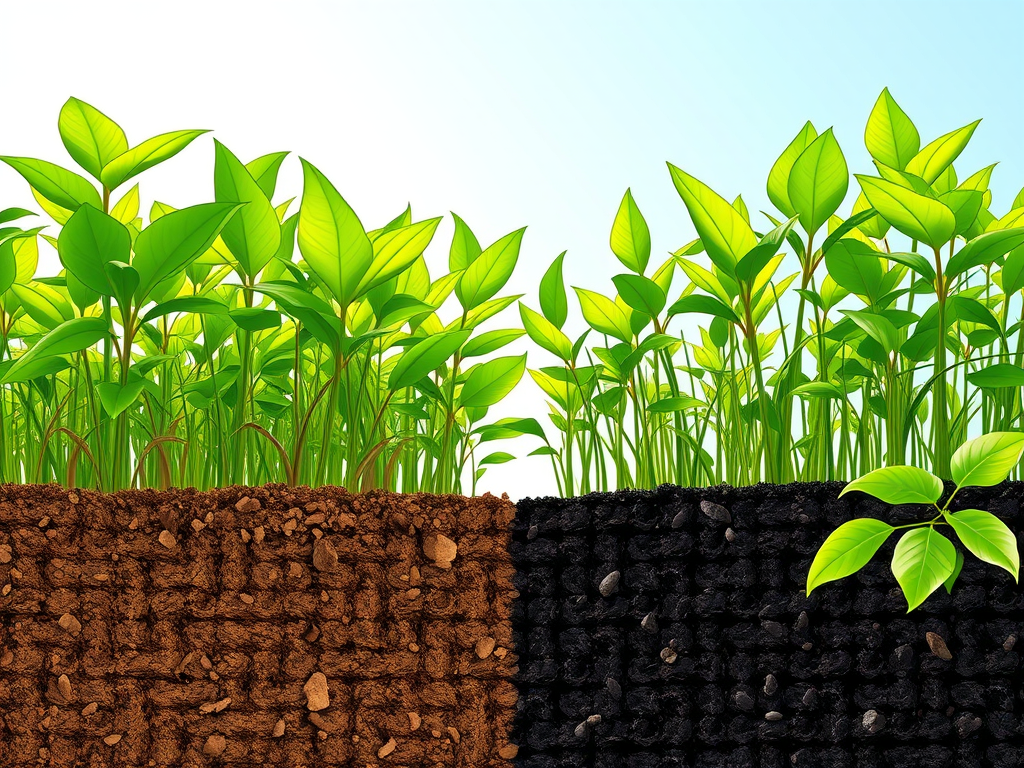
Climate change is increasing the frequency of droughts, threatening crop yields worldwide. A study published in Scientific Reports by Jay Karan Sah and colleagues, investigates whether rice husk biocharBiochar is a carbon-rich material created from biomass decomposition in low-oxygen conditions. It has important applications in environmental remediation, soil improvement, agriculture, carbon sequestration, energy storage, and sustainable materials, promoting efficiency and reducing waste in various contexts while addressing climate change challenges. More and nano iron oxide (Fe3O4 NPs) can enhance the drought tolerance of common buckwheat (Fagopyrum esculentum). Their findings suggest that a combination of these soil amendments improves plant health, reduces oxidative stress, and increases yields, making them valuable tools for sustainable agriculture.
Buckwheat is a nutrient-rich pseudocereal with growing global significance, yet it remains highly susceptible to drought stress. In this study, researchers tested the effects of biochar and Fe3O4 NPs under well-watered (80% field capacity) and drought conditions (40% field capacity). The experiment followed a randomized design, comparing untreated plants with those receiving biochar, nanoparticles, or a combination of both.
The results were promising. Buckwheat treated with biochar and nanoparticles showed higher relative water content, improved photosynthetic rates, and better stomatal conductance compared to untreated plants. The mechanisms behind these improvements are well understood. Biochar enhances soil water retention and microbial activity, creating a more favorable growth environment. Meanwhile, Fe3O4 NPs help regulate water uptake and protect plants from oxidative damage by boosting antioxidant activity. The combination of both appears to offer the most benefits, as it balances water availability with enhanced stress resistance.
The study adds to a growing body of research supporting biochar and nanoparticles as viable solutions for improving crop resilience. While more field trials are necessary to validate these findings on a larger scale, integrating biochar and nanomaterials could be a practical approach for farmers facing water scarcity. With continued research, these strategies may help secure food production in a changing climate.
Source:
Sah, J. K., Mannan, M. A., Akter, M., Akter, T., Ghosh, M., Dola, D. B., Zulfiqar, U., Soufan, W., Prasad, P. V. V., & Djalovic, I. (2025). Enhancing physio-biochemical traits and yield of common buckwheat (Fagopyrum esculentum) with rice husk biochar and nano iron oxide under water stress. Scientific Reports, 15, 7859. https://doi.org/10.1038/s41598-025-90736-3



Leave a Reply