
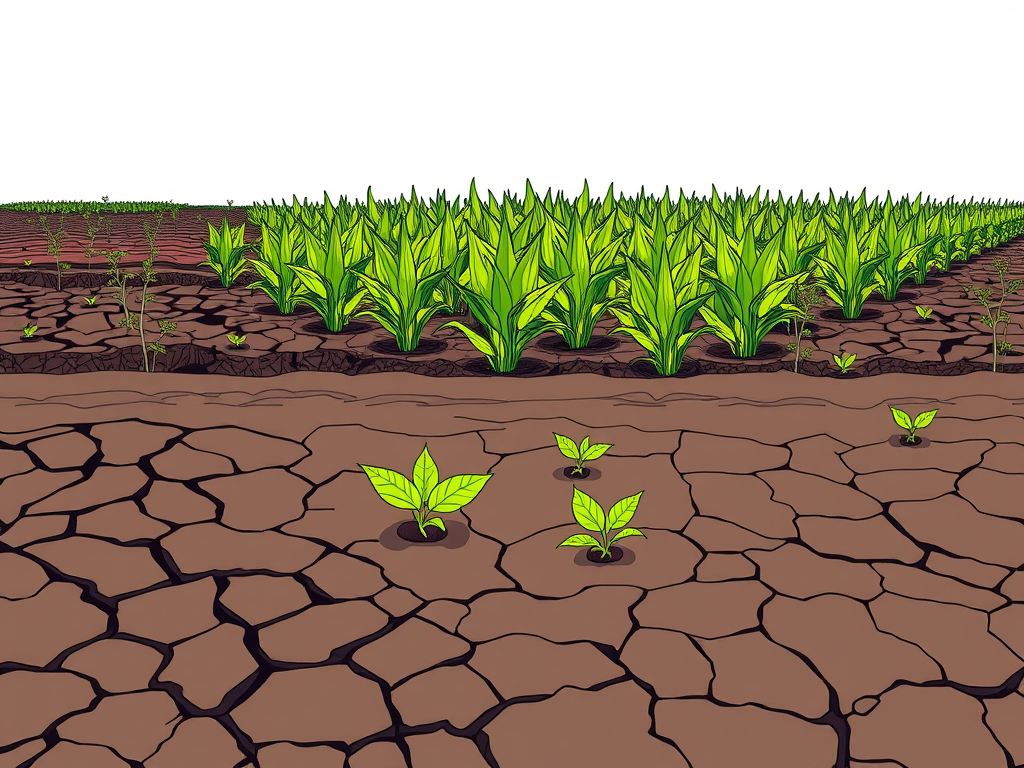
A comprehensive review by Peng Zhang, Yuning Wang, Fude Liu, Le Jiao, and Hongwen Sun, published as a chapter in BiocharBiochar is a carbon-rich material created from biomass decomposition in low-oxygen conditions. It has important applications in environmental remediation, soil improvement, agriculture, carbon sequestration, energy storage, and sustainable materials, promoting efficiency and reducing waste in various contexts while addressing climate change challenges. More – Applications in Agriculture and Environment, highlights the significant progress and future potential of biochar in ameliorating saline-alkali soils. These challenging soils, covering approximately 1.1×10⁹ hm2 (8.7% of Earth’s total land area), predominantly in arid and semi-arid regions, pose a major global threat to agricultural production and food security. Biochar has emerged as a multifunctional soil amendmentA soil amendment is any material added to the soil to enhance its physical or chemical properties, improving its suitability for plant growth. Biochar is considered a soil amendment as it can improve soil structure, water retention, nutrient availability, and microbial activity. More capable of regulating pHpH is a measure of how acidic or alkaline a substance is. A pH of 7 is neutral, while lower pH values indicate acidity and higher values indicate alkalinity. Biochars are normally alkaline and can influence soil pH, often increasing it, which can be beneficial More, immobilizing contaminants, sequestering carbon, and retaining nutrients, making it a promising strategy for sustainable remediation.
Biochar, a highly aromatic carbonaceous material produced through the pyrolysisPyrolysis is a thermochemical process that converts waste biomass into bio-char, bio-oil, and pyro-gas. It offers significant advantages in waste valorization, turning low-value materials into economically valuable resources. Its versatility allows for tailored products based on operational conditions, presenting itself as a cost-effective and efficient More of organic residues under oxygen-deficient conditions, boasts a large specific surface area, strong adsorption capacity, and anti-decomposition properties. These characteristics enable it to improve soil, enhance crop yields, and protect the environment. Studies have shown that biochar directly and indirectly regulates soil nutrients, increases soil organic matter, boosts cation exchange capacity (CEC), improves permeability and microbial activity, reduces nitrogen and phosphorus losses, and enhances soil aggregate structure and water conductivity.
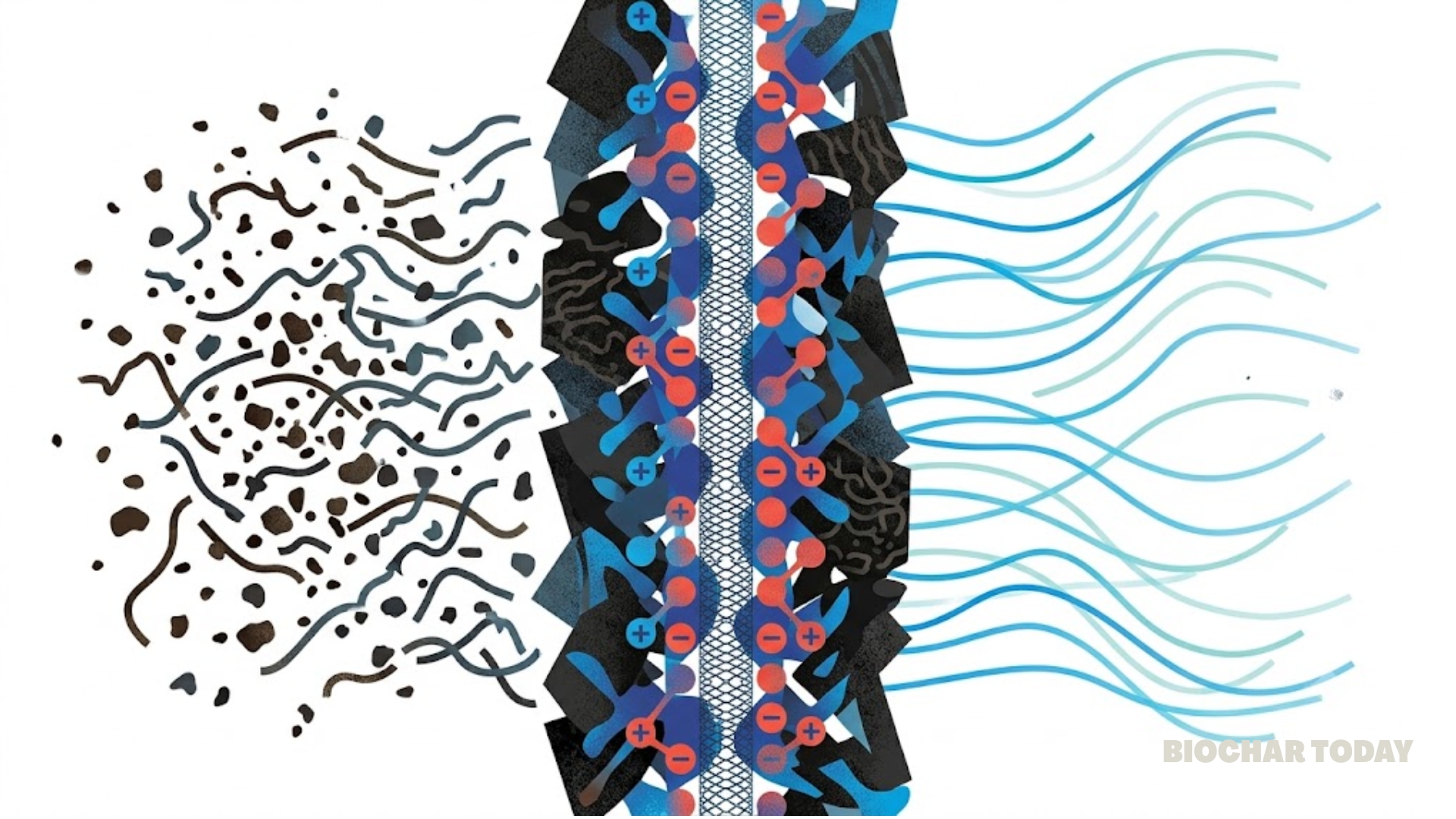
A key benefit of biochar is its ability to effectively reduce the salt content and exchangeable sodium percentage (ESP) in saline-alkali soils. This occurs primarily because biochar surfaces are rich in exchangeable ions like Ca2+ and Mg2+, which displace adsorbed sodium from soil colloids. Additionally, biochar significantly enhances soil porosityPorosity of biochar is a key factor in its effectiveness as a soil amendment and its ability to retain water and nutrients. Biochar’s porosity is influenced by feedstock type and pyrolysis temperature, and it plays a crucial role in microbial activity and overall soil health. Biochar More and specific surface area, improving water retention and facilitating the leachingLeaching is the process where nutrients are dissolved and carried away from the soil by water. This can lead to nutrient depletion and environmental pollution. Biochar can help reduce leaching by improving nutrient retention in the soil. More of sodium salts. While biochar can alter soil pH, this effect varies depending on the raw material and pyrolysis temperature. For instance, low-temperature biochar (less than 500∘C) is generally neutral or weakly alkaline, making it more suitable for these soils.
The often-low porosity of saline-alkali soils, which restricts plant growth, can be significantly improved by biochar. Studies demonstrate that biochar can increase the porosity of the topsoil layer (0-30 cm) by 4.8% to 30.1%. This is due to biochar’s own high intrinsic porosity, large specific surface area, low density, and stable porous structure, which directly and indirectly improve soil aggregate structure and dilute mineral components. For optimal improvement of porosity and bulk density, straw-derived biochar produced at high pyrolysis temperatures (greater than 600∘C) is prioritized.
Saline-alkali soils typically have low organic matter content and a limited capacity to retain cations, resulting in low CEC. Biochar, with its abundant functional groups like -OH and -COOH, can significantly enhance the CEC of saline-alkali soils by 22.5-82.0%. As a rich source of organic carbon, biochar enhances carbon sequestration in saline-alkali soils and reduces greenhouse gas emissions. Its high proportion of recalcitrant carbon allows for long-term sequestration, forming a stable carbon reservoir. Biochar’s large specific surface area also facilitates the adsorption of organic and inorganic substances, creating more stable organic-inorganic complexes and reducing carbon decomposition. Furthermore, by regulating soil properties and influencing microbial and enzyme activity, biochar modulates soil respiration, nitrification, and denitrification, thereby mitigating greenhouse gas emissions.
Biochar is inherently rich in essential nutrients like nitrogen, phosphorus, and potassium, and can significantly increase nutrient content in saline-alkali soils. For example, low-temperature biochar derived from livestock and poultry manure is particularly effective for enhancing nutrient content. Biochar also improves soil aggregate stability, reducing nutrient leaching. It alleviates salt stress in crops, promoting nutrient absorption and enhancing the cycling of NPK elements by boosting microbial and enzyme activity. This leads to reduced ammonia and nitrous oxide emissions, minimized nitrate leaching, and increased nitrogen fixationNitrogen is a crucial nutrient for plant growth, but plants can’t directly absorb it from the air. Nitrogen fixation is a process where certain bacteria convert atmospheric nitrogen into a form that plants can use. Biochar can provide a home for these nitrogen-fixing bacteria, enhancing More.
Despite these benefits, challenges persist. Large-scale application of biochar can be costly and may, in some cases, increase soil pH and salt content, negatively impacting saline-alkali soil. Research on raw material selection and preparation processes for modified biochar is predominantly at the laboratory stage, making efficient and cost-effective large-scale production difficult. Future research needs to focus on advancing biochar modification methods and principles, conducting long-term, large-scale field experiments to understand real-world performance, and ensuring environmental safety.
Source: Zhang, P., Wang, Y., Liu, F., Jiao, L., & Sun, H. (2025). Research and Application Progress of Biochar in Amelioration of Saline-Alkali Soil. In Biochar – Applications in Agriculture and Environment. IntechOpen.




Leave a Reply