

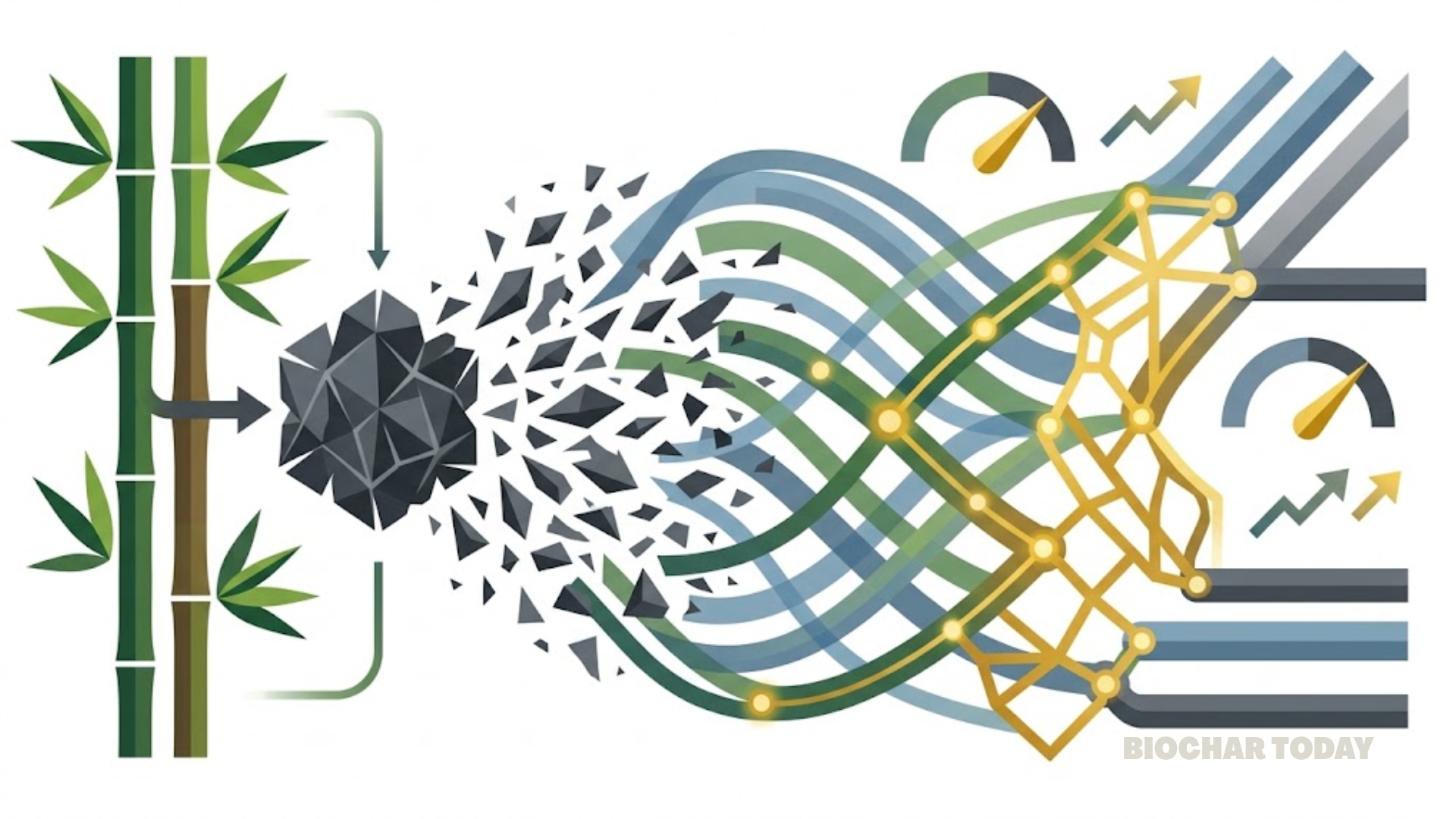
The metallurgical industry is a major user of carbon, historically relying on fossil sources. This reliance contributes significantly to rising atmospheric CO2 levels. To combat this, researchers are actively investigating biocharBiochar is a carbon-rich material created from biomass decomposition in low-oxygen conditions. It has important applications in environmental remediation, soil improvement, agriculture, carbon sequestration, energy storage, and sustainable materials, promoting efficiency and reducing waste in various contexts while addressing climate change challenges. More as a sustainable alternative. Biochar absorbs CO2 from the atmosphere during its growth. This makes the CO2 emissions from biochar use “circular,” meaning the carbon is recycled rather than newly added to the atmosphere, thus contributing to an anthropogenic carbon cycle.
A recent conference paper, “Compactability and solubility of spruce wood derived biochar as an alternative to fossil carbon in metallurgy,” presented at EMC 2025 by Fiona Pickart, Robert Alheid, Frank Bender, and Bernd Friedrich, delves into this very topic. Their work focuses on utilizing native German spruce wood biochar, a readily available biomassBiomass is a complex biological organic or non-organic solid product derived from living or recently living organism and available naturally. Various types of wastes such as animal manure, waste paper, sludge and many industrial wastes are also treated as biomass because like natural biomass these More due to post-World War II reforestation efforts. For many metallurgical processes, pulverized carbon isn’t sufficient; it needs to be agglomerated to maintain the mechanical structure of the furnace burden. This study specifically investigated briquetting spruce wood biochar and evaluating its ability to dissolve in liquid iron. The goal was to achieve a theoretical 3.62% carbon content in the carburized iron by adding 15.8 grams of carbon from 18.8 grams of dry biochar briquettes to 505.5 grams of iron.
The success of biochar in metallurgical applications hinges on the mechanical and thermal stability of its briquetted form. The researchers experimented with corn starch, bentonite, and spruce wood ashAsh is the non-combustible inorganic residue that remains after organic matter, like wood or biomass, is completely burned. It consists mainly of minerals and is different from biochar, which is produced through incomplete combustion. Ash Ash is the residue that remains after the complete More as binders for the biochar. These binders were dry-mixed with biochar before water was added until a doughy consistency was achieved. Each briquette was pressed using 8.0 grams of the mixture at a pressure of 150 kN for one minute. After a five-day curing period at room temperature, a visual and manual inspection of the briquettes revealed noticeable differences in their strength. The starch-bound briquettes exhibited the lowest stability and often showed a layered structure, which was even more pronounced after burning. The study originally planned to conduct standard mechanical strength tests (BS ISO 616:2021-10-29). However, none of the briquettes, including the most promising spruce wood ash-bound ones, developed the required strength for these tests.
The ash-bound briquettes, chosen for further solubility trials due to their comparatively higher stability, still showed significant weight loss after curing, ranging from 43.75% to 56.25%. While about 28.75% of this loss was attributed to water evaporation, the remaining 15.00-27.5% was likely due to the disintegration of loose biochar particles or fragments breaking off. This indicates that while spruce wood ash is a superior binder compared to starch and bentonite in this context, the briquetting process still needs considerable improvement to achieve the robust mechanical strength necessary for industrial handling and supporting the burden in furnaces.
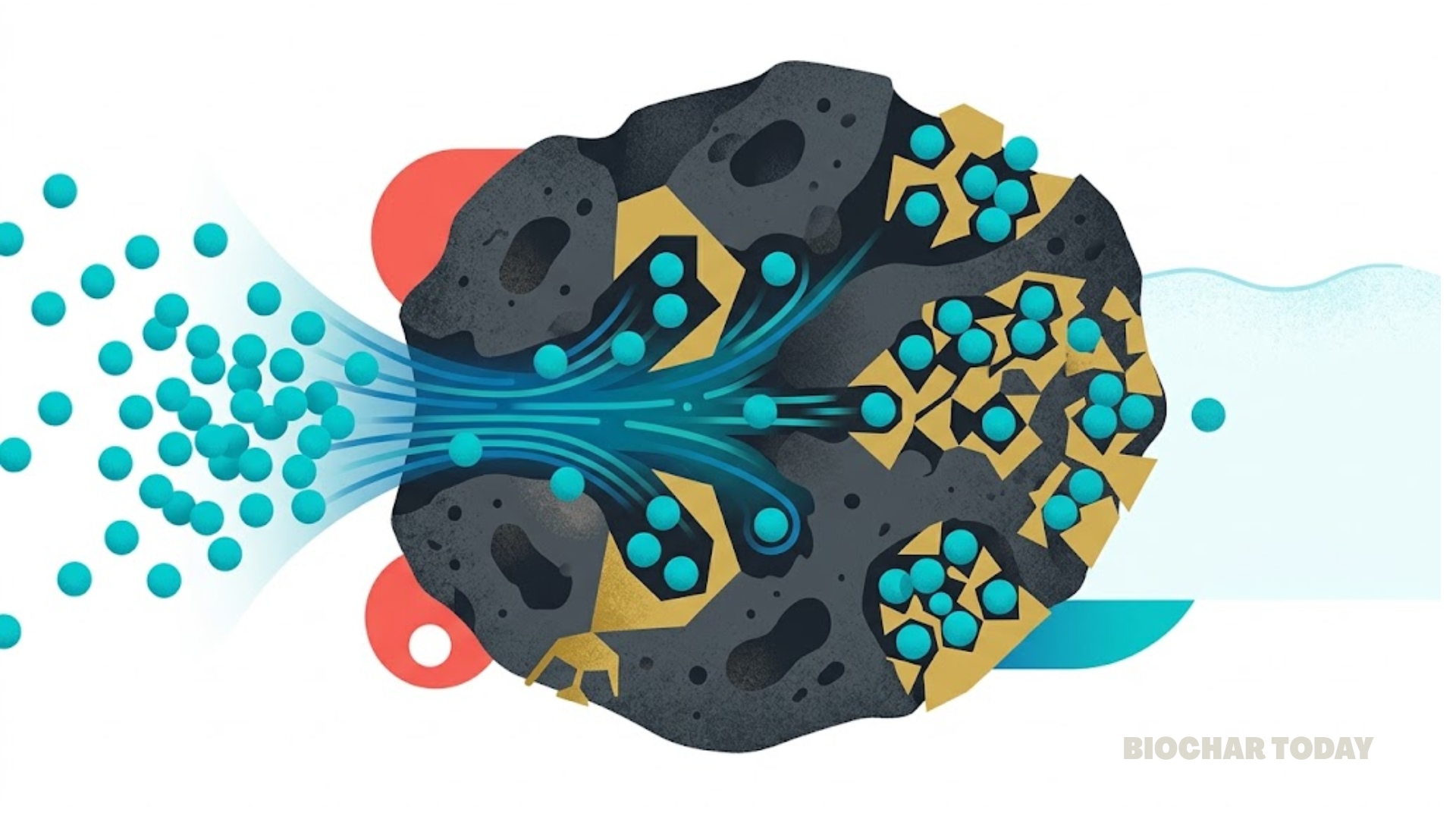
The primary objective of using biochar in metallurgy is its ability to dissolve carbon into liquid iron, a process known as carburization. This lowers the iron’s melting point from 1536∘C to as low as 1147∘C, which can lead to lower processing temperatures and reduced energy consumption. Solubility trials were conducted in a 4 kHz induction furnace at 1550∘C using the ash-bound biochar briquettes. A total of 18.8 grams of dry briquettes were added to 505.5 grams of iron. The biochar content in these briquettes was 90%, with a 93.5% total carbon content, theoretically adding 15.8 grams of carbon to the system. This should have resulted in a theoretical carbon content of 3.62% in the carburized iron. However, the measured carbon content in the iron samples, analyzed after ISO 15350, revealed a different picture. The carbon content increased rapidly within the first 10 seconds, reaching a maximum between 140 to 640 ppm. During this initial period, the carburization speed was 50 ppm/s. After this initial spike, the carbon content decreased at a diminishing rate, settling at a final carbon content of 124 ppm five minutes after the initial charge.
The substantial gap between the theoretical 3.62% carbon content and the measured 124 ppm in the iron melt was primarily due to an open experimental setup that allowed oxygen exposure, evidenced by flames during charging, and the instability of the biochar briquettes, leading to material loss outside the crucible. Although spruce wood ash-bound briquettes were the most stable, they lacked the robust strength required for metallurgical applications. Future research will focus on improving briquetting to enhance mechanical stability and conducting trials in a more shielded environment to prevent oxidation and maximize carbon dissolution efficiency.
The long-term objective is to develop biochar briquettes with optimized mechanical stability, thermal stability, and reactivity for industrial processes, such as the climate-neutral production of hot metal in SAFs (Submerged Arc Furnaces) or the recycling of copper slag, ideally using locally sourced raw materials. Research will also explore using inorganic binders that can double as slag formers, potentially reducing or eliminating the need for additional fluxes in industrial processes. This research, supported by Convoris Group GmbH for biochar supply, is a crucial step toward a more sustainable and low-carbon future for the metallurgical industry.
Source: Pickart, F., Alheid, R., Bender, F., & Friedrich, B. (2025, June). Compactability and solubility of spruce wood derived biochar as an alternative to fossil carbon in metallurgy. Conference Paper presented at EMC 2025.


Leave a Reply