
Key Takeaways
- Biochar’s ability to remove lead from water is dramatically reduced—by over 63%—if its water-soluble “coating” (Dissolved Organic Matter or DOM) is washed off.
- This soluble DOM coating, not just the rigid charcoalCharcoal is a black, brittle, and porous material produced by heating wood or other organic substances in a low-oxygen environment. It is primarily used as a fuel source for cooking and heating. More structure, is doing most of the work by chemically grabbing lead ions.
- The most effective “claws” on the DOM for capturing lead are oxygen-based chemical groups, especially carboxyl groups.
- Lead is captured in two ways: it gets chemically “stuck” to the DOM (complexation) and it forms tiny new mineral deposits on the biocharBiochar is a carbon-rich material created from biomass decomposition in low-oxygen conditions. It has important applications in environmental remediation, soil improvement, agriculture, carbon sequestration, energy storage, and sustainable materials, promoting efficiency and reducing waste in various contexts while addressing climate change challenges. More surface (co-precipitation).
- This research helps us design “smarter” biochars, specifically enriched with these powerful binding components to be more effective at cleaning up heavy metal pollution
When we think of biochar as an environmental solution, we often picture a simple, black, porous sponge—a rigid charcoal structure that soaks up and locks away contaminants. However, this image is incomplete. Biochar is a dynamic and complex material, and its most active components may not be the rigid structure at all, but the soluble substances that coat its surface. A new study published in the journal Biochar by lead authors Fuxiang Zhang, Boyang Zhou, and their colleagues investigates the precise role of these mobile components, known as biochar-derived dissolved organic matter (DOM). Their work zeroes in on one of the most persistent and toxic environmental pollutants, lead (Pb(II)), to understand what really gives biochar its cleanup power.
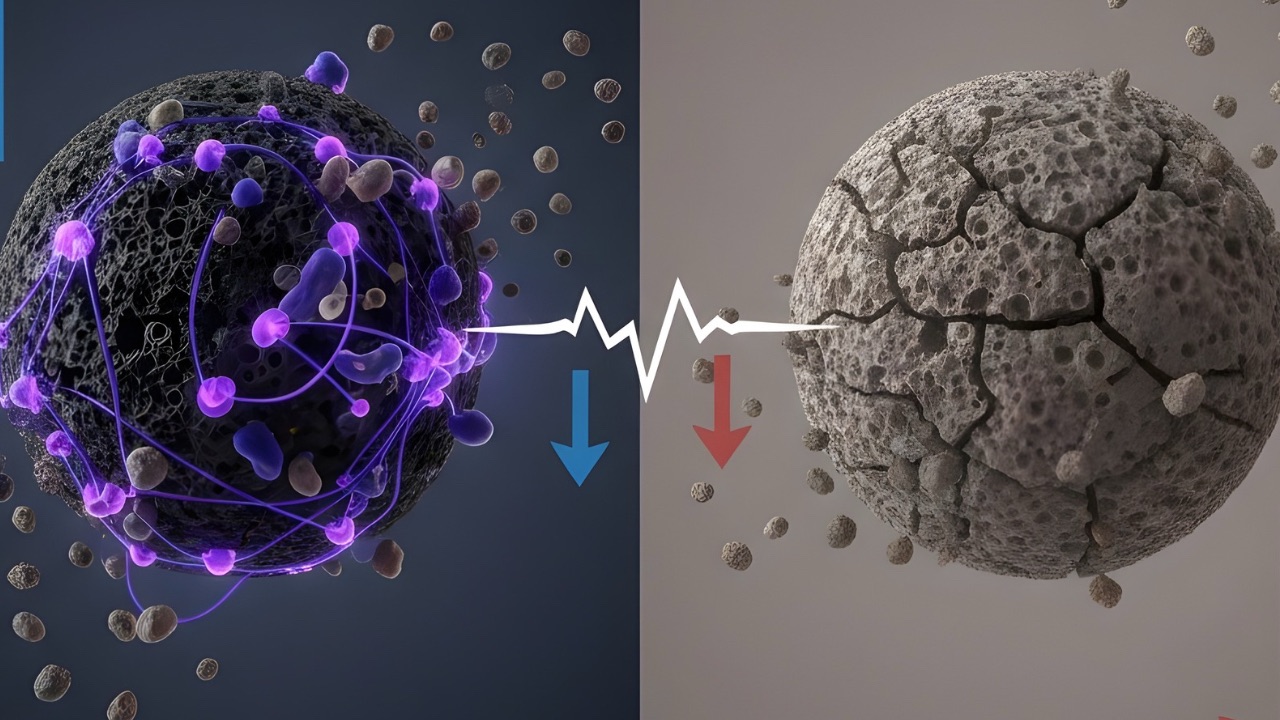
To isolate the effect of this soluble coating, the research team performed a simple but elegant experiment. They compared the performance of untreated biochar (BC) against biochar that had been thoroughly washed with water (WBC), stripping it of its DOM. The results were definitive. The untreated biochar, with its DOM intact, proved to be a highly effective adsorbent, capturing an impressive 96.2 milligrams of lead per gram of material. In stark contrast, the washed biochar’s capacity plummeted to just 35.0 mg/g. This 63.6% reduction in performance highlights a critical finding: the DOM is not just an accessory; it is essential for the biochar’s ability to immobilize lead.
The study’s advanced analysis revealed that this process is overwhelmingly chemical in nature. Using spectroscopic techniques to observe the binding at a molecular level, the researchers identified the specific “chemical claws” on the biochar and DOM that latch onto lead ions. These are oxygen-containing functional groups—specifically hydroxyl, carboxyl, carbonyl, and ether groups. When lead is captured, it is primarily locked away through two distinct mechanisms. The dominant mechanism is complexation, where the lead ion forms a direct, strong bond with these oxygen groups. This is followed by co-precipitation, a process where the lead ions react with other compounds on the surface to form new, stable mineral solids, effectively taking them out of circulation.
But the team did not stop there. They “fingerprinted” the DOM itself using fluorescence spectroscopy to understand its composition. They found that DOM is not one single substance, but a heterogeneous mixture of different compounds. The analysis identified three main “humic-like” components. Critically, not all components were equally effective. One component, a mix of humic and tyrosine-like substances, exhibited the strongest binding affinity for lead. This suggests that biochars naturally rich in this specific type of DOM are far superior for remediation. By observing the reaction as it happened, the study also identified the “first responders” in the binding process: carboxyl groups (the same acidic groups found in vinegar and citrus fruits) on the humic substances were the most reactive sites, binding to the lead first and fastest.
This research provides a clear, molecular-level picture of how biochar really works to fight lead pollution. It moves us past the simple idea of a “carbon sponge” and shows that biochar is a dynamic chemical system. The key takeaway is that the soluble, mobile DOM—rich in humic-like substances and carboxyl groups—is the true engine of lead removal. This work provides a scientific basis for designing smarter, more effective biochars. Instead of just “making biochar,” we can now aim to optimize production to maximize these specific, powerful components, creating targeted, high-efficiency materials for remediating heavy metal pollution.
Source: Zhang, F., Zhou, B., Fu, Q., Jia, H., Li, Y.-F., Ding, Y., & Cui, S. (2025). Binding mechanisms of Pb(II) adsorption by biochar-derived dissolved organic matter: unraveling site heterogeneity and kinetics through advanced spectral analysis. Biochar, 7(116).



Leave a Reply